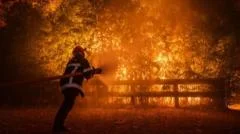
French President Emmanuel Macron has called an emergency crisis meeting as wildfires burn perilously close to the historic city of Bordeaux, with a severe heatwave forecast to compound the threat. The blazes are now approximately 15 kilometers from the city center, raising alarm across the region.
Blazes on the Doorstep of Bordeaux
The wildfires, which have been raging in the Gironde department, are edging toward Bordeaux, a city renowned for its wine industry and cultural heritage. Firefighters are battling the flames, but the proximity has sparked concern among residents and authorities alike. The city’s mayor has stated that there are no current plans to evacuate Bordeaux, but the situation is being monitored closely.
Why the Heatwave Amplifies the Danger
The looming heatwave is a critical factor. Forecasts predict soaring temperatures and dry conditions, which could accelerate the spread of the fires and hamper firefighting efforts. For residents, this means heightened anxiety as the combination of flames and extreme heat poses risks to health, property, and the environment. The wine industry, a cornerstone of the local economy, also faces potential devastation.
How the Crisis Unfolded
The wildfires in southwestern France have been a recurring challenge, with previous summers seeing massive blazes in the Gironde region. This latest outbreak comes amid a pattern of increasingly intense fire seasons linked to climate change. The current fires have already forced some evacuations in rural areas, but the threat to Bordeaux marks a significant escalation.
Who Is Affected and What It Means
For the people of Bordeaux, the threat is both immediate and emotional. Families are watching the smoke on the horizon, unsure if they will need to flee. Local businesses, particularly vineyards and tourism operators, face uncertainty. The crisis meeting led by Macron signals that the government is treating this as a national priority, but for now, residents are left waiting.
Official Response and Government Action
President Macron’s crisis meeting will bring together top officials, including emergency services and regional authorities, to coordinate a response. The mayor of Bordeaux has reassured the public that evacuation plans are not yet necessary, but officials are preparing for all scenarios. The government has deployed additional firefighting resources, including aircraft and ground crews, to contain the blazes.
What This Crisis Means Beyond the Flames
The situation highlights the growing intersection of climate-driven disasters and public safety. The heatwave, which is part of a broader European trend, is not just a weather event but a multiplier of fire risk. This crisis underscores the need for robust emergency planning and climate adaptation, especially in vulnerable regions like southwestern France.
Confirmed Facts vs What Remains Unclear
What is confirmed: The fires are about 15 km from Bordeaux; Macron has called a crisis meeting; the mayor says no evacuation plans are in place; a heatwave is forecast. What remains unclear: The exact trajectory of the fires, whether evacuation orders may change, and the full extent of damage to property and land. All speculation about potential evacuations or fire spread should be treated as unconfirmed.
Risks and Balanced View
While officials are confident that Bordeaux is not under immediate threat, the situation is fluid. Critics may argue that the government should have acted sooner or that more preventive measures are needed. The heatwave could rapidly change the fire’s behavior, and some experts warn that complacency could be dangerous. The balance lies in trusting official assessments while preparing for worst-case scenarios.
Wider Trend: Europe’s Escalating Fire Seasons
This event is part of a broader pattern of intensifying wildfires across Europe, from Portugal to Greece. Climate change is lengthening fire seasons and making heatwaves more severe. France has seen devastating fires in recent years, and this crisis near Bordeaux is a stark reminder that no region is immune.
Practical Guidance for Residents and Visitors
Residents of Bordeaux and surrounding areas should stay informed via official channels, such as local government alerts and fire service updates. Have an emergency kit ready, including documents, medications, and essentials. Avoid travel to affected zones. Visitors should check with accommodations and consider postponing trips if the situation worsens. Follow evacuation orders if issued.
What Could Happen Next
The outcome of Macron’s crisis meeting could lead to reinforced firefighting efforts, potential evacuation pre-planning, or public warnings about the heatwave. If the fires continue to advance, authorities may reconsider the no-evacuation stance. The heatwave’s intensity will be a key variable in the coming days.
Our Take
This story is a reminder of how quickly a natural disaster can escalate from a rural threat to an urban crisis. Macron’s emergency meeting is a necessary step, but the real test will be in the execution of firefighting and public safety measures. The lack of evacuation plans for Bordeaux may be reassuring, but it also reflects a delicate balancing act between preventing panic and ensuring readiness. As the heatwave looms, the next 48 hours will be critical.
Frequently Asked Questions
Is Bordeaux being evacuated due to the wildfires?
No, the mayor of Bordeaux has stated there are no current plans to evacuate the city, though the situation is being monitored.
Why is Macron holding a crisis meeting about the Bordeaux wildfires?
President Macron has called an emergency meeting to coordinate the government’s response as wildfires approach within 15 km of Bordeaux, with a heatwave expected to worsen conditions.
How close are the wildfires to Bordeaux?
The blazes are approximately 15 kilometers from the city center, according to officials.
What should residents do if the wildfires get closer?
Residents should stay tuned to official alerts, prepare an emergency kit, and be ready to follow any evacuation orders if issued by local authorities.