Macau, long known as the world’s gambling capital, is trying to write a new chapter. The city’s top trade official says it wants to be known not just for its casinos, but as a serious destination for business, conferences, and exhibitions. To make that happen, the government is putting $16 billion on the table.
A New Identity for the World’s Gambling Capital
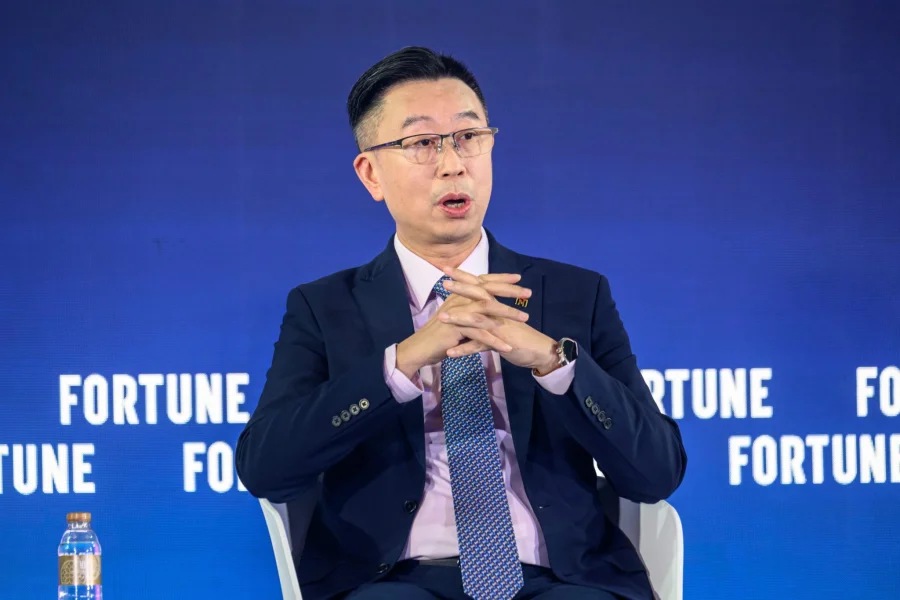
Speaking at the Fortune Leaders Forum in Macau on Sept. 8, Alex Che Weng Keong, president of the board of directors of the Commerce and Investment Promotion Institute of the Macao SAR, laid out the vision. Macau wants to move from being a “tourism city” to a “business city.”
The shift is not just about branding. It is an economic strategy aimed at reducing the city’s overwhelming dependence on casino revenue.
Why Macau’s Heavy Reliance on Gaming Is a Problem
Gaming still accounts for roughly 45% of Macau’s GDP. Even more striking, the industry supplies about 80% of the government’s tax revenue. That kind of concentration leaves the city vulnerable to downturns in the gambling sector, shifts in Chinese tourism policy, or broader economic shocks.
Diversifying into business events and trade could create a more stable economic base. It also aligns with Beijing’s broader push for Macau to reduce its reliance on gaming and integrate more deeply into the Greater Bay Area economy.
The Las Vegas Blueprint: A Casino Town That Evolved
Che pointed to an interesting role model: Las Vegas. The world’s other major gambling hub has shown that a casino town can also become a “world-class venue…for business, exchange, conferences, and exhibitions,” he said.
Las Vegas now hosts some of the largest trade shows and conventions on the planet, from CES to countless industry expos. Macau appears to want a piece of that same pie, leveraging its existing tourism infrastructure to attract a different kind of visitor.
What the $16 Billion Investment Means for Local Businesses
For small and medium-sized enterprises in Macau, this pivot could open new doors. A shift toward business tourism means more demand for hotels, restaurants, transport, and professional services beyond the casino floor. It also creates opportunities for local firms to participate in supply chains for conferences and exhibitions.
However, the transition will not happen overnight. Building the venues, training the workforce, and convincing global event organizers to choose Macau over established rivals like Singapore, Hong Kong, or Shanghai will take time.
Government Strategy: The Third Five-Year Plan
The push toward becoming a business city is part of Macau’s third five-year plan, introduced after Portugal’s administrative era ended. The plan signals a deliberate policy direction from the Macao SAR government to diversify the economy and reduce its reliance on gaming.
This is not just a local initiative. It reflects a coordinated effort with Beijing to reposition Macau as a more versatile economic player in the region.
Who Stands to Benefit Most from This Economic Shift
The biggest beneficiaries could be professionals in the MICE sector—Meetings, Incentives, Conferences, and Exhibitions. Event planners, logistics companies, translation services, and hospitality workers all stand to gain if Macau successfully attracts more business events.
For everyday residents, the hope is that a more diversified economy brings more stable employment opportunities beyond the casino industry, which has historically dominated the local job market.
Official Response: What Macau’s Trade Chief Is Saying
Alex Che Weng Keong’s comments at the Fortune Leaders Forum are the clearest public signal yet of the city’s ambitions. By citing Las Vegas as a model, he is acknowledging that Macau cannot simply remain a gambling destination forever.
His remarks suggest that the government is serious about using its $16 billion investment to build the infrastructure and incentives needed to attract global business events.
Can Macau Really Compete with Asia’s Business Hubs?
The challenge is significant. Singapore, Hong Kong, and mainland Chinese cities like Shanghai already have mature business event ecosystems. They have established reputations, world-class convention centers, and deep pools of corporate talent.
Macau’s advantages are its existing tourism infrastructure, its status as a special administrative region with its own legal and economic systems, and its proximity to the massive Chinese market. But proximity alone may not be enough to lure event organizers away from established competitors.
Confirmed Facts vs What Remains Unclear
What is confirmed: Macau’s trade promotion chief publicly stated the goal of becoming a “business city.” The city is investing $16 billion in this effort. Gaming still accounts for 45% of GDP and 80% of tax revenue. Las Vegas was cited as a model.
What remains unclear: The specific breakdown of how the $16 billion will be spent, the timeline for major infrastructure projects, and whether Macau can realistically attract a meaningful share of Asia’s business events market. No independent economic projections for the impact of this shift have been released.
Macau’s Competitive Edge: Why This City Has a Real Chance
Macau is not starting from zero. It already has world-class hotels, entertainment venues, and transport links. The city’s casinos have built massive integrated resorts that can be adapted for conventions and exhibitions.
Its unique status as the only place in China where gambling is legal also gives it a distinctive draw for certain types of events. And with Beijing’s backing, Macau has political support that competitors like Singapore cannot match.
Risks and the Road Ahead: Not Everyone Is Convinced
Skeptics point out that Macau has talked about diversification for years without dramatic results. The gaming industry’s dominance is deeply entrenched, and the tax revenue it generates gives the government little short-term incentive to push too hard for change.
There is also the risk that the $16 billion investment could be spent on projects that fail to attract enough international business events to justify the cost. Critics argue that without a fundamental shift in how the city markets itself, it may remain a gambling hub with a business-tourism side project.
A Broader Pattern: Casino Cities Trying to Reinvent Themselves
Macau is not alone in trying to diversify. Las Vegas has spent decades building its convention business. Singapore has successfully positioned itself as a business and leisure destination. Even Atlantic City has attempted reinvention, though with mixed results.
The pattern suggests that casino cities eventually realize they cannot rely on gambling alone. Macau’s $16 billion bet is part of this wider trend, but its success will depend on execution, not just ambition.
What Should Businesses and Investors Watch For
For businesses, the key indicator will be the number of major international conferences and exhibitions Macau secures over the next few years. If the city starts landing events that would previously have gone to Singapore or Hong Kong, the strategy is working.
For investors, the focus should be on infrastructure spending and whether new convention facilities are actually being built. Announcements are easy; construction and bookings are harder to fake.
What Happens Next: A Long Road to Reinvention
The $16 billion investment will take years to deploy, and the results will not be visible immediately. Macau will need to build new venues, train staff, and market itself aggressively to global event organizers.
The next few years will be telling. If Macau can secure even a fraction of Asia’s business events market, it could begin to reduce its reliance on gaming. If not, it may remain what it has always been—a gambling town with big dreams.
Our Take
Macau’s ambition to become a business city is both sensible and necessary. The city’s dependence on gaming is an economic vulnerability that no responsible government should ignore. The $16 billion investment shows that officials are serious about change.
But money alone does not guarantee transformation. Macau is competing against some of the most sophisticated business destinations in the world. It will need more than cash to win—it will need a clear strategy, strong execution, and the patience to see the plan through over many years.
Frequently Asked Questions
Why is Macau trying to become a business city?
Macau wants to reduce its heavy economic reliance on gaming, which accounts for 45% of its GDP and 80% of government tax revenue. Diversifying into business events and conferences is seen as a way to create a more stable and sustainable economy.
How much is Macau spending on this transformation?
Macau is investing $16 billion to support its shift from a tourism-focused gambling hub to a business city. The funds are intended to build infrastructure and attract conferences, exhibitions, and trade events.
What role does Las Vegas play in Macau’s plan?
Macau’s trade promotion chief cited Las Vegas as a model. Las Vegas successfully evolved from a casino town into a world-class venue for business, conferences, and exhibitions, and Macau hopes to follow a similar path.
Will Macau stop being a gambling hub?
No. Gaming will remain a major part of Macau’s economy for the foreseeable future. The goal is to diversify so that the city is not solely dependent on gambling revenue, not to eliminate the industry altogether.