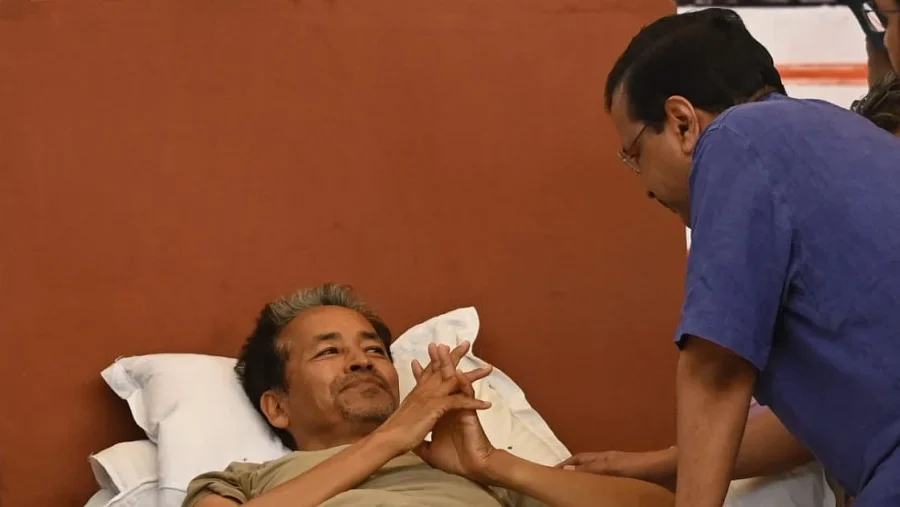
On a Thursday afternoon at Jantar Mantar, where the winter sun struggled to warm the gathered crowd, Arvind Kejriwal stood beside a visibly weakened Sonam Wangchuk and invoked a name that still resonates in India's protest history: Anna Hazare.
The Aam Aadmi Party national convenor's visit to the climate activist on Day 19 of his indefinite hunger strike was more than a political gesture. It was an attempt to connect two generations of protest — the 2011 anti-corruption movement that gave birth to the AAP, and the current student-led agitation against examination paper leaks.
What Kejriwal said at Jantar Mantar
Addressing the gathering, Kejriwal urged the Centre to take the concerns of students and young people seriously. "Every year, exam papers get leaked and youth pay the price. I appeal to the government to listen to students and Wangchuk," the former Delhi chief minister said.
He demanded that Union Education Minister Dharmendra Pradhan step down over alleged irregularities in the National Eligibility cum Entrance Test (NEET). In a striking remark, Kejriwal suggested that Wangchuk should instead be appointed the country's education minister — a comment that drew cheers from the crowd but also highlighted the political nature of the protest.
Why the Anna Hazare reference matters
Kejriwal's invocation of the Anna Hazare movement is significant. That 2011 protest against corruption, led by the veteran activist, saw massive public participation and eventually led to the formation of the AAP. By drawing this parallel, Kejriwal is framing Wangchuk's hunger strike as part of a larger, morally driven struggle — one that transcends party politics.
For many in the crowd, the comparison felt natural. Both movements centre on young people demanding accountability from those in power. Both use the tactic of indefinite hunger strikes to pressure the government. And both have drawn support from opposition politicians seeking to challenge the ruling establishment.
Who is Sonam Wangchuk and why is he on hunger strike
Sonam Wangchuk, best known as the inspiration behind the film "3 Idiots" character Phunsukh Wangdu, is a climate activist and education reform advocate from Ladakh. His current hunger strike, now in its 19th day, demands the resignation of Union Education Minister Dharmendra Pradhan over alleged irregularities in NEET examinations.
The protest stems from repeated allegations of paper leaks in competitive exams, which have affected thousands of students across India. Wangchuk has argued that such irregularities undermine the credibility of the education system and that the minister must take responsibility.
Who is affected by the NEET paper leak controversy
The NEET paper leak allegations have caused widespread anxiety among students preparing for medical entrance exams. For many young Indians from middle-class and lower-income families, NEET represents their only pathway to a medical career. Any irregularity in the examination process can derail years of preparation and significant financial investment.
Parents, too, have been affected. Many have taken loans or made sacrifices to fund their children's coaching and exam fees. The uncertainty around exam integrity has left families feeling betrayed by the system they trusted.
What the government has said so far
As of now, the Union Education Ministry has not officially responded to Kejriwal's visit or Wangchuk's demand for Dharmendra Pradhan's resignation. The ministry has previously stated that investigations into paper leak allegations are ongoing and that strict action will be taken against those found guilty.
However, critics argue that the government has not done enough to prevent recurring leaks or to reassure students about the integrity of the examination process.
What this protest means for student politics in India
Kejriwal's backing of Wangchuk's hunger strike signals a renewed focus on student issues in opposition politics. The AAP, which has traditionally positioned itself as a party of the common person, is now aligning with a protest that resonates with young voters — a crucial demographic in upcoming elections.
The invocation of the Anna Hazare movement also serves a strategic purpose. It reminds voters of the AAP's origins as a grassroots anti-corruption movement, potentially helping the party regain its moral high ground amid criticism of its governance record in Delhi and Punjab.
Confirmed facts vs what remains unclear
Confirmed: Arvind Kejriwal visited Sonam Wangchuk at Jantar Mantar on Day 19 of his hunger strike. He demanded the resignation of Union Education Minister Dharmendra Pradhan over NEET irregularities. He invoked the Anna Hazare movement in his address.
Unclear: Whether the government will respond to the demand for Pradhan's resignation. The exact nature and extent of the NEET irregularities remain under investigation. It is also unclear whether Wangchuk's health can sustain the hunger strike for much longer.
Risks and concerns surrounding the protest
While the protest has drawn sympathy, there are risks. Prolonged hunger strikes can cause serious health complications, including organ failure. Medical experts have warned that indefinite fasting beyond 20 days can be life-threatening without proper medical supervision.
There is also the risk of political exploitation. Critics may argue that Kejriwal's visit is an attempt to capitalise on student anger for electoral gain, rather than a genuine concern for education reform.
The wider pattern of exam paper leaks in India
The NEET controversy is not an isolated incident. In recent years, several competitive exams — including the Common Eligibility Test (CET), the Railway Recruitment Board exams, and various state-level tests — have faced allegations of paper leaks. These incidents have eroded public trust in the examination system and raised questions about the security measures in place.
The issue has become a recurring theme in Indian education politics, with opposition parties routinely demanding accountability and the government promising stricter protocols.
What students and parents should do now
For students affected by the NEET irregularities, experts recommend staying informed through official channels rather than relying on social media rumours. Parents are advised to document any evidence of irregularities and report them to the appropriate authorities.
Those concerned about exam integrity can also participate in peaceful protests or sign petitions demanding a transparent investigation. However, medical professionals caution against participating in hunger strikes without proper health monitoring.
What could happen next
The trajectory of Wangchuk's protest depends largely on the government's response. If the Centre agrees to an investigation or if Pradhan offers to step down pending inquiry, the protest may de-escalate. If not, the hunger strike could continue, potentially drawing more political support and media attention.
Kejriwal's involvement may also lead to the AAP organising larger protests, especially in Delhi and Punjab, where the party has a strong presence. The coming weeks will determine whether this becomes a sustained movement or a brief political moment.
Our Take
The sight of Arvind Kejriwal standing beside a fasting Sonam Wangchuk at Jantar Mantar is a powerful image — one that deliberately echoes the Anna Hazare protests of 2011. Whether this parallel is justified or opportunistic depends on one's view of the AAP's political trajectory.
What is undeniable is the genuine anger among students and parents over exam paper leaks. This is not a manufactured grievance. For millions of young Indians, competitive exams are the only ladder to a better life. When that ladder is perceived as rigged, the anger is real and justified.
Kejriwal's challenge will be to sustain this momentum without letting it become just another political spectacle. Wangchuk's challenge is to survive the protest physically. And the government's challenge is to restore faith in an examination system that has repeatedly failed its most vulnerable stakeholders.
Frequently Asked Questions
Why is Sonam Wangchuk on hunger strike?
Sonam Wangchuk is on an indefinite hunger strike demanding the resignation of Union Education Minister Dharmendra Pradhan over alleged irregularities in the NEET examination, including paper leaks that have affected thousands of students.
What did Arvind Kejriwal say during his visit?
Kejriwal urged the government to listen to students and Wangchuk, demanded Pradhan's resignation, and invoked the Anna Hazare anti-corruption movement to draw parallels between the two protests.
How long has Wangchuk's hunger strike been going on?
As of Thursday, Wangchuk's hunger strike had entered its 19th day. He is protesting at Jantar Mantar in Delhi.
What is the NEET paper leak controversy?
The NEET paper leak controversy involves allegations that question papers for the National Eligibility cum Entrance Test were leaked before the examination, potentially giving some candidates an unfair advantage and undermining the exam's integrity.
Is the government responding to the protest?
As of now, the Union Education Ministry has not officially responded to Kejriwal's visit or Wangchuk's demand for the minister's resignation. The government has previously stated that investigations into paper leak allegations are ongoing.