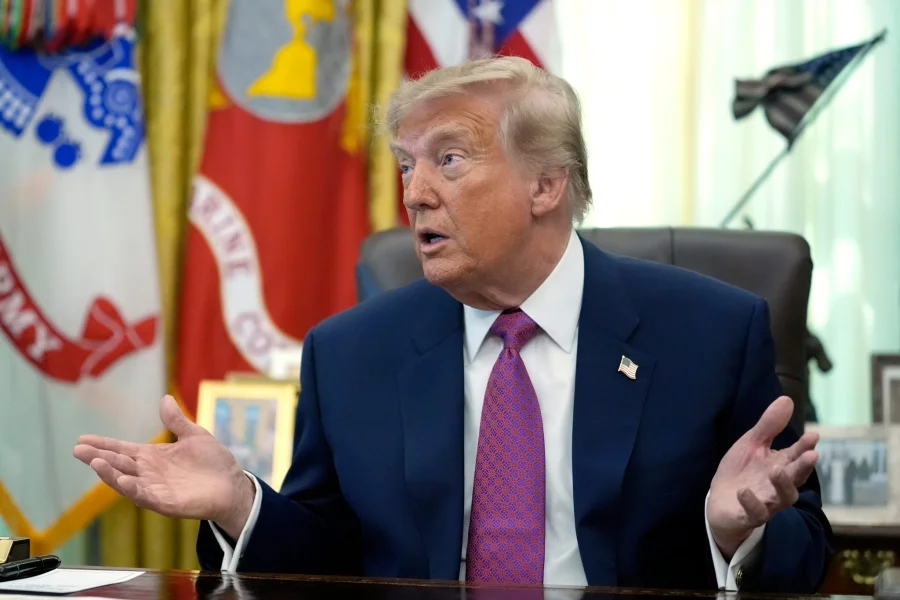
Six months ago, Americans were told this would be a "little excursion" — a matter of weeks. Today, the US-Iran war grinds on, and President Donald Trump is fielding questions he clearly doesn't want to answer.
When pressed about the blocked Strait of Hormuz and why China appears to be trading with Tehran without facing sanctions, Trump shot back: "I don't have to announce everything, do I?"
A war that outlasted its own promise
The conflict between the US, Israel, and Iran has now reached the six-month mark — a milestone that sits awkwardly against the president's earlier assurances of a quick, contained operation.
Trump has maintained that through bombs and blockade, Iran's leadership, military, and economy have been devastated. But the war isn't over, and the administration's own actions suggest a recognition that military force alone won't finish the job.
Why the Hormuz blockade question matters
The Strait of Hormuz is one of the world's most critical oil chokepoints. Roughly one-fifth of global petroleum consumption passes through it daily.
A blockade doesn't just hurt Iran — it threatens global energy prices, supply chains, and economies far beyond the region. That's why questions about it aren't academic. Indian consumers, like those elsewhere, could feel the ripple effects through fuel prices and shipping costs.
The China question that won't go away
China is Iran's largest oil buyer. If Washington is serious about "maximum pressure," Beijing would logically be the primary target.
Yet the administration's latest strategy — threatening to punish any country or entity that continues business with Tehran — appears to leave room for interpretation. Trump's bristling response suggests either a deliberate ambiguity or a policy that isn't fully settled.
What the shift to economic pressure really signals
This week, the administration said it would turn its focus to increasing economic pressure rather than military action. That's a significant strategic pivot.
Analysts would note that such a shift often indicates that military objectives have hit diminishing returns — or that the costs of continued escalation are becoming politically and economically untenable.
Who is affected by this six-month war
Beyond the immediate combatants, the conflict has ripple effects across global markets, energy security, and regional stability. Shipping insurance rates spike when Hormuz is threatened. Oil prices react to every headline. Countries that rely on Iranian crude — including India — must navigate a complex landscape of sanctions and supply alternatives.
For ordinary citizens, the war's length means sustained uncertainty at the petrol pump and in the broader economy.
What the administration is saying now
The White House's current line is that economic strangulation will "finish off" Iran where bombs haven't. The threat to punish third-party countries and entities doing business with Tehran is the centerpiece of this approach.
But Trump's own reluctance to detail the Hormuz blockade or China's status leaves significant questions unanswered — questions that markets and allies are watching closely.
Reading between the lines of Trump's retort
"I don't have to announce everything, do I?" can be read two ways. Either the administration has unannounced measures in play, or it's managing expectations by keeping options open.
In diplomatic terms, strategic ambiguity can be a tool. But it also fuels speculation and uncertainty — which, in a conflict of this scale, carries its own risks.
Confirmed facts vs what remains unclear
Confirmed: The US-Iran war has reached six months. Trump has claimed devastation of Iran's leadership, military, and economy. The administration is shifting toward economic pressure. Washington is threatening to punish entities doing business with Tehran.
Unclear: Whether the Hormuz blockade is fully enforced or partially symbolic. Whether China has any formal exemption from sanctions. What unannounced measures, if any, the administration is holding in reserve.
Risks and the balanced view
Supporters of the administration's approach argue that economic pressure is the least bloody path to ending the conflict. They point to sanctions as a proven tool in past negotiations.
Critics counter that a prolonged blockade risks global economic fallout, that sanction enforcement against a major power like China is impractical, and that strategic ambiguity at this stage could embolden rather than deter.
The wider pattern in US foreign policy
This moment fits a broader pattern of the administration's approach to foreign conflicts — aggressive initial posturing, followed by a recalibration when timelines slip. The shift from military to economic pressure mirrors similar pivots in other theaters.
It also reflects a recurring tension: the gap between campaign-style promises of quick victories and the messy reality of modern warfare and economic statecraft.
What should you watch for now
For those tracking this story, the key indicators are: any formal announcement on Hormuz shipping restrictions, China's continued crude purchases from Iran, and how Washington responds to third-party countries that keep trading with Tehran.
Oil price movements and shipping insurance rates will be the most immediate real-world signals of how the blockade is actually being enforced.
What happens next
The coming weeks will test whether economic pressure can achieve what military action hasn't. If China continues importing Iranian oil without consequence, the credibility of the sanctions threat weakens. If Washington follows through on punishing third-party traders, expect market volatility and diplomatic friction.
Trump's refusal to "announce everything" leaves room for either outcome.
Our Take
Six months into a war that was promised to last weeks, the administration's pivot to economic pressure reads less like a confident strategy and more like an acknowledgment that the military path has stalled. Trump's bristling at legitimate questions — about a blockade that affects global energy markets and a China policy that affects global trade — doesn't inspire confidence that a clear plan exists.
The "I don't have to announce everything" line may play well with supporters who value unpredictability. But for markets, allies, and citizens facing higher prices and prolonged uncertainty, it sounds less like strategic genius and more like improvisation.
Frequently Asked Questions
Why did Trump bristle at questions about Hormuz and China?
Trump responded sharply when reporters asked about the blocked Strait of Hormuz and why China appears to be trading with Iran without facing sanctions. His retort — "I don't have to announce everything, do I?" — suggested he believes some measures should remain undisclosed.
What is the current status of the US-Iran war?
The conflict has reached six months, far beyond Trump's initial promise of a "little excursion" lasting weeks. The administration is now shifting focus from military action to economic pressure, threatening to punish countries and entities that continue business with Tehran.
Why is the Strait of Hormuz blockade significant?
The Strait of Hormuz is a critical oil chokepoint through which roughly one-fifth of global petroleum passes. A blockade threatens global energy prices and supply chains, affecting economies worldwide, including India's.
Is China exempt from Iran sanctions?
There is no confirmed formal exemption for China. Trump's evasive response left the question open, and it remains unclear whether Washington will enforce sanctions against Beijing, which is Iran's largest oil buyer.