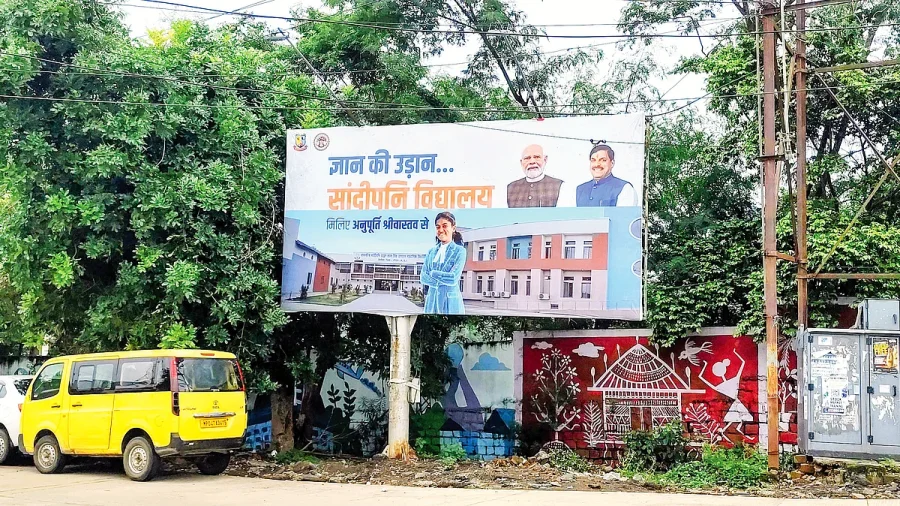
When Madhya Pradesh announced its Sandipani school project in 2025, the promise was grand: Rs 13,000 crore to bring "high-quality" education to government schools. Smart classrooms, robotics labs, libraries, even gyms. But on the ground, the picture is far more complicated — and for thousands of students in rural districts, the project has become a source of disruption rather than opportunity.
A showcase project with an uneven footprint
The Sandipani initiative was designed to modernise a select number of government schools. In urban centres like Bhopal, Indore and Gwalior, the results are visible — modern infrastructure, computer labs, free bus services and extracurricular facilities that rival private institutions.
But the majority of government schools continue to languish. The gap between the showcase urban campuses and the reality in rural Madhya Pradesh is stark, raising questions about the project's priorities and execution.
When merging schools disrupts education
The core mechanism of the Sandipani project involves merging 15 to 30 existing government schools into a single larger institution. In theory, this consolidation allows for better resources and facilities. In practice, it has created chaos in districts like Balaghat, Betul and Jhabua.
Many of these merged Sandipani schools remain incomplete. Students who once attended neighbourhood schools now face long commutes, overcrowded temporary arrangements, or simply no functional campus at all. For thousands of children, the promise of better education has translated into disrupted schooling.
The Ujjain protest: a tipping point
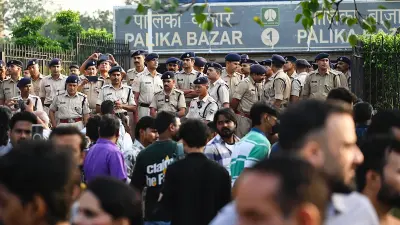
On 14 August, more than 300 students of an all-girls' school in Ujjain's Sarafa area gathered outside their campus. The protest was a rare public display of discontent over the Sandipani project's execution.
While the specific demands of the students remain part of the ongoing reporting, the gathering itself signals a growing frustration — not with the idea of modernising schools, but with how the project is being implemented on the ground.
What the Rs 13,000 crore was supposed to achieve
The scale of the investment is unprecedented for government school education in the state. The Sandipani project was meant to create model schools that would demonstrate what government education could look like with adequate funding and vision.
Urban campuses have delivered on parts of this vision. But the project's design — concentrating resources in a handful of schools while merging and closing others — has created winners and losers. The students in incomplete rural campuses are the ones paying the price.
Official claims versus ground reality
State officials have consistently presented the Sandipani project as a success story, highlighting the modern facilities in urban schools. However, ground reports from Balaghat, Betul and Jhabua paint a different picture.
The disconnect between official narratives and on-ground conditions is a recurring theme in large-scale infrastructure projects. When the focus is on showcasing success rather than ensuring uniform delivery, the most vulnerable beneficiaries — rural students — are often the last to be served.
Why this project matters beyond Madhya Pradesh
The Sandipani experiment is being watched across India as a potential model for government school reform. If it succeeds, it could inspire similar consolidation-driven modernisation drives in other states.
But the current mixed results offer a cautionary tale. Merging schools without completing infrastructure first, without addressing transportation needs, and without ensuring quality teaching at the new campuses, can do more harm than good.
Confirmed facts versus what remains unclear
What is verified: The Sandipani project was launched in 2025 with Rs 13,000 crore in funding. Urban schools in Bhopal, Indore and Gwalior have received modern facilities. Schools in Balaghat, Betul and Jhabua remain incomplete. Over 300 students protested in Ujjain on 14 August.
What remains unclear: The specific demands of the Ujjain protesters, the exact number of incomplete Sandipani schools across the state, and the timeline for completing rural campuses. Official responses to the Ujjain protest have not been fully detailed in available reporting.
The core flaw: infrastructure before consolidation
The Sandipani project's fundamental design flaw appears to be sequencing. Merging schools before completing the new campuses creates an immediate disruption — students lose their existing schools before the promised replacement is ready.
A more cautious approach would have been to complete the new Sandipani campuses first, then merge schools only when the new facilities were fully operational. This would have minimised disruption while still achieving the consolidation benefits.
What parents and students should know
For families affected by incomplete Sandipani schools, the immediate concern is continuity of education. Parents should document any disruption in schooling and raise concerns through parent-teacher associations and local education officers.
For those considering government schools in Madhya Pradesh, it is worth visiting the specific campus to assess its actual condition rather than relying on promotional material about the project's urban successes.
What happens next for the Sandipani project
The Ujjain protest on 14 August may force the state government to address the rural implementation gaps. Whether this leads to accelerated completion of pending campuses, better communication with affected families, or a rethink of the merger strategy, remains to be seen.
What is clear is that the project's reputation now depends on how quickly and effectively the state addresses the rural shortfalls. The urban showcase alone cannot sustain the narrative of success.
Our Take
The Sandipani school project is a textbook example of how large-scale education reform can go wrong when execution lags behind ambition. The vision — modern, well-equipped government schools — is sound. But the implementation has created a two-tier system: gleaming urban campuses and incomplete rural shells.
The lesson for other states is simple: infrastructure first, consolidation second. Merging schools before the new campuses are ready is not reform; it is disruption dressed up as progress. The students of Balaghat, Betul, Jhabua and Ujjain deserve better than being collateral damage in a showcase project.
Frequently Asked Questions
What is the Sandipani school project in Madhya Pradesh?
The Sandipani school project is a Rs 13,000 crore initiative launched in 2025 by the Madhya Pradesh government to modernise select government schools with smart classrooms, computer and robotics labs, libraries, gyms and free bus services. It involves merging 15 to 30 existing government schools into larger consolidated campuses.
Why are Sandipani schools facing disruption in rural districts?
In districts like Balaghat, Betul and Jhabua, many Sandipani schools remain incomplete. Because the project merges existing schools into new campuses before construction is finished, thousands of students have been left without functional schools, disrupting their education.
What happened at the Ujjain girls' school on 14 August?
More than 300 students of an all-girls' school in Ujjain's Sarafa area gathered outside their campus on 14 August, in a protest related to the Sandipani project's execution. The specific demands were part of ongoing reporting at the time.
Are urban Sandipani schools better than rural ones?
Yes, based on available reporting. Urban Sandipani schools in Bhopal, Indore and Gwalior have received smart classrooms, robotics labs, libraries and free bus services. Rural schools in districts like Balaghat, Betul and Jhabua remain incomplete, creating a significant gap in delivery.