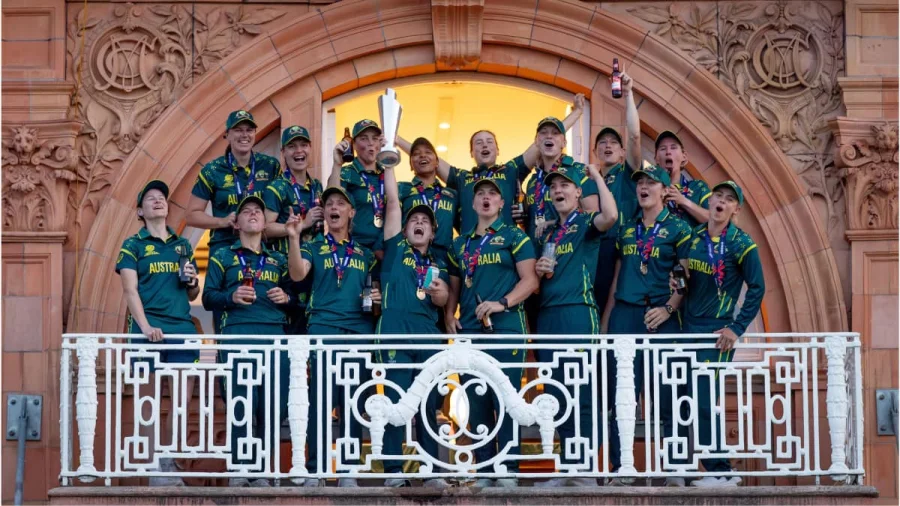
Australia have done it again. In a final that felt more like a coronation than a contest, the Southern Stars demolished England by seven wickets at a sold-out Lord's on Sunday to claim a record-extending seventh ICC Women's T20 World Cup title. The victory was emphatic, clinical, and utterly dominant — a statement that Australian women's cricket remains the gold standard.
Mooney and Litchfield Script a Flawless Chase
Chasing 151 for victory, Australia needed a strong start. They got more than that. Beth Mooney, the tournament's most consistent batter, played an innings of controlled aggression, scoring 64 off just 48 balls. Her partnership with the young Phoebe Litchfield, who made a fluent 48 off 38, effectively killed the contest before England could even think of a fightback.
The pair added 98 runs for the second wicket, with Litchfield's crisp drives and Mooney's clever placement leaving the English bowlers searching for answers. Australia reached the target with 17 balls to spare — a margin that reflected their complete control.
Why This Win Feels Different: Record Seventh Title
This was not just another trophy. It was history. Australia's seventh Women's T20 World Cup title moves them further ahead of England (one title) and the West Indies (one title) in the all-time standings. For a team that has dominated women's cricket for over a decade, this victory cements their legacy as the most successful side in the format's history.
For Indian fans, the achievement is a reminder of the gap Australia has built — a gap that teams like India are still trying to close. The Southern Stars have now won four of the last five T20 World Cups, a run of dominance unmatched in women's sport.
Sophie Molineux: A Captain's First ICC Trophy
For Sophie Molineux, this final was personal. Taking over the captaincy midway through the tournament cycle, she led from the front with both bat and ball. Her tactical acumen — rotating bowlers smartly, setting aggressive fields — kept England under pressure throughout the chase. Lifting the trophy at Lord's, she became the first Australian captain to do so in a Women's T20 World Cup final at the historic venue.
"This group is special," Molineux said after the match. "To do it at Lord's, in front of this crowd, against England — it doesn't get better than this."
England's Missed Opportunity at Home
For England, the final was a bitter pill. Playing at home, with a passionate Lord's crowd behind them, they posted a competitive 150 — a total that should have tested Australia. But the bowling attack, led by Sophie Ecclestone, failed to find early breakthroughs. The fielding, usually a strength, had moments of sloppiness that proved costly.
England captain Heather Knight admitted her side was outplayed. "We knew we had to be at our best to beat them, and we weren't. Australia were simply too good today."
How Australia Built Their Dominance: A Decade of Excellence
This victory did not happen overnight. Australia's women's team has been systematically building a winning culture since their first T20 World Cup win in 2010. Investment in grassroots cricket, a strong domestic structure (the Women's Big Bash League), and a focus on athleticism and mental toughness have created a conveyor belt of talent.
Players like Meg Lanning (who retired last year), Ellyse Perry, and now Molineux have ensured that the team never rebuilds — it reloads. The current squad blends experienced match-winners with fearless youngsters like Litchfield, who is just 23.
What This Means for Women's Cricket Globally
Australia's dominance raises important questions for the sport. While their success is admirable, it also highlights a competitive imbalance. No other team has won more than one T20 World Cup. The gap between Australia and the rest — including India, England, and South Africa — remains significant.
For the ICC and cricket boards worldwide, the challenge is clear: how to close the gap. More bilateral series, better domestic structures, and increased investment in women's cricket outside Australia are urgent needs.
Confirmed Facts vs What Remains Unclear
Confirmed Facts: Australia won by seven wickets. Beth Mooney scored 64 off 48 balls. Phoebe Litchfield scored 48 off 38. Sophie Molineux captained Australia to her first ICC trophy. The final was played at Lord's in front of a sold-out crowd.
What Remains Unclear: The exact attendance figure at Lord's has not been officially confirmed. The full breakdown of player-of-the-match and player-of-the-tournament awards is yet to be announced by the ICC.
Australia's Moat: Why They Keep Winning
Australia's sustained success is built on a powerful combination: a world-class domestic league (WBBL) that develops talent, a strong cricket board (Cricket Australia) that prioritizes women's cricket, and a winning culture that demands excellence. The team's ability to seamlessly transition from legends like Lanning to new stars like Litchfield shows a system that works. This is not luck — it is institutional strength.
Risks and Balanced View: Is Dominance Healthy for the Sport?
While Australia's achievement is remarkable, some critics argue that one-sided dominance hurts the sport's growth. Fans want close contests, not predictable outcomes. The ICC must balance celebrating Australia's excellence with ensuring other teams get the resources and opportunities to compete. Without that balance, women's T20 cricket risks becoming a one-team show.
Wider Trend: The Rise of Women's Cricket as a Global Sport
This final was played at a sold-out Lord's — a sign of women's cricket's growing popularity. Broadcast numbers, sponsorship deals, and fan engagement have all surged in recent years. Australia's dominance, while frustrating for rivals, also provides a benchmark. Other teams now know exactly what it takes to be the best.
What Indian Fans Can Learn from Australia's Success
For Indian cricket fans, Australia's victory offers lessons. The BCCI's investment in the Women's Premier League (WPL) is a step in the right direction, but more is needed: better grassroots scouting, longer domestic seasons, and a focus on athletic development. India's women's team has the talent — they now need the system to match Australia's.
Future Outlook: Can Anyone Stop Australia?
The next Women's T20 World Cup is scheduled for 2028. By then, Australia's current stars may have retired, but the pipeline of talent suggests they will remain contenders. England, India, and South Africa will need to accelerate their development to close the gap. For now, Australia's reign continues — and there is no sign of it ending soon.
Our Take
Australia's seventh title is not just a victory — it is a statement. It says that excellence, when backed by investment and culture, becomes a habit. For the rest of the cricketing world, the message is clear: catch up, or be left behind. This was history at Lord's, but it also felt like a warning.
Frequently Asked Questions
How many Women's T20 World Cups has Australia won?
Australia has won seven Women's T20 World Cups, the most of any team. They won in 2010, 2012, 2014, 2018, 2020, 2023, and 2026.
Who was the player of the match in the 2026 final?
Beth Mooney was the standout performer, scoring 64 off 48 balls. The official player-of-the-match award is expected to be announced by the ICC.
Where was the 2026 Women's T20 World Cup final played?
The final was played at Lord's Cricket Ground in London, England, in front of a sold-out crowd.
Who captained Australia in the 2026 final?
Sophie Molineux captained Australia to victory, winning her first ICC trophy as captain.