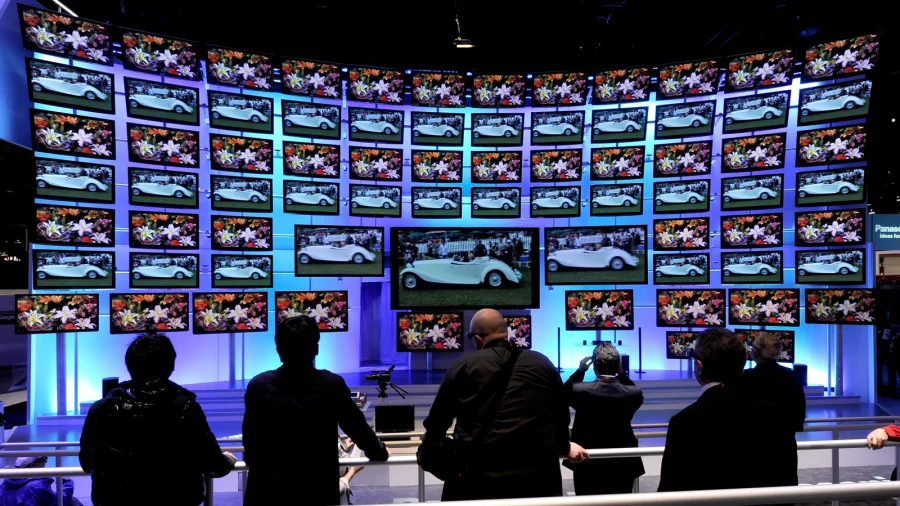
Remember when 3D TVs were supposed to be the next big thing? For a few years, every electronics store had them on display, promising to bring the cinema experience into your living room. But instead of a revolution, we got a headache. The glasses were clunky, the picture was dim, and you had to sit perfectly still to see the effect. And then there were the movies — rushed, dark, and often just plain bad. It was a perfect storm of inconvenience and disappointment that killed the format before it ever really had a chance.
The Home Entertainment Hassle That Killed the Dream
The core problem was simple: 3D TVs were a pain to use. Active shutter glasses needed batteries, synced wirelessly, and flickered noticeably. They were heavy, expensive, and easy to lose. If you sat at the wrong angle, the effect broke. If someone walked in front of the TV, the image doubled. For a family watching a movie together, it was a logistical nightmare. Convenience is king for home entertainment, and 3D TVs proved to be anything but.
Hollywood’s Greedy Gamble: Bad 3D Movies for Higher Prices
While the hardware was flawed, Hollywood made things worse. Studios saw 3D as a way to charge premium ticket prices — often $3 to $5 more per ticket. To cash in, they rushed out post-production 3D conversions of films never intended for the format. These "fake 3D" movies were dark, blurry, and gave audiences headaches. Films like Clash of the Titans and Alice in Wonderland became infamous for their poor 3D quality. Instead of an immersive experience, viewers got a dim, nauseating mess.
How the 3D Hype Built and Then Collapsed
The 3D TV boom peaked around 2010–2013, driven by James Cameron’s Avatar (2009), which was a genuine 3D spectacle. Manufacturers like Samsung, LG, and Sony bet big, releasing dozens of 3D-capable models. But consumer adoption never followed. By 2016, sales had plummeted. Samsung stopped making 3D TVs in 2016; LG and Sony followed by 2017. The format had gone from "next big thing" to "forgotten feature" in less than a decade.
Why Real People Rejected 3D at Home
For the average family, 3D TV was a solution to a problem nobody had. People didn't want to wear glasses to watch TV. They didn't want to fight over who got the best seat. They didn't want to explain to guests how to use the system. The technology added complexity without adding enough value. A 2013 survey by the NPD Group found that only 12% of TV buyers considered 3D an important feature. Most just wanted a good picture, smart features, and easy use.
What Hollywood and Manufacturers Said — and Didn’t Say
Manufacturers blamed the lack of content. Hollywood blamed the hardware. Both were right, but neither fixed the core issues. Studios continued to release 3D Blu-rays, but the selection was small and often poor quality. Manufacturers never solved the glasses problem or the brightness issue. The industry never agreed on a standard, leaving consumers confused about which glasses worked with which TV. It was a classic case of an industry pushing a technology without understanding what people actually wanted.
The Deeper Problem: 3D Was a Gimmick, Not an Improvement
At its heart, 3D TV failed because it didn't make the viewing experience better — it made it worse. The glasses reduced brightness by about 50%. The active shutter technology caused visible flicker. The 3D effect was often subtle or nonexistent in poorly converted content. Compare this to 4K or HDR, which genuinely improve picture quality without adding inconvenience. 3D was a novelty, not an upgrade, and novelties wear off fast.
Confirmed Facts vs What Remains Unclear
Confirmed: 3D TVs required active shutter glasses that reduced brightness and caused eye strain. Hollywood released multiple low-quality post-production 3D conversions. Major manufacturers discontinued 3D TVs by 2017. Unclear: Whether a different approach — like passive glasses or glasses-free 3D — could have succeeded. Some argue that better content standards might have saved the format, but no evidence supports this.
The Technology That Could Have Saved 3D — But Didn’t
Glasses-free 3D technology existed but was never perfected for home use. Nintendo’s 3DS handheld used a parallax barrier that worked for a single viewer but had a narrow sweet spot. LG tried passive polarized glasses, which were lighter and cheaper, but halved the vertical resolution. Neither approach solved the fundamental problem: 3D added complexity without enough benefit. The technology simply wasn't ready for the mass market.
Risks and Balanced View: Was 3D Always Doomed?
Not everyone agrees 3D was doomed. Some industry veterans argue that better content — more films shot natively in 3D, not converted — could have built a market. Others point to the success of 3D in premium cinema formats like IMAX, where the experience is genuinely immersive. But the home market is different. The cost, inconvenience, and lack of compelling content created a cycle that was impossible to break. Even Avatar sequels couldn't revive interest in home 3D.
The Bigger Pattern: Why Gimmick Technologies Fail
The 3D TV failure fits a pattern of tech that prioritizes novelty over usability. Curved TVs, gesture-controlled interfaces, and early VR headsets all faced similar problems: they solved problems people didn't have, added complexity, and required behavior change. Successful technologies — like streaming, voice assistants, and high-resolution displays — make existing experiences easier or better without asking users to adapt. 3D asked too much and delivered too little.
What It Means for You: Lessons for Future Tech
For consumers, the 3D TV story is a cautionary tale. Before buying into a new display technology, ask: Does it make the experience better without adding hassle? Does it solve a real problem? Is there enough content to justify the cost? For investors and tech companies, the lesson is clear: usability and content matter more than specs. A technology that requires users to change their behavior will almost always fail.
What’s Next for 3D and Immersive Entertainment
3D as a home format is dead, but the concept of immersive entertainment lives on. VR headsets like Meta Quest and Apple Vision Pro offer true 3D experiences without the glasses problem — but they face their own usability challenges. Light-field displays and holographic technologies are in development, but remain years away from mass adoption. For now, 3D survives only in premium cinema, where the controlled environment makes it work. The home 3D dream is over.
Our Take
The failure of 3D TVs is a textbook case of an industry misreading its audience. Manufacturers and studios saw a revenue opportunity and pushed a technology that consumers never asked for. The result was a billion-dollar flop that wasted investment, disappointed customers, and damaged trust in "next-gen" promises. The real tragedy is that the core idea — immersive, depth-enhanced viewing — wasn't bad. It was the execution that failed. And until the industry learns to prioritize user experience over profit, we'll keep seeing similar failures.
Frequently Asked Questions
Why did 3D TVs fail so quickly?
3D TVs failed because they were inconvenient to use — requiring special glasses, perfect seating positions, and causing eye strain — combined with a lack of high-quality 3D content. Hollywood's rush to release poor 3D conversions further killed consumer interest.
Are 3D TVs still being made?
No. Major manufacturers like Samsung, LG, and Sony stopped producing 3D TVs by 2017. The format is no longer supported in new models, and 3D Blu-ray players are also being phased out.
Did any 3D movies actually look good?
Yes. Films shot natively in 3D, like Avatar (2009), Gravity (2013), and Life of Pi (2012), delivered impressive depth and immersion. But these were exceptions. Most 3D films were rushed post-production conversions that looked dark and blurry.
Could 3D TV ever make a comeback?
Unlikely. The home entertainment market has moved toward 4K, HDR, and streaming — technologies that improve picture quality without requiring special glasses or behavior changes. Glasses-free 3D technology exists but remains too expensive and limited for mass adoption.