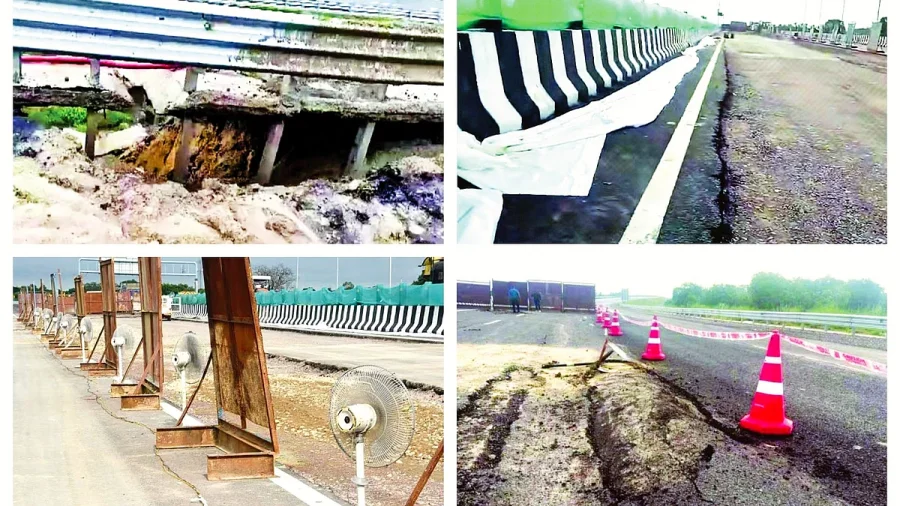
Thirteen days. That is all it took for a Rs 4,300 crore showpiece infrastructure project to begin falling apart. The Lucknow-Kanpur Expressway, inaugurated with great fanfare on 13 July by three senior BJP leaders, was damaged by 26 July — cracks, subsidence, and peeled asphalt now mark the road that was meant to symbolise progress.
A grand launch, then a rapid unravelling
The 63-kilometre expressway was inaugurated by UP Chief Minister Yogi Adityanath, Defence Minister Rajnath Singh, and Road Transport and Highways Minister Nitin Gadkari. The ceremony projected the project as a milestone for connectivity between two of Uttar Pradesh's largest cities.
Within two weeks, heavy rainfall exposed what many now suspect was hasty or substandard construction. Water peeled away the asphalt layer, and surface subsidence followed in multiple stretches.
Why the rapid failure matters to every commuter
For ordinary road users, this is not just a bureaucratic embarrassment. The expressway was expected to cut travel time between Lucknow and Kanpur significantly. Now, traffic is restricted to a single carriageway in the worst-affected areas, creating bottlenecks and safety concerns.
Every taxpayer funded this project. When a road fails within days of opening, public money and public safety are both called into question.
Timeline of a fast-moving infrastructure failure
13 July: The expressway is inaugurated with high-profile political presence.
26 July: Cracks and subsidence are reported after heavy rainfall. Videos on social media show the extent of damage, with heavy machinery deployed for repairs.
NHAI responds: Toll collection is suspended until repairs are completed. The construction firm PNC Infratech is suspended, along with three project engineers.
Who is affected by the expressway damage
Daily commuters between Lucknow and Kanpur face the most immediate impact — restricted lanes, slower journeys, and uncertainty about when full service will resume. Truckers and logistics operators who rely on the route for freight movement also face delays.
The reputational damage extends to the public agencies involved. When a flagship project fails this quickly, public trust in infrastructure delivery takes a hit.
NHAI's response and corrective actions
NHAI moved swiftly on some fronts. Toll suspension was announced until repairs are done. The contractor PNC Infratech was suspended, and three project engineers were taken off the job.
Pedestal fans were brought in to dry wet patches — a striking image of high-tech infrastructure being dried with industrial fans. Heavy machinery remains at work, and the repair process is ongoing.
What the cracks reveal about construction oversight
The core question is simple: how does a newly inaugurated expressway develop structural damage in 13 days? Heavy rainfall is a natural factor, but infrastructure is designed to withstand weather. The failure points to possible issues with drainage, asphalt quality, or the pace of construction.
Experts would argue that proper compaction, drainage design, and quality checks should have prevented this scale of damage. The suspension of the contractor and engineers suggests NHAI itself believes there was fault.
Confirmed facts versus what remains unclear
What is confirmed: The expressway was inaugurated on 13 July. Cracks and subsidence appeared by 26 July. NHAI suspended tolls, suspended PNC Infratech, and removed three engineers. Traffic is restricted in damaged stretches.
What remains unclear: The full extent of structural damage, the root cause — whether design flaw, material quality, or weather — and whether any legal or financial penalties will follow. NHAI has not yet released a detailed technical investigation report.
Why PNC Infratech's role matters
PNC Infratech is one of India's established infrastructure firms, with experience in highway projects. Its suspension from this project is a significant reputational blow. The company's response and any internal investigation will be closely watched by the infrastructure sector.
For the industry, this case is a reminder that project completion speed cannot come at the cost of quality assurance.
Risks and the balanced view
Critics will point to this as evidence of rushed infrastructure delivery prioritising inauguration dates over durability. Supporters of the government may argue that NHAI acted responsibly by suspending tolls and taking corrective action quickly.
The balanced view: swift corrective action is welcome, but the damage itself should never have happened. Accountability must go beyond suspension — it must include a transparent investigation and, if warranted, penalties.
A wider pattern in Indian infrastructure
This is not an isolated incident. Indian highways and expressways have faced quality concerns before, particularly when projects are completed under tight deadlines. The tension between political timelines and engineering timelines is a recurring theme.
The Lucknow-Kanpur case may prompt renewed scrutiny of how expressway projects are approved, monitored, and handed over.
What commuters and taxpayers should do now
If you use this expressway, expect delays and restricted lanes until repairs are complete. Check NHAI updates before travelling. For taxpayers, this is a moment to demand transparency — ask for the technical investigation report to be made public.
For those following the story, the key is to track whether NHAI follows through on its corrective actions and whether any financial penalty is imposed on the contractor.
Future outlook for the expressway
Repairs are underway, but the timeline for full restoration is not yet clear. The expressway will likely reopen fully once NHAI is satisfied with the fixes. However, the long-term durability of the repaired stretches remains to be proven.
The bigger question is whether this incident forces changes in how Indian expressways are built and inspected.
Our Take
The Lucknow-Kanpur Expressway failure is a warning sign, not just for one road but for India's infrastructure ambitions. A project that fails within 13 days of inauguration raises fundamental questions about quality control, oversight, and the pressure to meet political deadlines.
NHAI's quick corrective action is commendable, but it does not erase the underlying concern. The public deserves a full, transparent investigation — not just suspensions and temporary fixes. Infrastructure is built to last decades, not days.
Frequently Asked Questions
Why did the Lucknow-Kanpur Expressway develop cracks?
Heavy rainfall peeled away the asphalt and caused surface subsidence within 13 days of the expressway's inauguration on 13 July. The exact root cause — whether drainage design, material quality, or construction pace — has not yet been officially confirmed by NHAI.
What action has NHAI taken after the expressway damage?
NHAI suspended toll collection until repairs are complete, suspended contractor PNC Infratech, and removed three project engineers. Heavy machinery is working on repairs, and traffic is restricted to a single carriageway in the worst-affected stretches.
Is the Lucknow-Kanpur Expressway safe to use now?
Traffic is restricted in damaged areas, and repairs are ongoing. Commuters should expect delays and follow NHAI updates before travelling. Full safety clearance will depend on the completion and verification of repair work.
Who is responsible for the expressway's early failure?
NHAI has suspended contractor PNC Infratech and three project engineers, indicating they are being held accountable. A full technical investigation is needed to determine the precise cause and any further penalties.