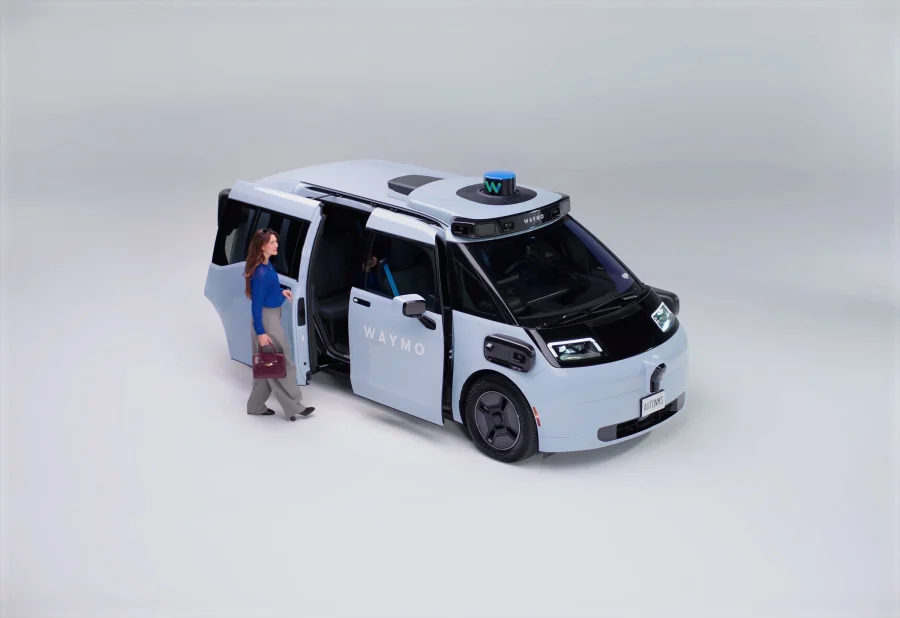
A new player is about to join the autonomous vehicle landscape, and it’s arriving in a distinctive shade of pale blue. Waymo’s latest robotaxi, named “Ojai,” is set to begin picking up members of the public in California and Arizona within the next few weeks. But what makes this rollout particularly notable isn’t just the color — it’s where the vehicles are made.
The Ojai robotaxis are manufactured in China by Geely, a major Chinese automaker. This marks a significant shift in Waymo’s fleet strategy, introducing a Chinese-made vehicle into the heart of the American autonomous ride-hailing market. For passengers, the experience may feel familiar, but the implications are far-reaching.
What Is the Waymo Ojai Robotaxi?
The Ojai is a pale-blue, fully autonomous vehicle designed specifically for ride-hailing. It joins Waymo’s existing fleet, which has primarily relied on vehicles from American and European manufacturers like Jaguar and Chrysler. The choice of Geely as a manufacturing partner signals a new chapter in Waymo’s supply chain and global strategy.
According to reports, the vehicles are already being prepared for deployment. The first passengers will be picked up in select areas of California and Arizona, where Waymo already operates its autonomous ride-hailing service. The timeline is tight — within weeks, these robotaxis will be on public roads.
Why This Matters Right Now
The introduction of a Chinese-made robotaxi into the US market is not just a business decision — it carries political, economic, and regulatory weight. In an era of heightened trade tensions and national security concerns around technology, the arrival of Geely-built vehicles in a high-profile autonomous fleet raises questions about supply chain dependencies, data security, and regulatory oversight.
For everyday riders, the immediate impact is simple: more robotaxis on the road, potentially lower wait times, and a new vehicle to experience. But for industry watchers, this is a signal that Waymo is diversifying its manufacturing base, reducing reliance on traditional automakers, and potentially lowering costs.
How the Situation Developed
Waymo has been testing and deploying autonomous vehicles for years, primarily using modified versions of existing cars. The partnership with Geely was first hinted at in earlier reports, but the official rollout of the Ojai name and the pale-blue design marks a concrete step forward.
The vehicles are expected to operate in the same service areas where Waymo already offers rides. California and Arizona have been key testing grounds for autonomous vehicle technology, with relatively favorable regulatory environments compared to other states.
Who Is Affected and What Officials Are Saying
Passengers in California and Arizona will be the first to experience the Ojai. For them, the change may be subtle — a different vehicle color and interior. But for regulators, the implications are more complex. The use of Chinese-manufactured vehicles in a service that collects vast amounts of data about passenger movements and urban environments could attract scrutiny.
Waymo has not publicly commented on the specific regulatory approvals required for the Ojai deployment. However, the company has a track record of working closely with state and federal authorities to ensure compliance with safety and data privacy standards.
What We Know So Far — and What Remains Unclear
What is confirmed: The Ojai robotaxis are pale blue, made by Geely in China, and will begin picking up passengers in California and Arizona in the next few weeks.
What remains unclear: The exact number of vehicles being deployed, the specific cities or neighborhoods where they will operate, the pricing structure, and whether any special data handling protocols are in place due to the Chinese manufacturing origin.
Also unclear is how the vehicles will be received by the public. While Waymo has built a generally positive reputation for safety and reliability, the introduction of a Chinese-made vehicle could become a talking point in an increasingly polarized political environment.
Risks, Concerns, and the Balanced View
From a risk perspective, the primary concerns revolve around data security and geopolitical tensions. Autonomous vehicles collect enormous amounts of data — video feeds, sensor readings, location history, and passenger behavior. If that data is accessible to a foreign manufacturer, it could raise national security questions.
On the other hand, Waymo is a US-based company with a strong track record of data protection. The company has stated that it controls all data collected by its vehicles. The Geely partnership is likely limited to vehicle manufacturing, not data processing or software development.
There is also the question of trade policy. Chinese-made vehicles face potential tariffs or restrictions, especially in the current political climate. Waymo’s ability to navigate these challenges will be closely watched.
Why Similar Trends Are Increasing
Automakers and tech companies are increasingly looking to global supply chains to reduce costs and accelerate production. Geely is not the only Chinese manufacturer entering the autonomous vehicle space, but its partnership with Waymo is one of the most high-profile examples.
The trend reflects a broader shift: autonomous vehicle technology is becoming commoditized, and the competitive advantage is moving from who builds the best sensors to who can deploy the most vehicles at the lowest cost. Chinese manufacturers, with their scale and efficiency, are well-positioned to play a major role.
- Geely is one of China’s largest automakers and has invested heavily in electric and autonomous vehicle technology.
- Waymo’s existing fleet includes vehicles from Jaguar (I-PACE) and Chrysler (Pacifica).
- The Ojai name appears to be a new brand specific to Waymo’s Geely-built fleet.
"The pale-blue Ojai vehicles will start picking up members of the public in California and Arizona in the next few weeks." — Original report
What Readers, Users, or Investors Should Know Now
If you live in California or Arizona and use Waymo, you may soon see a pale-blue robotaxi pull up instead of the usual white or black vehicle. The experience should be similar, but the vehicle itself is new.
For investors, this move signals Waymo’s commitment to scaling its fleet rapidly. The partnership with Geely could reduce vehicle costs and allow for faster expansion into new markets. However, the geopolitical risks should not be ignored.
For policymakers, this is a reminder that autonomous vehicle technology is global, and supply chain decisions have national security implications. The debate over Chinese-made technology in critical infrastructure is unlikely to go away.
What Could Happen Next
If the Ojai rollout is successful, Waymo may expand the fleet to other cities and states. The company could also deepen its partnership with Geely, potentially co-developing future vehicles specifically designed for autonomous operation.
However, regulatory pushback is possible. If concerns about data security or trade policy escalate, Waymo may face restrictions on the use of Chinese-made vehicles in its fleet. The company will need to navigate these challenges carefully.
In the near term, expect to see more pale-blue robotaxis on the roads of California and Arizona. The autonomous vehicle revolution is accelerating, and the Ojai is the latest — and most globally connected — vehicle to join the fleet.
Our Take: Why This Story Matters Beyond One Incident
The Waymo Ojai is more than just a new robotaxi. It is a symbol of how globalized the autonomous vehicle industry has become. A US-based company, using a Chinese-manufactured vehicle, deploying in American cities — this is the new reality of transportation technology.
The story also highlights the tension between innovation and regulation. Waymo is moving fast, but the political and regulatory environment is catching up. How this plays out could set precedents for the entire autonomous vehicle industry.
For now, the Ojai is coming. Whether it becomes a common sight or a flashpoint in a larger debate remains to be seen.
FAQs
What is the Waymo Ojai robotaxi?
The Waymo Ojai is a new pale-blue autonomous vehicle manufactured by Chinese automaker Geely. It will be used in Waymo’s ride-hailing service in California and Arizona.
When will the Waymo Ojai start picking up passengers?
The Ojai robotaxis are expected to begin picking up members of the public in California and Arizona within the next few weeks.
Is the Waymo Ojai safe?
Waymo has a strong safety record with its autonomous vehicles. The Ojai is equipped with the same sensor and software systems as other Waymo vehicles. The company works closely with regulators to ensure compliance with safety standards.
Why is Waymo using a Chinese-made vehicle?
Waymo partnered with Geely to manufacture the Ojai as part of its strategy to diversify its supply chain, reduce costs, and scale its fleet more rapidly. Geely is a major global automaker with experience in electric and autonomous vehicle production.