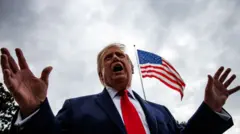
Eighty-two years after Allied soldiers stormed the beaches of Normandy to liberate Europe from Nazi occupation, US Defence Secretary Pete Hegseth stood on the same shores and delivered a speech that has left European allies stunned. Instead of honouring the fallen with a message of unity, Hegseth used the solemn anniversary to accuse European nations of allowing an "invasion" on their own soil — this time, through migration.
What Hegseth said at the D-Day ceremony
Speaking at a commemorative event in Normandy on Saturday, Hegseth said the freedoms won by Allied troops in 1944 were now under threat from within. "The beaches that were once stormed by liberators are now being stormed by dangerous ideologies and unchecked migration," he told the audience, which included veterans, French officials, and military dignitaries. He warned that Europe's open-border policies were creating a "slow-motion invasion" that could undo the sacrifices of the Second World War.
Why the comparison sparked outrage
Historians and European leaders were quick to condemn the analogy. The D-Day landings, which claimed over 10,000 Allied lives on June 6, 1944, are widely regarded as one of the most heroic and costly military operations in history. Comparing that sacrifice to contemporary migration flows — which involve civilians fleeing war, poverty, and climate change — was seen by many as deeply disrespectful. "This is not just a political disagreement; it is a historical distortion," said a French government spokesperson.
How the speech unfolded
Hegseth's remarks were part of a broader address that touched on NATO's role, the war in Ukraine, and the need for European nations to increase defence spending. But it was the migration section that dominated headlines. According to pool reports from the event, several attendees appeared visibly uncomfortable as Hegseth escalated his rhetoric. Some veterans were seen shaking their heads. The speech was pre-approved by the Pentagon, according to a defence official who spoke on condition of anonymity.
Who is affected by this controversy
The remarks have immediate diplomatic consequences. European nations that have been struggling with migration — including Italy, Greece, and Spain — now find themselves at the centre of a transatlantic row. For the millions of migrants and refugees living in Europe, the language of "invasion" carries dangerous echoes of far-right rhetoric that has fuelled violence and discrimination. Human rights groups warned that such framing could embolden anti-immigrant attacks.
Official reactions from Europe and the US
The French government issued a carefully worded statement expressing "surprise and disappointment" over the comparison. Germany's foreign ministry called the remarks "historically reckless and unhelpful for transatlantic cooperation." In the US, the White House declined to comment directly, but a senior administration official told reporters that Hegseth's speech "reflected the president's views on border security." The Pentagon confirmed the speech was cleared through standard channels.
What Hegseth's words really mean
Analysts say the speech is part of a broader strategy by the current US administration to pressure European allies into adopting stricter immigration controls. By invoking D-Day, Hegseth was attempting to frame migration as an existential threat — not just a policy challenge. "This is a deliberate rhetorical escalation," said Dr. Elena Marchetti, a professor of international relations at Sciences Po in Paris. "It's designed to shock and to force a reaction. But it also risks trivialising the memory of D-Day itself."
Confirmed facts vs what remains unclear
What is confirmed: Hegseth delivered the speech at a D-Day anniversary event in Normandy. He used the word "invasion" to describe migration. The Pentagon pre-approved the remarks. What remains unclear: whether Hegseth intended to specifically criticise any one European nation, and whether the White House fully endorsed the language before delivery. Some reports suggest the speech was written by political appointees within the Pentagon, not career diplomats.
Why this administration uses such language
The current US administration has made border security a central pillar of its foreign policy. Hegseth, a former Fox News host and veteran, has been one of the most vocal advocates for this approach. His speech in Normandy fits a pattern of using historical analogies to frame contemporary issues as battles between civilisation and chaos. Critics argue this oversimplifies complex policy challenges and alienates allies.
Risks and balanced view of the controversy
Supporters of Hegseth argue that Europe does face a genuine migration crisis, with over one million irregular arrivals in 2025 alone, and that leaders have failed to secure borders. They say his language, while blunt, reflects legitimate security concerns. Opponents counter that comparing migrants to Nazi invaders is not only historically inaccurate but also dangerous, as it dehumanises vulnerable people. The risk for the US is a further erosion of trust with European allies at a time when NATO unity is already strained over Ukraine.
Wider trend: how migration is being militarised in political rhetoric
Hegseth's speech is not an isolated incident. Across Europe and the US, politicians from both the far-right and mainstream right have increasingly used military language to describe migration — calling it an "invasion," a "flood," or a "wave." Human rights experts warn that this framing makes it easier to justify harsh policies, including pushbacks at sea, detention, and deportation. The D-Day analogy, however, marks a new and particularly charged escalation.
What readers should understand about this story
For Indian and global readers, this controversy matters because it signals a hardening of US policy on migration that could affect visa regimes, asylum processes, and diplomatic relations with Europe. It also highlights how historical memory is being weaponised in contemporary political debates. If you follow international affairs, this is a moment to watch how European leaders respond — and whether the US backs down or doubles down.
What could happen next
European Union foreign ministers are expected to discuss the remarks at their next meeting in Brussels. Some diplomats are calling for a formal démarche — a diplomatic protest — against the US. Meanwhile, human rights groups are planning to file a complaint with the UN Special Rapporteur on racism, arguing that Hegseth's language incites discrimination. The Pentagon has not signalled any intention to apologise.
Our Take
This was not a diplomatic slip. It was a calculated political statement designed to reset the terms of debate on migration. But by invoking D-Day — a day of immense sacrifice and heroism — Hegseth has crossed a line that even some of his usual allies find uncomfortable. The memory of the soldiers who died on those beaches deserves better than to be used as a rhetorical weapon in a policy fight. Whether this speech strengthens or weakens US influence in Europe will depend on how European leaders choose to respond. For now, the damage is done.
Frequently Asked Questions
What did Pete Hegseth say about migration in his D-Day speech?
He said Europe was facing an "invasion" of "dangerous ideologies and unchecked migration" and warned that the freedoms won by Allied forces in 1944 could be lost if borders were not secured.
Why is the comparison to D-Day considered controversial?
D-Day was a military operation to liberate Europe from Nazi tyranny, costing over 10,000 Allied lives. Comparing that to migration — which involves civilians fleeing hardship — is seen as historically inaccurate and disrespectful to the fallen.
How did European leaders react to Hegseth's speech?
France expressed "surprise and disappointment," Germany called the remarks "historically reckless," and EU diplomats are considering a formal protest. Several historians also condemned the analogy.
Was the speech approved by the US government?
Yes, the Pentagon confirmed the speech was pre-approved through standard channels. The White House did not directly comment but said the remarks reflected the administration's views on border security.