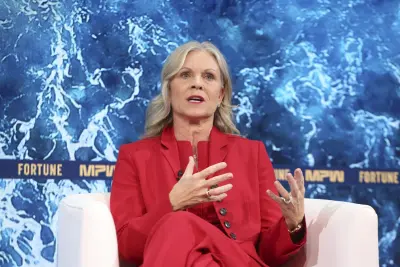
The moment a new technology matures, humanity does not simply use it — we rebuild the world around it. Steel gave us skyscrapers. The automobile gave us highways. The internet gave us digital spaces. Now, a Goldman Sachs Global Institute co-head argues, machine intelligence is about to trigger the next great reinvention of our physical and cognitive environments.
Why the AI Era Demands a Physical Reinvention
The core argument is deceptively simple: when a technology changes what humans can do, it changes where and how we live. The pace of improvement in AI models has led many observers to predict that human intelligence may soon be overtaken by the cognitive capacity of machines. If that happens, the spaces we inhabit — designed for human cognition — will need to be redesigned for machine cognition.
This is not merely a technological shift. It is an infrastructural one. Just as the highway system was unthinkable before the automobile, a world optimized for machine intelligence may be unthinkable before AI reaches its full cognitive potential.
The Visionaries Behind the Prediction
The Goldman Sachs analysis draws on striking predictions from two of the most influential figures in AI. Anthropic CEO Dario Amodei imagines a world with "a country of geniuses in a data center" — a compressed, concentrated form of intelligence that could outthink humanity collectively.
Elon Musk went further this summer, positing that "AI may exceed the sum of human intelligence in around five years." His framing is stark: "There really won't be anything that AI can't do better than humans, apart from being human, perhaps."
How Past Technologies Reshaped Human Environments
The historical pattern is instructive. The invention of steel did not just improve construction — it made vertical cities possible, changing land values, population density, and daily life. The automobile did not just replace horses — it created suburbs, highways, and the modern commute. The internet did not just speed up communication — it created entirely new digital spaces where commerce, community, and identity now live.
Each of these shifts required a generation to build the physical and institutional infrastructure. The argument from Goldman Sachs is that AI will demand the same scale of response — and that planning should begin now, not after the technology arrives.
What a Machine-Intelligence World Could Look Like
If machine intelligence becomes the dominant cognitive force, the implications are profound. Data centers may become the new industrial cities. Transportation systems may be optimized for autonomous decision-making rather than human reaction times. Urban planning may prioritize machine-readable environments over human-centric design.
For ordinary people, the shift could mean rethinking education, employment, and even the concept of work itself. If machines can outperform humans in most cognitive tasks, the question becomes not what humans can do, but what humans should do.
The Goldman Sachs Global Institute's Role in the Debate
The Goldman Sachs Global Institute serves as a research and analysis arm focused on long-term economic and technological trends. Its co-head's commentary signals that mainstream financial and policy institutions are taking the machine intelligence transition seriously — not as science fiction, but as a planning reality.
This institutional weight matters. When a major global financial institution frames AI as an infrastructural challenge rather than a product feature, it shifts the conversation from consumer gadgets to national policy, urban planning, and economic strategy.
Confirmed Facts vs What Remains Unclear
Confirmed: The Goldman Sachs Global Institute co-head has publicly argued that machine intelligence will require a fundamental reshaping of human environments, drawing on historical parallels like steel, automobiles, and the internet. Dario Amodei and Elon Musk have made the cited predictions about AI surpassing human intelligence.
Unclear: The exact timeline for machine intelligence surpassing human cognition remains speculative. The specific policy or infrastructural recommendations from the Goldman Sachs Global Institute have not been detailed in the available material. Whether this reshaping will be planned or reactive is an open question.
Risks and Balanced View
The optimistic framing of a machine-intelligence world carries significant counterarguments. Critics of rapid AI deployment warn of job displacement, economic inequality, and the concentration of power in the hands of those who control AI infrastructure. The "country of geniuses in a data center" could also become a country of unchecked surveillance or automated decision-making that erodes human agency.
There is also the question of whether the historical analogy holds. Steel and the internet were tools that amplified human capability. Machine intelligence, by contrast, may replace human capability. That difference could make the transition less like building highways and more like redefining what it means to be human in the workforce and society.
The Wider Pattern: Infrastructure Follows Intelligence
Across history, every leap in cognitive or physical capability has been followed by a leap in infrastructure. Writing created libraries. Printing created publishing houses. Computers created data centers. The pattern is consistent: when intelligence expands, the environment is rebuilt to house and distribute it.
Machine intelligence may be the most dramatic example yet, because it is not just an extension of human cognition — it is a separate, potentially superior cognitive force. The infrastructure question is no longer about how humans can do more, but how humans and machines will coexist in shared spaces.
What Readers Should Watch For
For those following this transition, the key indicators are not just AI model benchmarks but physical investments. Watch for data center construction trends, urban planning proposals that incorporate AI infrastructure, and policy debates about AI's role in public systems. These are the early signals of the world being remade for machine intelligence.
For individuals, the practical takeaway is to track how AI is being integrated into the industries you work in and the cities you live in. The reshaping will not happen overnight, but it will happen — and early movers will have an advantage in adapting.
Future Outlook: Planning for the Unplannable
The Goldman Sachs argument suggests that the window for proactive planning is now. The technology is advancing faster than the infrastructure that will house it. Whether governments, corporations, and urban planners respond with foresight or reaction will determine how disruptive the transition is.
The most likely near-term developments are pilot projects: AI-optimized districts, autonomous transport corridors, and data-center-centric economic zones. These will test the concept of a world built for machine intelligence on a small scale before any large-scale reinvention begins.
Our Take
The framing of AI as an infrastructural force rather than a technological product is a valuable correction to the public conversation. It moves the debate from "what can AI do?" to "what will AI require of us?" — a question that demands answers from urban planners, policymakers, and citizens, not just engineers.
The historical parallels are compelling but imperfect. Steel and the internet amplified human capability; machine intelligence may replace it. That distinction means the coming reshaping will not be a smooth continuation of past patterns but a genuine rupture. The institutions that recognize this — like the Goldman Sachs Global Institute — are positioning themselves to understand the transition before it arrives.
The uncomfortable truth is that we are building the future without knowing its shape. The best we can do is plan for flexibility, invest in adaptation, and keep asking the question the Goldman Sachs co-head has raised: what does it mean to remake our world for machine intelligence?
Frequently Asked Questions
What does "remaking our world for machine intelligence" mean?
It means redesigning physical and digital infrastructure — cities, transport, data systems, and institutions — to accommodate AI systems that may surpass human cognitive capacity. The argument draws on historical parallels like steel enabling skyscrapers and the internet creating digital spaces.
Who is the Goldman Sachs Global Institute co-head?
The Goldman Sachs Global Institute is a research arm of Goldman Sachs focused on long-term economic and technological trends. The co-head's commentary frames AI as an infrastructural challenge requiring proactive planning, similar to how past technologies reshaped human environments.
What did Dario Amodei and Elon Musk predict about AI?
Anthropic CEO Dario Amodei imagined "a country of geniuses in a data center," describing concentrated AI intelligence. Elon Musk said this summer that AI may exceed the sum of human intelligence in around five years, with AI doing almost everything better than humans except "being human."
How soon will machine intelligence surpass human intelligence?
Timelines vary widely. Elon Musk has suggested around five years, while other experts believe it could take decades or may never fully happen. The Goldman Sachs analysis focuses less on the exact timeline and more on the need to plan for the transition regardless of when it occurs.