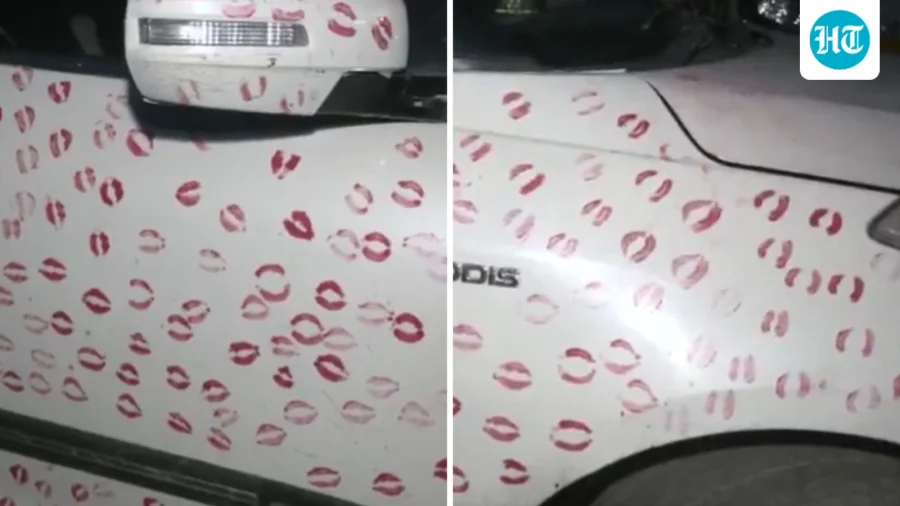
A grand romantic gesture in Gwalior has ended with a hefty fine and a lesson about viral trends. A man was left red-faced—quite literally—after police fined him ₹5,500 because his girlfriend had covered his car in 3,400 lipstick kiss marks. What began as a playful display of affection quickly turned into a public spectacle and a costly mistake.
When a Viral Love Trend Met Gwalior Police
The incident stems from a popular social media trend where couples cover a partner's vehicle with lipstick kisses as a symbol of love. In this case, the girlfriend reportedly took the trend to the extreme, leaving thousands of marks across the car's body, windows, and even the number plate. The vehicle, which was parked in a public area, drew attention for all the wrong reasons.
According to reports, local police spotted the car and took objection to its appearance. The officers deemed the display a public nuisance and a violation of traffic and vehicle cleanliness rules. The man was instructed to clean the car on the spot and was issued a challan for ₹5,500.
Why Police Considered the Kiss Marks a Problem
While the gesture was meant to be romantic, the police's concerns were practical. The lipstick marks reportedly obscured the car's number plate and windows, which is a direct violation of motor vehicle rules. Obscured number plates are a serious offence in India, as they hinder vehicle identification and can be misused for illegal activities.
Beyond the legal technicality, the heavily decorated car was also seen as creating a public disturbance. In a busy city like Gwalior, a car covered in thousands of kiss marks could easily distract other drivers and pedestrians, raising safety concerns. The police action, while seemingly harsh, was rooted in enforcing standard regulations.
How the Situation Unfolded
The sequence of events appears straightforward. The girlfriend completed the romantic decoration, likely as a surprise. The man then drove the car or found it parked in a public spot, where it caught the attention of law enforcement. The police approached, assessed the situation, and determined that the vehicle was not in compliance with regulations.
The man was reportedly given a cloth or cleaning material and asked to wipe off the marks immediately. After the car was cleaned, the police issued the fine and allowed him to leave. The entire episode was captured by onlookers and has since gone viral on social media, sparking a debate about love, law, and viral trends.
Who Is Affected by This Viral Trend Backfire
This incident primarily affects the young couple involved, who now face a financial penalty and public embarrassment. However, it also serves as a warning to countless other young people across India who are tempted to replicate viral trends without considering the consequences.
For the broader public, this story highlights the growing tension between social media culture and traditional legal frameworks. What is acceptable in a curated online video may not be acceptable on the streets of a real city. The fine is a tangible reminder that the internet's rules do not always apply in the physical world.
Official Response and Legal Justification
While no formal statement from the Gwalior police has been widely published, the action taken by the officers on the ground indicates their interpretation of the law. The challan was reportedly issued under sections related to obscuring the number plate and creating a public nuisance.
Traffic police across India routinely fine drivers for dirty or obscured number plates, and this case appears to fall under that jurisdiction. The fact that the man was made to clean the car before being fined suggests a corrective approach rather than a purely punitive one. The police's message seems clear: affection is fine, but not at the cost of public order and safety.
Analyzing the Clash Between Romance and Regulation
This incident is a classic example of a cultural clash. On one hand, the gesture is a modern, social-media-driven expression of love. On the other, it conflicts with practical, decades-old traffic laws designed for safety and identification. The police are not necessarily against romance; they are against the physical manifestation of it that violates clear rules.
The viral nature of the story adds another layer. The couple likely expected the video or photos of the car to gain them likes and admiration online. Instead, they have gained a fine and a news story. This outcome underscores the unpredictable gap between online validation and real-world consequences.
Confirmed Facts vs What Remains Unclear
Confirmed: A man in Gwalior was fined ₹5,500 by police. The fine was related to his car being covered in lipstick kiss marks, reportedly numbering 3,400. The man was made to wipe off the marks.
Unclear: The exact date of the incident and the specific legal sections under which the challan was issued have not been officially confirmed. The identity of the couple has not been released. Whether the girlfriend was also penalized or questioned remains unknown. The precise reason cited by the police—whether it was the number plate, windows, or general nuisance—has not been officially detailed.
Risks and Balanced View of Following Viral Trends
This story is a cautionary tale about the risks of blindly following internet trends. The benefits are obvious: social media attention, a fun memory, and a grand gesture. However, the risks include legal penalties, public embarrassment, and potential conflicts with law enforcement.
Critics of the police action might argue that the fine is excessive for a romantic gesture and that the police could have shown more leniency. Supporters of the police would counter that rules are rules, and allowing one person to obscure their number plate sets a dangerous precedent. Both perspectives have merit, but the law, as it stands, sided with the police.
The Wider Pattern of Viral Challenges Clashing with Law
This Gwalior incident is not isolated. Across India, police have had to intervene in various viral trends, from dangerous bike stunts to public pranks. The "kiss mark car" trend is the latest in a long line of social media fads that have crossed the line into illegality or public nuisance.
This pattern reveals a growing disconnect between the digital world, where such acts are celebrated, and the physical world, where they are regulated. As social media continues to influence behavior, police forces are increasingly having to adapt and respond to these new, often bizarre, challenges.
Practical Guidance for Those Inspired by This Trend
If you are considering a similar romantic gesture, it is crucial to think about the location and the law. Avoid covering the number plate, windows, or mirrors. Consider using removable, non-staining materials. Most importantly, do it in a private space, such as your own driveway or garage, rather than a public street.
For those who see a vehicle in violation, it is best to inform the authorities rather than take matters into your own hands. And for the general public, this story is a reminder to always weigh the potential real-world consequences of a digital trend before participating.
Future Outlook: Will This Stop the Trend?
It is unlikely that this fine will completely stop the "kiss mark" trend, as social media trends often persist despite warnings. However, it may make participants more cautious. Future instances might see couples using washable paints or confining the gesture to private property to avoid police attention.
Police departments may also issue advisories or social media posts warning against this specific trend, preempting future incidents. The Gwalior case will likely be cited as a precedent in such warnings, serving as a clear example of the potential costs involved.
Our Take
This story is a perfect snapshot of modern life in India, where ancient traditions of romance meet the fast-paced, often reckless world of social media. The fine of ₹5,500 is a small price for a big lesson: not everything that gets likes online is acceptable in the real world. While the police action may seem harsh to some, it reinforces the importance of public order and safety. For the young couple, this will be a memorable story, albeit one they likely wished had stayed private. It serves as a reminder that love is grand, but it must operate within the boundaries of the law.
Frequently Asked Questions
Why was the man fined for kiss marks on his car?
The man was fined because the lipstick kiss marks obscured the car's number plate and windows, which violates Indian motor vehicle rules. Police also considered the heavily decorated car a public nuisance and a potential distraction.
How much was the fine for the kiss mark car in Gwalior?
The fine was ₹5,500. The man was also reportedly made to wipe off all 3,400 kiss marks from the car before he was allowed to leave the spot.
Is it illegal to put kiss marks on a car in India?
It is not specifically illegal to put kiss marks on a car, but it becomes illegal if the marks obscure the number plate, windows, or mirrors, as these are required to be clear for identification and safety. This is what led to the fine in Gwalior.
What should I do if I want to do this trend without getting fined?
To avoid a fine, ensure the number plate, all windows, and mirrors are completely clear of any marks. Use easily removable and non-staining materials, and ideally, park the car in a private space like a driveway or garage, away from public roads and police scrutiny.