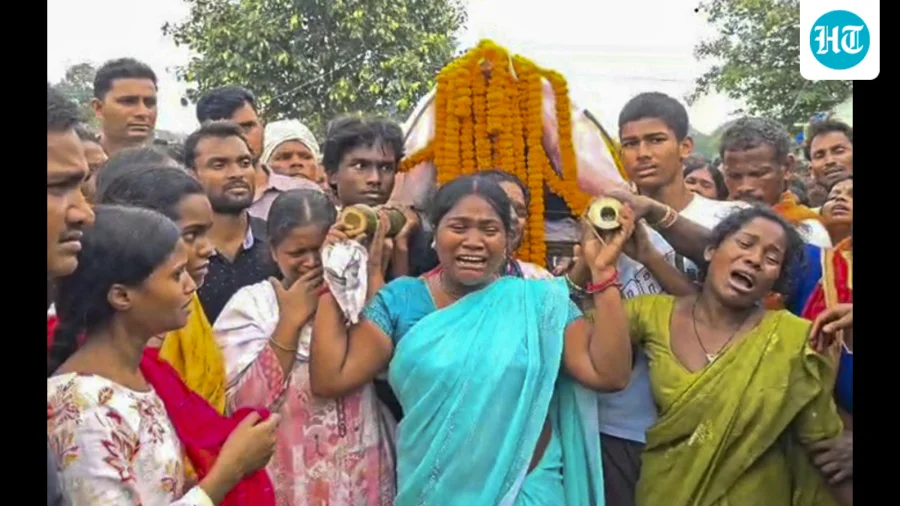
The body of Brijesh Ganjhu, alias Gopal Singh Bhokta, was barely cold when the first political challenge to the official narrative arrived. On Monday, former Simaria MLA Ganesh Ganjhu publicly demanded a CBI investigation into the encounter, turning a police operation into a question of accountability.
Brijesh Ganjhu, the supremo of the banned militant organisation Tritiya Sammelan Prastuti Committee (TSPC), was killed on Sunday in an encounter with the Uttar Pradesh Anti-Terrorism Squad (UP ATS) in Varanasi. The operation was swift, but the demand for an independent probe signals that the story is far from over.
The Demand That Changes the Narrative
Ganesh Ganjhu's call for a CBI probe is significant. It moves the conversation from a simple police success story to a contested account of what actually happened in Varanasi. The former MLA's demand suggests a lack of confidence in the current investigation process.
When a political figure from the same region as the deceased challenges an encounter, it forces a public re-examination of the operation's details. The demand is not just about one man's death; it is about the credibility of the agencies involved.
Why This Encounter Matters Beyond Varanasi
The TSPC has been a banned organisation operating primarily in Jharkhand, where it has been involved in extortion and violence. The killing of its supremo is a major blow to the group's structure. However, the location of the encounter—Varanasi, in Uttar Pradesh—raises jurisdictional questions.
For the people of Simaria and the wider Jharkhand region, the death of a local militant leader can have immediate ripple effects. It can lead to a power vacuum within the organisation or trigger retaliatory violence. The demand for a CBI probe is, in part, a demand for clarity on what this means for local security.
How the Encounter Unfolded
According to the original report, the UP ATS conducted the operation in Varanasi on Sunday. Brijesh Ganjhu was killed during this encounter. The UP ATS has a mandate to investigate terror-related activities, and the operation was likely the result of specific intelligence.
However, the exact sequence of events—how the ATS tracked him to Varanasi, whether he was alone, and the nature of the exchange of fire—has not been detailed in the public domain. This lack of a detailed public account is often what fuels demands for an independent inquiry.
The Human Cost of an Unanswered Question
For the families involved, an encounter is not a political event; it is a personal tragedy. For the broader public, it is a matter of trust. When an encounter is questioned, it creates anxiety about the rule of law.
Ganesh Ganjhu's demand speaks to a deeper concern: that without a transparent investigation, the truth of what happened in Varanasi may never be fully known. This uncertainty affects not just the family of the deceased but also the credibility of the state's security apparatus.
Official Silence and the Call for Accountability
As of now, there has been no official response from the UP ATS, the Jharkhand Police, or the CBI regarding the demand for a probe. The absence of a statement leaves the field open for speculation.
In cases of encounter killings, the standard procedure often involves a magisterial inquiry. The demand for a CBI probe goes a step further, asking for an agency outside the state's control to investigate. This is a significant escalation in the call for accountability.
What We Know and What Remains Unclear
Confirmed: Brijesh Ganjhu was killed in a UP ATS encounter in Varanasi on Sunday. Ganesh Ganjhu demanded a CBI probe on Monday.
Unclear: The specific circumstances of the encounter, the evidence collected, and whether the UP ATS followed all standard operating procedures. It is also unclear if the CBI will take up the case, as a formal request from the state government is usually required.
The TSPC's Structure and the Impact of Its Leader's Death
The TSPC is a splinter group that has operated in the shadow of larger militant organisations in Jharkhand. Its strength has often been tied to the personality and networks of its leader. Brijesh Ganjhu's death is likely to create a leadership crisis within the banned group.
For security agencies, this is a tactical victory. For the group's remaining members, it is a moment of vulnerability that could lead to either fragmentation or a violent struggle for succession. The long-term impact on the region's security depends on how this vacuum is filled.
Risks and the Need for a Balanced View
The demand for a CBI probe is not without its critics. Some may argue that it is a political move to undermine a successful security operation. Others may see it as a necessary check on police powers.
The risk of not having an independent probe is that public trust in the encounter's legitimacy will erode. The risk of having one is that it could be used to stall or discredit the agencies involved. A balanced view requires acknowledging both the need for security operations and the need for transparency.
A Growing Pattern of Contested Encounters
This case is part of a wider trend in India where encounter killings, particularly of alleged militants or criminals, are increasingly being questioned. Civil society groups and political opponents often demand judicial or independent probes to ensure that the rule of law is upheld.
The demand for a CBI probe in this case follows a familiar pattern: a police operation, a death, a political challenge, and a call for an independent investigation. How authorities respond will set a precedent for similar cases in the future.
What This Means for the People of Simaria and Jharkhand
For residents of Simaria, the death of a local figure like Brijesh Ganjhu is a significant event. It could lead to a temporary lull in the TSPC's activities or a spike in violence if the group seeks revenge.
Citizens should remain vigilant and rely on official channels for information. The demand for a CBI probe is a legal and political process; it is important to let it unfold without jumping to conclusions. The priority for the public is safety and peace.
What Happens Next?
The immediate future depends on whether the demand for a CBI probe gains political traction. If the Jharkhand government or the central government supports the demand, a formal investigation could be ordered.
If not, the case may remain with the UP ATS, which will likely file its own report. The family of the deceased could also approach the courts. The coming days will reveal whether this remains a political demand or becomes a legal reality.
Our Take
The demand for a CBI probe into the Brijesh Ganjhu encounter is more than a political statement. It is a test of the system's willingness to be transparent. A security operation can be both successful and subject to scrutiny. The two are not mutually exclusive.
In a democracy, the legitimacy of an encounter is strengthened, not weakened, by an independent investigation. Whether this demand is met or not, it has already ensured that the death of Brijesh Ganjhu will not be a closed chapter. The question of what happened in Varanasi on Sunday will continue to demand an answer.
Frequently Asked Questions
Who was Brijesh Ganjhu?
Brijesh Ganjhu, also known as Gopal Singh Bhokta, was the supremo of the Tritiya Sammelan Prastuti Committee (TSPC), a banned militant organisation operating primarily in Jharkhand. He was killed in an encounter with the UP ATS in Varanasi on Sunday.
Why is a CBI probe being demanded?
Former Simaria MLA Ganesh Ganjhu has demanded a CBI probe to ensure an independent and transparent investigation into the circumstances of the encounter. The demand reflects a lack of confidence in a state-led inquiry.
What is the UP ATS?
The Uttar Pradesh Anti-Terrorism Squad (UP ATS) is a specialised police unit tasked with investigating and combating terrorism and organised crime in Uttar Pradesh. It conducted the operation in Varanasi.
What happens if the CBI takes over the case?
If the CBI takes over, it will conduct an independent investigation into the encounter. This would involve re-examining evidence, recording statements, and determining whether the operation was conducted lawfully. The outcome could either validate the UP ATS's actions or lead to further legal proceedings.