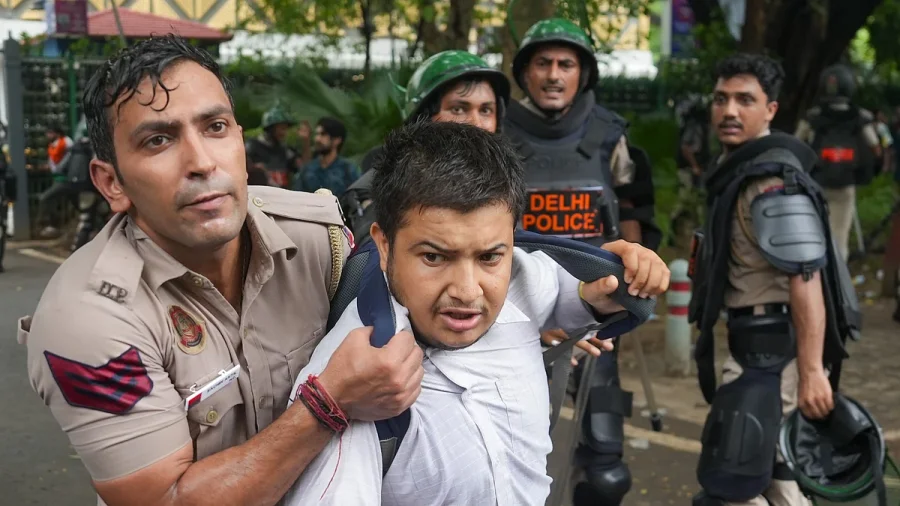
The streets around Parliament turned into a flashpoint on Monday as security forces resorted to a lathicharge and fired tear gas shells to disperse thousands of Cockroach Janta Party (CJP) protesters who allegedly attempted to breach barricades while marching towards the high-security zone. The confrontation, which began around 11:25 am, left the area tense and heavily fortified.
How the protest escalated near Parliament
According to PTI sources, the march called by the CJP to press its demands saw protesters converging on Parliament Street and adjoining areas. Multiple layers of barricades had been erected to prevent entry into the high-security zone around Parliament. The situation turned volatile when a section of protesters allegedly tried to push through the barricades, leading to a scuffle between demonstrators and security personnel.
Delhi Police denies using force despite reports
In a contrasting account, Delhi Police denied using force against the protesters, asserting that the demonstration was being handled professionally. The official statement did not elaborate on the lathicharge or tear gas shells, leaving a gap between ground reports and the police version. This discrepancy raises questions about the official narrative of the day's events.
Why this protest matters for public safety
The incident highlights the delicate balance between the right to protest and maintaining security around critical government institutions. For ordinary citizens, the sight of tear gas and lathicharge near Parliament—a symbol of democracy—can be unsettling. It also underscores the challenges authorities face in managing large-scale demonstrations in high-security zones.
What led to the CJP march
The Cockroach Janta Party, a lesser-known political group, had called the march to press its demands, though the specific demands were not detailed in available reports. The party's decision to march towards Parliament, a restricted area, set the stage for the confrontation. The protest's timing and location suggest a deliberate attempt to draw attention to their cause.
Confirmed facts vs what remains unclear
What is confirmed: Security forces used lathicharge and tear gas shells near Parliament on Monday. Thousands of CJP protesters were involved. The protest began around 11:25 am. What remains unclear: Whether protesters actually breached any barricades. The exact number of injuries or arrests. The specific demands of the CJP. Delhi Police's denial of using force contradicts multiple source reports, leaving the full picture uncertain.
Risks and balanced view of the protest
While the right to protest is fundamental, marching towards a high-security zone like Parliament carries inherent risks. Critics may argue that the CJP's approach was provocative, potentially endangering both protesters and security personnel. On the other hand, the use of force by authorities, if confirmed, could be seen as excessive. A balanced view acknowledges the need for security while respecting democratic expression.
Wider pattern of protests near Parliament
This incident is not isolated. Parliament has been a focal point for protests in recent years, from farmers' marches to political rallies. Each time, security forces face the challenge of balancing access with safety. The CJP protest fits into this broader pattern of demonstrations testing the limits of security protocols in the capital.
What protesters and citizens should know
For those planning future protests near Parliament, understanding the security perimeter is crucial. Citizens should stay informed about road closures and avoid areas with heavy police presence. For protesters, peaceful demonstration within designated zones is key to avoiding escalation. Authorities recommend prior permission for marches near sensitive locations.
What could happen next
The aftermath of the protest could see legal action against those who attempted to breach barricades. The CJP may face scrutiny over its methods. Delhi Police might review its crowd control tactics. The incident could also spark debate in Parliament about protest management and security protocols.
Our Take
The clash between CJP protesters and security forces near Parliament is a reminder of the fragile line between dissent and disruption. While the protest's demands remain unclear, the use of lathicharge and tear gas—if confirmed—raises concerns about proportionality. The denial by Delhi Police adds confusion, eroding public trust. This story matters because it tests the resilience of democratic spaces and the accountability of those who guard them.
Frequently Asked Questions
What happened at the CJP protest near Parliament?
Security forces lathicharged and fired tear gas shells at Cockroach Janta Party protesters who allegedly tried to breach barricades near Parliament on Monday. The protest began around 11:25 am.
Did Delhi Police use force against the protesters?
Delhi Police denied using force, stating the demonstration was handled professionally. However, multiple sources reported lathicharge and tear gas shells, creating a contradiction.
Why was the CJP protesting near Parliament?
The Cockroach Janta Party called the march to press its demands, though specific demands were not detailed in available reports. The protest aimed to draw attention to their cause.
What are the risks of protesting near Parliament?
Protesting near Parliament carries risks of escalation due to high security. Authorities may use force to prevent breaches, and protesters could face legal action. Peaceful demonstration in designated zones is advised.