On the 157th birth anniversary of Mahatma Gandhi, the Congress on Friday reached back to the ideas that shaped India's freedom movement — truth, non-violence, harmony and justice — and argued they are not relics of the past but tools for the present.
Kharge's Message: Gandhi Gave Strength to Truth, Courage to Non-Violence
Congress president Mallikarjun Kharge led the party's tribute, describing Gandhi as a leader who gave strength to truth and courage to non-violence, while turning Satyagraha into a powerful instrument of political and moral change.
In a message marking the occasion, Kharge said Gandhi's principles continued to hold relevance in the face of contemporary challenges, according to the party's statement.
Why the Congress Is Reaching for Gandhi Now
Gandhi Jayanti is observed every year on October 2, but the framing of this year's tribute — truth and non-violence as still relevant — carries a pointed edge.
By invoking Gandhi's methods rather than only his memory, the party is signalling that his approach to conflict, dissent and justice still has something to say to a country navigating its own divides.
What Gandhi's Ideals Meant — and Why They Endure
Gandhi built his political philosophy on Satyagraha, a method of resistance rooted in truth and non-violent defiance rather than force. It became the backbone of India's freedom struggle and later influenced civil rights movements across the world.
Kharge's tribute recalled those same ideals — truth, harmony, peace and compassion — as values he urged people to uphold.
The Human Appeal Behind the Remembrance
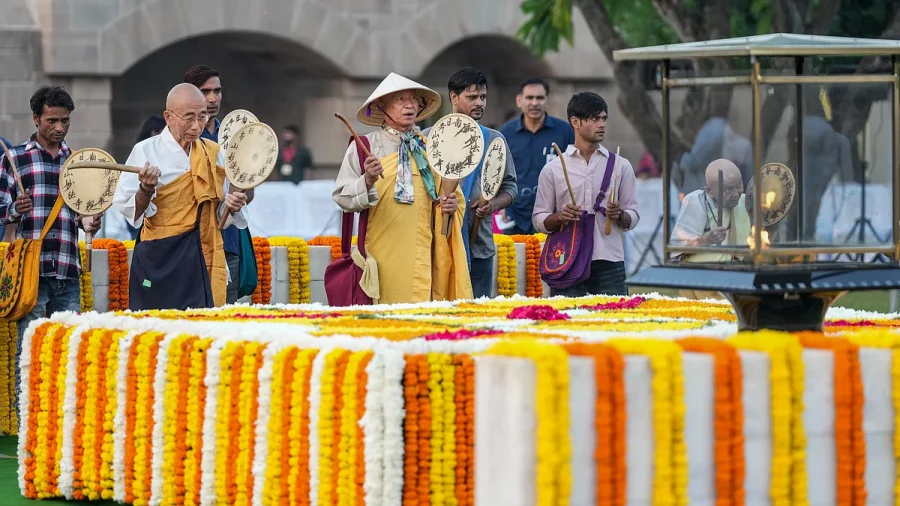
For millions of Indians, Gandhi Jayanti is not only a political occasion but a national one. His birth anniversary is marked across the country, with tributes at memorials and reflections on his life and work.
The Congress's message speaks to that wider audience — not just party workers, but citizens who associate Gandhi with the moral foundation of independent India.
What the Party Said — and What It Left Open
The tribute, as issued, focused on Gandhi's ideals and their continued relevance. It did not outline specific programmes or policy positions tied to those principles.
That leaves the message as a statement of values rather than a roadmap — a distinction worth noting as political parties routinely invoke Gandhi across the spectrum.
Confirmed Facts vs What Remains Unclear
Confirmed: The Congress paid tribute to Mahatma Gandhi on his 157th birth anniversary. Kharge issued a message recalling Gandhi's ideals of truth, non-violence, harmony and justice, and said his principles remain relevant amid contemporary challenges.
Unclear: The tribute did not specify which contemporary challenges were being referenced, nor did it announce any follow-up action. Any reading of political intent beyond the stated message would be speculation.
Gandhi's Legacy as a Shared, Contested Inheritance
Gandhi is claimed across India's political landscape — a reminder that his legacy is not the property of any single party. The Congress's tribute is one voice in a broader national conversation about what his ideals demand today.
That contest over meaning is itself part of Gandhi's enduring relevance: his ideas remain argued about precisely because they still carry weight.
Risks and a Balanced View
Tributes of this kind risk becoming ritual — annual statements that honour a figure without engaging with the harder questions his ideas raise about inequality, dissent and justice.
Critics of all parties have made this point before: invoking Gandhi is easy; following his methods is not. The value of Friday's message will be judged less by its wording than by whether it shapes conduct.
The Wider Pattern: Gandhi Jayanti as a National Reckoning
Every October 2, India pauses to remember Gandhi — and, in doing so, to measure itself against him. The gap between his ideals and present realities is a recurring theme in public life.
This year's Congress tribute fits that pattern: a reminder issued not as history, but as an appeal.
What Readers Should Take Away
For citizens, the occasion is a moment to reflect on Gandhi's principles in daily life — truthfulness, non-violence and compassion — as Kharge urged.
For observers of politics, the message is a signal of how the Congress wants to frame its moral vocabulary. Watch whether that framing translates into action in the months ahead.
Future Outlook
The Congress is likely to continue invoking Gandhi's ideals as a moral reference point in its public messaging. Whether that translates into concrete positions — on social harmony, dissent or justice — remains to be seen.
What is certain is that Gandhi's birth anniversary will keep returning as a national occasion for both remembrance and self-examination.
Our Take
The Congress's tribute is a reminder that Gandhi's ideas were never meant to be museum pieces. Truth and non-violence were working methods — demanding, inconvenient and hard to live by.
That is precisely why they remain relevant. The question the tribute leaves open is not whether Gandhi's ideals still matter, but whether anyone invoking them is prepared to practise them.
Frequently Asked Questions
What did the Congress say on Mahatma Gandhi's 157th birth anniversary?
The Congress paid tribute to Mahatma Gandhi, recalling his ideals of truth, non-violence, harmony and justice. Party president Mallikarjun Kharge said Gandhi's principles remain relevant amid contemporary challenges.
What did Mallikarjun Kharge say about Gandhi?
Kharge described Gandhi as a leader who gave strength to truth and courage to non-violence, and who made Satyagraha a powerful instrument. He urged people to uphold Gandhi's values of truth, harmony, peace and compassion.
Why is Mahatma Gandhi's birth anniversary significant?
Gandhi Jayanti is observed on October 2 each year to mark the birth of the Father of the Nation. It is a national occasion to remember his role in India's freedom struggle and his philosophy of truth and non-violence.
What is Satyagraha?
Satyagraha is the method of non-violent resistance developed by Mahatma Gandhi, rooted in truth and peaceful defiance. It became central to India's freedom movement and influenced civil rights struggles worldwide.