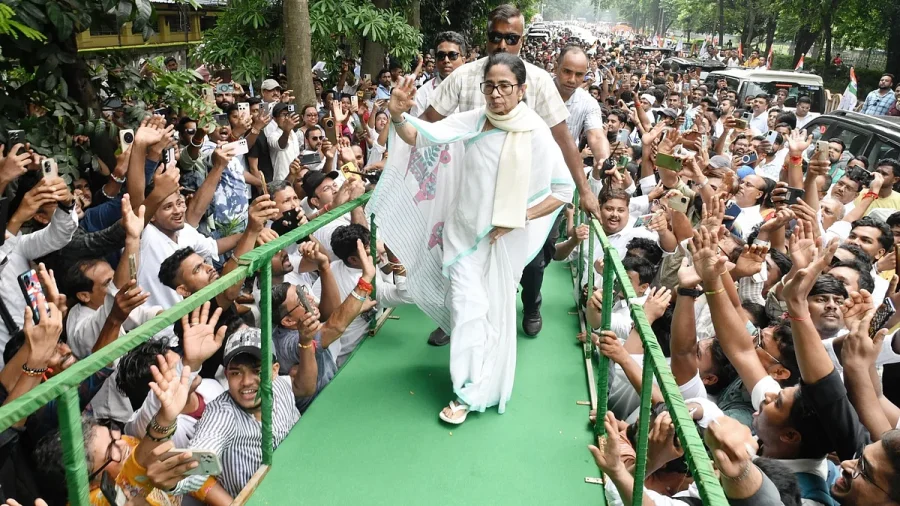
The political temperature in West Bengal shot up on Friday as Mamata Banerjee turned a student rally into a direct confrontation with her political rival Suvendu Adhikari. Speaking at the Trinamool Chhatra Parishad's foundation day event in Kolkata, the TMC supremo issued a stark warning: don't touch Lakshmir Bhandar, or face consequences.
A Warning Delivered in Public, With a Threat Attached
Banerjee's message was unambiguous. "We have not yet started to open up your deeds," she said, addressing Adhikari directly. "If you stop Lakshmir Bhandar of the people..." — the unfinished sentence carried its own weight, a clear signal that she has ammunition she has not yet used.
The warning was not just about a welfare scheme. It was about political survival, public trust, and the legacy of her government's most popular initiative.
Why Lakshmir Bhandar Has Become a Political Flashpoint
Lakshmir Bhandar is not just another government programme in Bengal. Launched by the TMC government, it provides monthly financial assistance to over two crore women across the state. For millions of households, this money is not a handout — it is a lifeline that pays for rations, school fees, and medical expenses.
Any threat to this scheme is a threat to the daily lives of Bengal's women. That is precisely why Mamata's warning resonates far beyond political circles. When she says "don't provoke me," she is signalling that any attempt to dismantle Lakshmir Bhandar will be met with fierce resistance — both political and personal.
The Rally That Became a Political Offensive
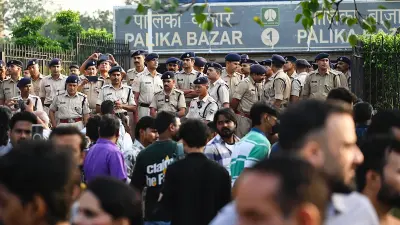
The Cathedral Road rally was meant to celebrate the Trinamool Chhatra Parishad's foundation day. Instead, it became a platform for a broader assault. Banerjee did not limit her fire to Adhikari alone. She took aim at the BJP, the Election Commission of India, and the police, painting a picture of a coordinated effort to undermine her government.
The timing is significant. With electoral battles looming, every public appearance becomes a strategic move. This rally was no exception.
A Rival Faction Adds to the Confusion
Adding to the political complexity, a rival TMC faction led by Ritabrata Banerjee also held its own events, attempting to project itself as the state's principal opposition. This internal friction within the opposition space only deepens the uncertainty around Bengal's political landscape.
For ordinary voters, the message is mixed. On one hand, they see a strong leader defending a popular welfare scheme. On the other, they witness fragmentation and infighting among those who claim to challenge the ruling dispensation.
The Human Cost Behind the Political Rhetoric
Behind the slogans and threats lies a simple reality: lakhs of women depend on Lakshmir Bhandar for their monthly survival. Widows, divorced women, and those from economically weaker sections receive direct bank transfers that often make the difference between a meal and no meal.
When political leaders fight over this scheme, they are fighting over the dignity and security of Bengal's most vulnerable citizens. That is why this is not merely a political story — it is a human one.
Official Response and the Silence That Followed
As of now, Suvendu Adhikari has not issued a formal response to Mamata's warning. The BJP, too, has remained publicly quiet on the specific threat, though party leaders have previously accused the TMC of using welfare schemes as vote-buying tools.
The Election Commission has not commented on the allegations raised by Banerjee during the rally. This silence leaves room for speculation, but no verified facts have emerged to support either side's claims.
What This Escalation Really Means for Bengal
Political analysts see this as more than a personal feud. Mamata's warning is a calculated move to consolidate her support base, particularly among women voters who form the backbone of her electoral strength. By positioning herself as the protector of Lakshmir Bhandar, she is drawing a clear line: attack the scheme, and you attack the people it serves.
For Adhikari, the challenge is equally significant. Any perceived threat to the scheme could alienate the very voters he needs to win over. His response — or lack of it — will be closely watched in the coming days.
Confirmed Facts vs What Remains Unclear
What is confirmed: Mamata Banerjee made these remarks at the Trinamool Chhatra Parishad rally in Kolkata on 28 August. She warned Suvendu Adhikari against stopping Lakshmir Bhandar and threatened to expose his alleged wrongdoings.
What remains unclear: The specific "deeds" Mamata referred to have not been detailed publicly. Whether Adhikari has any plans to alter the scheme is also unverified. The claims and counter-claims are part of an ongoing political battle, not established facts.
Why This Scheme Matters Beyond Politics
Lakshmir Bhandar is one of the largest direct benefit transfer schemes in India, reaching millions of women monthly. Its scale makes it a powerful tool for social security — and an equally powerful political symbol. Whoever controls its narrative controls a significant chunk of Bengal's political discourse.
Risks and the Other Side of the Argument
Critics of the TMC argue that Lakshmir Bhandar is a populist measure designed to secure votes rather than empower women. They point to fiscal strain and question the sustainability of such large-scale transfers. Supporters counter that the scheme has lifted millions out of extreme financial distress and is a legitimate welfare intervention.
Both arguments have merit, but the political reality is that the scheme enjoys widespread public support. Any move against it would carry significant electoral risk.
A Pattern of Welfare Politics in Bengal
This is not the first time a welfare scheme has become a political battleground in Bengal. From Kanyashree to Swasthya Sathi, the TMC has built its electoral strategy around direct benefit schemes. The pattern is clear: protect the schemes, protect the vote bank.
What Should Citizens Watch For Now
For ordinary citizens, the key is to watch for concrete actions, not just rhetoric. Will any official move be made against Lakshmir Bhandar? Will Mamata actually reveal the "deeds" she hinted at? These are the questions that will determine whether this is just political posturing or the beginning of a deeper confrontation.
Future Outlook: What Happens Next
Political observers expect the war of words to intensify. Mamata has drawn a red line, and Adhikari will likely respond in some form. The coming weeks could see fresh allegations, counter-charges, and possibly legal or administrative actions. For now, the ball is in Adhikari's court.
Our Take
This confrontation is about more than two politicians trading threats. It is about the future of welfare politics in India, the power of direct benefit schemes, and the lengths leaders will go to protect their legacy. Mamata's warning is a reminder that in Indian politics, welfare is not just policy — it is power. And those who hold it do not give it up easily.
Frequently Asked Questions
What did Mamata Banerjee say about Suvendu Adhikari and Lakshmir Bhandar?
Mamata Banerjee warned Suvendu Adhikari not to stop or tamper with the Lakshmir Bhandar scheme, threatening to expose his alleged wrongdoings if provoked. She made the remarks at a Trinamool Chhatra Parishad rally in Kolkata.
What is the Lakshmir Bhandar scheme?
Lakshmir Bhandar is a welfare scheme launched by the West Bengal government that provides monthly financial assistance to women from economically weaker sections, including widows and divorced women, through direct bank transfers.
Why is Lakshmir Bhandar politically significant in West Bengal?
The scheme benefits over two crore women, making it one of the largest direct benefit transfer programmes in India. It is a key pillar of the TMC's electoral strategy and enjoys widespread public support.
Has Suvendu Adhikari responded to Mamata's warning?
As of the latest reports, Suvendu Adhikari has not issued a formal public response to Mamata Banerjee's warning. The BJP has also not officially commented on the specific threat.