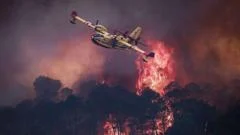
Europe is facing a devastating wildfire crisis this week, with two major blazes stretching emergency services to their limits. In southwestern France, a fire near Bordeaux has torn through more than 162 square miles (420 square kilometers) in less than four days, while Spain’s Madrid region battles its worst wildfires on record. These events, captured in satellite imagery and official maps, reveal the scale of destruction and the urgent response underway.
Mapping the Bordeaux wildfire: A fast-moving inferno
The Bordeaux blaze, located near the town of La Teste-de-Buch in the Gironde department, has consumed vast tracts of pine forest. Satellite maps from the European Forest Fire Information System (EFFIS) show the fire perimeter expanding rapidly since ignition, with active fronts pushing toward populated areas. The fire has already destroyed dozens of homes and forced the evacuation of thousands of residents, including tourists from coastal campsites. Firefighters describe the blaze as "unprecedented" in its speed and intensity, fueled by dry vegetation and strong winds.
Madrid region faces worst fires on record
In Spain, the Madrid region is experiencing its most severe wildfire season ever. Multiple fires have broken out across the Sierra de Guadarrama and other forested areas, with maps showing large burn scars near urban fringes. The Spanish government has deployed military emergency units (UME) and water-bombing helicopters to contain the flames. Local officials report that the fires have already claimed at least one life and injured several firefighters. The scale of the Madrid fires has overwhelmed local resources, prompting calls for national and European assistance.
Why these wildfires are so severe: Climate and conditions
Experts point to a combination of extreme heat, prolonged drought, and strong winds as key drivers. Southern Europe has experienced record-breaking temperatures this summer, with heatwaves drying out vegetation and creating tinderbox conditions. The Bordeaux region, typically humid, has seen unusually low rainfall, while Madrid’s mountainous terrain makes firefighting difficult. Climate scientists warn that such events are becoming more frequent and intense due to global warming, turning once-rare wildfires into annual crises.
Human impact: Evacuations, loss, and fear
For residents and tourists, the wildfires have brought chaos and fear. In Bordeaux, families fled their homes with little warning, leaving behind belongings and pets. Evacuation centers have been set up in schools and sports halls, but many are overcrowded. In Madrid, entire villages have been emptied as flames approach. The emotional toll is immense: "We lost everything," one evacuee told local media. "The fire came so fast, we barely had time to grab our documents." Air quality has deteriorated across both regions, with health advisories urging people to stay indoors.
How authorities are tackling the blazes
French and Spanish firefighting agencies have mobilized massive resources. In France, over 1,000 firefighters, supported by water-bombing aircraft from Canada and the European Union, are battling the Bordeaux blaze. They are using bulldozers to create firebreaks and aerial drops to slow the advance. In Spain, the UME has deployed hundreds of troops, while the Madrid regional government has activated its emergency plan. International coordination is underway through the EU’s Civil Protection Mechanism, with Italy and Greece offering additional aircraft. However, officials admit that containment may take days, especially if weather conditions worsen.
Confirmed facts vs what remains unclear
What is confirmed: The Bordeaux fire has burned over 162 sq miles (420 sq km) in less than four days; the Madrid fires are the worst on record for the region; evacuations are ongoing; and international aid has been requested. What remains unclear: The exact number of structures destroyed, the full casualty count, and the precise cause of ignition. Speculation about arson or lightning strikes has not been officially confirmed. Fire investigators are still assessing the origins.
Wider trend: Europe’s wildfire season is worsening
These fires are part of a broader pattern across Europe. In recent years, countries like Greece, Portugal, and Italy have seen increasingly destructive wildfires, with 2023 and 2024 setting records for burned area. Scientists link this trend to climate change, which is lengthening fire seasons and making landscapes more flammable. The European Commission has warned that without aggressive climate action and better forest management, such disasters will become the norm.
Practical guidance for affected residents and travelers
If you are in or near affected areas: Follow evacuation orders immediately; monitor official channels like local prefecture or emergency services; keep emergency supplies ready; avoid roads near fire zones. Travelers should check with airlines and tour operators for cancellations. For those wanting to help, donations to organizations like the Red Cross or local firefighter funds are recommended. Avoid spreading unverified information on social media.
Future outlook: What could happen next
Firefighters expect the Bordeaux blaze to remain active for several more days, with containment possible only if winds subside. In Madrid, cooler temperatures may help, but the fire risk remains high. Authorities are already planning for the long-term recovery, including reforestation and compensation for victims. The European Union is likely to increase funding for firefighting equipment and climate adaptation. However, experts caution that without systemic changes, next summer could bring even worse fires.
Our Take
These wildfires are a stark reminder that Europe is not immune to climate-driven disasters. The speed and scale of the Bordeaux blaze, in particular, highlight how quickly conditions can spiral out of control. While firefighters are doing heroic work, the real solution lies in prevention: better land management, early warning systems, and aggressive emissions reduction. For now, the focus must remain on saving lives and containing the flames. But the maps of devastation should serve as a wake-up call for policymakers and citizens alike.
Frequently Asked Questions
How big is the Bordeaux wildfire compared to other European fires?
The Bordeaux blaze has burned over 162 sq miles (420 sq km), making it one of the largest in France in recent years. For context, it is roughly the size of the city of Paris.
What is causing the Madrid wildfires to be so severe?
The Madrid fires are driven by extreme heat, drought, and strong winds, combined with dry vegetation in mountainous terrain. This is the worst fire season on record for the region.
How can I track the wildfires in real time?
You can use the European Forest Fire Information System (EFFIS) for satellite maps, or follow local authorities like the Gironde prefecture and Madrid emergency services on social media.
Are these wildfires linked to climate change?
Yes, scientists say climate change is increasing the frequency and intensity of wildfires in Europe by creating hotter, drier conditions that make landscapes more flammable.