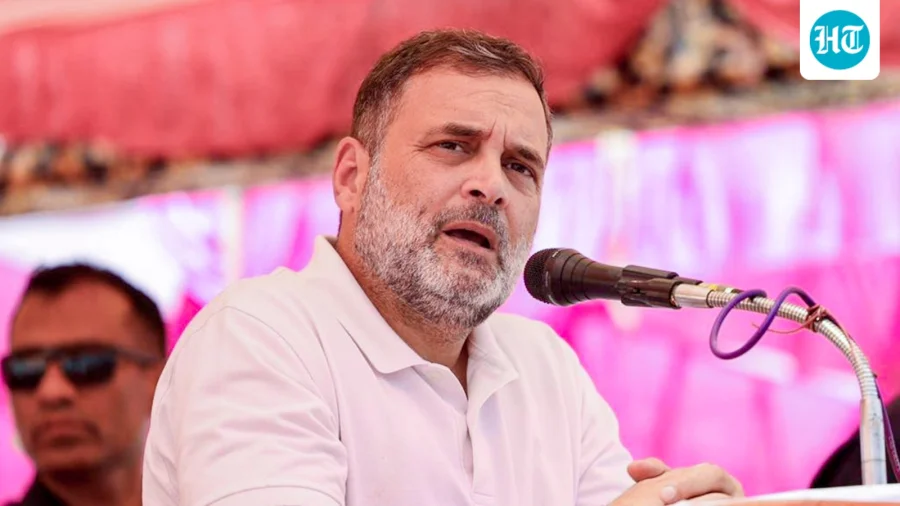
The battle lines are drawn, and the stakes couldn't be higher for millions of students and their families. Congress leader Rahul Gandhi has refused to back down, launching a fresh salvo at the Central Board of Secondary Education (CBSE) after the board categorically rejected his explosive allegations of a scam in the awarding of a contract to a company named Coempt Edu Teck. "Denial is not an answer," Gandhi said, demanding a full-scale judicial inquiry and the formation of a Special Investigation Team (SIT) to get to the bottom of what he calls a massive irregularity.
The Core of the Controversy: What is the Coempt Edu Teck Contract?
At the heart of this political storm is a contract awarded by the CBSE to Coempt Edu Teck for its On-Screen Marking (OSM) system. This system is used to evaluate answer sheets for major examinations, including the Class 10 and Class 12 board exams. Rahul Gandhi has alleged that the contract was awarded in a non-transparent manner, raising serious questions about the integrity of the process and the potential for financial irregularities. He has specifically questioned the selection of Coempt Edu Teck over other established players, hinting at a possible "scam" that could have affected the evaluation of answer sheets for lakhs of students.
Why This Matters Right Now
This is not just a political slugfest. The credibility of the CBSE, the country's largest school board, is directly under the scanner. Every year, over 20 lakh students appear for CBSE board exams, and their futures depend on a fair and transparent evaluation process. If the process of awarding the contract for the very software that marks their papers is questionable, it shakes the foundation of trust in the entire system. For parents and students, this raises a chilling question: Was the evaluation of my child's answer sheet handled by a company that got the contract through dubious means? The emotional and practical consequences are immense, affecting college admissions, career paths, and the basic faith in a national institution.
How the Controversy Unfolded
The timeline of this escalating row is critical. It began when Rahul Gandhi first raised the issue, alleging a "scam" in the CBSE's OSM contract. He claimed that the contract was awarded to Coempt Edu Teck, a company he linked to the ruling party, without proper tendering or due diligence. The allegations quickly gained traction, becoming a major political issue. In response, the CBSE issued a firm denial, stating that all procedures were followed "properly" while selecting the agency. The board insisted that the process was transparent and that there was no wrongdoing. However, this official denial did not satisfy the Congress leader. Instead, it prompted a stronger, more direct response, with Gandhi now demanding a deeper, independent investigation.
Who Is Affected and What Officials Are Saying
The primary group affected is the student community and their parents, who are now anxious about the fairness of their exam results. Teachers and school administrators are also watching the developments closely, as the controversy could lead to changes in evaluation protocols. On the official front, the CBSE has maintained a defensive stance, reiterating that its processes are above board. Rahul Gandhi, however, has dismissed this as a cover-up. "The CBSE's denial is not the end of the matter. It is the beginning of a fight for truth," he stated, calling for a judicial probe to be conducted by a sitting High Court judge and an SIT to investigate the financial and procedural aspects of the contract.
What We Know So Far — and What Remains Unclear
What We Know: Rahul Gandhi has publicly alleged irregularities in the awarding of the CBSE's OSM contract to Coempt Edu Teck. The CBSE has officially denied these allegations, claiming all procedures were followed. Gandhi has now escalated his demand, calling for a judicial inquiry and an SIT.
What Remains Unclear: The exact nature of the alleged irregularities is yet to be detailed in a formal complaint or investigation. The specific financial details of the contract and the comparative evaluation process that led to Coempt Edu Teck being selected are not in the public domain. Whether the allegations have any concrete evidence beyond political statements is the central question that a judicial probe would aim to answer.
Risks, Concerns, and the Balanced View
The biggest risk here is the erosion of public trust in the CBSE examination system. If the allegations are proven true, it would be a massive scandal. If they are proven false, it would be a serious political attack on a vital educational institution. From a balanced perspective, it is important to note that awarding government contracts is a complex process, and allegations of irregularities are common in the political arena. However, the involvement of a system that directly impacts student futures makes this case particularly sensitive. The demand for a judicial probe is a standard political tool to seek an independent review, but it also carries the risk of creating prolonged uncertainty for students and schools.
Why Similar Concerns Are Growing in Public Discourse
This controversy is not happening in a vacuum. It taps into a growing public concern over the transparency and fairness of large-scale examination systems in India. From past paper leaks to alleged irregularities in other recruitment exams, the public is increasingly sensitive to any hint of manipulation in the education sector. This incident feeds into a broader narrative of institutional accountability, where citizens are demanding more than just official denials. They want independent, verifiable proof that the systems meant to shape their children's futures are clean.
- The CBSE OSM system is used to evaluate answer sheets for Class 10 and 12 board exams.
- Rahul Gandhi has linked the Coempt Edu Teck contract to a potential conflict of interest.
- The Congress party has announced plans to raise the issue in Parliament.
"Denial is not an answer. The truth must come out. I demand a judicial inquiry and an SIT to unearth the truth behind this scam." — Rahul Gandhi, Congress Leader
What Readers, Students, and Parents Should Know Now
For students and parents, the immediate advice is to not panic. The CBSE has stated that the evaluation process for the current academic year is proceeding as normal. However, it is wise to stay informed. Follow credible news sources for verified updates. If you have specific concerns about your child's results, the official CBSE grievance portal is the correct channel. Politically, this is a developing story, and the outcome of Gandhi's demand for a judicial probe will be the next major milestone. For now, the focus should remain on the facts as they emerge from official statements and any future investigation.
What Could Happen Next
The immediate future will likely see a war of words between the Congress party and the government. Rahul Gandhi's call for a judicial probe and SIT is a significant escalation. The government's response to this demand will be crucial. If a probe is ordered, it could take months or even years to conclude. If it is rejected, the political heat will intensify. The issue is also likely to be raised in the upcoming Parliament session, turning it into a major political flashpoint. For the CBSE, the challenge will be to maintain operational normalcy while defending its reputation.
Our Take: Why This Story Matters Beyond One Incident
This is more than a political row over a contract. It is a test of institutional transparency in India's most critical education board. The CBSE's initial response—a blanket denial—has not been enough to quell the doubts raised by a prominent opposition leader. The demand for a judicial probe, while politically motivated, also reflects a legitimate public desire for accountability. Whether the allegations have merit or not, the process of investigating them will either restore or further damage public faith. In an era where trust in institutions is fragile, how this story is handled will set a precedent for how similar future controversies are addressed. The real answer, as Rahul Gandhi insists, cannot simply be a denial.
FAQs
What is the CBSE Coempt Edu Teck contract controversy about?
The controversy involves allegations by Congress leader Rahul Gandhi that the CBSE awarded a contract for its On-Screen Marking (OSM) system to a company called Coempt Edu Teck in a non-transparent manner. He has called it a "scam" and is demanding a judicial probe.
What has CBSE said in response to Rahul Gandhi's allegations?
The CBSE has officially denied all allegations, stating that all procedures were followed properly while selecting the agency for the contract. The board maintains that the process was transparent and above board.
What is Rahul Gandhi demanding now after CBSE's denial?
Rahul Gandhi has rejected the CBSE's denial, stating that "denial is not an answer." He is now demanding a judicial inquiry conducted by a sitting High Court judge and the formation of a Special Investigation Team (SIT) to investigate the matter.
How does this controversy affect CBSE students and parents?
The controversy raises serious questions about the integrity of the exam evaluation process. It creates anxiety among students and parents about the fairness of their results. The outcome of the political and legal battle could impact trust in the CBSE system and potentially lead to changes in how evaluation contracts are awarded in the future.