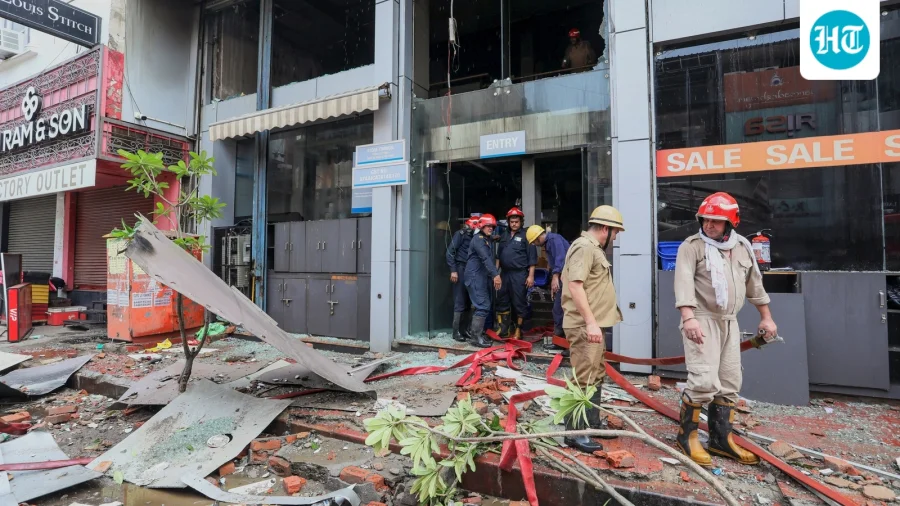
For the families who lost loved ones in the Vivek Vihar fire, the tragedy was sudden and brutal. Nine lives, extinguished in a matter of minutes. But for those who have been tracking Delhi’s fire safety record, the disaster was not a surprise. It was a prediction come true — one that was written down, officially, more than a decade ago.
A report from 2011 had already laid out the city’s fire safety deficiencies in stark detail. It warned of inadequate infrastructure, poor enforcement, and a system that was not ready for a crisis. Now, after a series of deadly blazes, that report is being read again — not as a historical document, but as a hauntingly accurate diagnosis of a problem that was never fixed.
The 2011 Report That Saw It Coming
Commissioned by the Delhi government, the 2011 report was a comprehensive audit of fire safety across the capital. It identified critical gaps in everything from building codes to the capacity of the fire department. The report’s core finding was simple: Delhi’s rapid urbanization had outpaced its safety infrastructure. Many older buildings lacked basic fire escapes, sprinklers, and proper exits. The report recommended immediate upgrades, stricter enforcement, and a complete overhaul of the city’s fire preparedness strategy.
Why This Matters Right Now
This is not an academic debate. The gaps identified in 2011 are the same gaps that are costing lives today. The Vivek Vihar fire, which killed nine people, is just the latest in a grim pattern. Each blaze raises the same questions: Why weren’t the warnings heeded? Why are buildings still operating without basic safety measures? For residents of Delhi, this is a matter of life and death. For officials, it is a test of accountability. The 2011 report is not just a document; it is a missed opportunity that continues to have deadly consequences.
How the Crisis Unfolded — A Timeline of Missed Chances
The 2011 report was submitted with a sense of urgency. It called for immediate action. In the years that followed, some minor changes were made, but the core recommendations — like retrofitting older buildings and increasing fire station density — were largely ignored. Budget constraints, bureaucratic inertia, and a lack of political will all played a role. By the time the first major fire of the 2020s struck, the system was still fundamentally unprepared. The pattern has repeated itself: a fire, an outcry, a promise of action, and then silence until the next tragedy.
Who Is Affected and What Officials Are Saying
The most affected are the residents of Delhi’s older, densely packed neighborhoods. These are often lower-income areas where buildings were constructed before modern fire codes existed. Landlords have little incentive to upgrade, and tenants have little power to demand change. Meanwhile, the Delhi Fire Service has repeatedly stated that it is understaffed and under-equipped. Officials have acknowledged the gaps but point to a lack of funding and enforcement powers. “We have flagged these issues multiple times,” a senior fire officer said, speaking on condition of anonymity. “But without political backing, we can only do so much.”
What We Know So Far — and What Remains Unclear
What we know: The 2011 report exists and its core findings are still relevant. Deadly fires continue to occur in buildings that do not meet basic safety standards. The Delhi Fire Service has publicly stated it needs more resources.
What remains unclear: The exact number of buildings in Delhi that still violate the 2011 report’s recommendations. Whether the current government has a concrete plan to address these gaps. And most importantly, whether any real change will happen before the next tragedy.
Risks, Concerns, and the Balanced View
The risks are clear: more lives lost, more families devastated, and a growing crisis of public trust. Critics argue that the government has been negligent, prioritizing development over safety. Supporters of the administration point to the complexity of the problem — retrofitting thousands of buildings is expensive and logistically challenging. However, the balanced view is that while the challenge is real, the lack of progress over 13 years is indefensible. The 2011 report was not a suggestion; it was a warning. Ignoring it has had a human cost.
Why Similar Trends Are Growing Across Indian Cities
Delhi is not alone. Cities like Mumbai, Bengaluru, and Chennai face similar fire safety challenges. Rapid urbanization, lax enforcement, and a construction boom have created a perfect storm. The 2011 Delhi report is a case study in a national problem. Across India, fire safety audits are often ignored until a disaster forces action. The pattern is so predictable that experts have begun calling it a “fire safety cycle of neglect.”
- In 2022, a fire in a Mumbai high-rise killed seven people. A 2015 audit had flagged the building’s safety issues.
- In 2023, a fire in a Bengaluru gaming zone killed four. The building had no fire NOC.
- In Delhi, the Vivek Vihar fire in 2024 killed nine. The building’s fire safety systems were reportedly non-functional.
“The 2011 report was a comprehensive document. It was not a secret. It was available to every government department. The fact that we are still talking about the same problems is a failure of governance.” — Former Delhi Fire Service official, speaking on condition of anonymity.
What Residents and Building Owners Should Know Now
For residents, the first step is awareness. Check if your building has a fire NOC (No Objection Certificate). Look for basic safety features like fire extinguishers, clear exits, and working alarms. If you live in an older building, ask your landlord or residents’ association about the last fire safety audit. For building owners, the message is clear: compliance is not optional. The cost of upgrading is far less than the cost of a lawsuit — or a life.
What Could Happen Next
The Vivek Vihar fire has reignited public pressure. There are reports that the Delhi government is planning a new fire safety audit. However, without a clear timeline and enforcement mechanism, there is a risk that this will be another cycle of promises. The most likely outcome is a series of piecemeal measures — unless a major tragedy forces a comprehensive overhaul. The 2011 report remains the blueprint. The question is whether anyone will finally follow it.
Our Take: Why This Story Matters Beyond One Incident
This is not just a story about a report. It is a story about accountability. The 2011 report was a tool for prevention. It was ignored. The result is a city that is still vulnerable, still unprepared, and still mourning. The real tragedy is not the fires themselves — it is the fact that they were predictable. Until the system changes, every fire in Delhi will be a reminder of a warning that was never heeded.
FAQs
What was the 2011 fire safety report on Delhi?
The 2011 report was a government-commissioned audit that identified critical fire safety gaps in Delhi’s buildings and infrastructure. It recommended immediate upgrades to older buildings, stricter enforcement of fire codes, and increased resources for the Delhi Fire Service.
Why are the 2011 report’s findings still relevant today?
Because many of the report’s core recommendations were never fully implemented. Deadly fires in Delhi, including the 2024 Vivek Vihar blaze, have occurred in buildings that lacked the basic safety measures the report called for over a decade ago.
What are the main fire safety gaps in Delhi buildings?
The main gaps include a lack of fire escapes, non-functional sprinkler systems, inadequate fire exits, and poor enforcement of building codes. Many older buildings were constructed before modern safety standards existed and have not been retrofitted.
What can residents do to check their building’s fire safety?
Residents should ask their landlord or residents’ association for the building’s fire NOC (No Objection Certificate). They can also visually check for basic safety features like fire extinguishers, clear emergency exits, and working smoke alarms. Reporting concerns to the local fire station is also an option.