Over 47 lakh people who were on Delhi's electoral roll just months ago have suddenly disappeared from the draft list. That's one in every three registered voters — the highest deletion rate in the entire country. For lakhs of families across the capital, the immediate question is simple: is my vote still valid?
Delhi's Draft Roll: The Numbers Behind the Mass Exclusion
The draft electoral roll published on Monday carries the names of approximately 97.5 lakh voters across Delhi's 70 Assembly segments. This is a sharp drop from the 1.45 crore registered electors previously on the rolls.
The exclusion of more than 47 lakh voters — nearly 33 per cent — is the largest among all states and Union Territories where the Special Intensive Revision (SIR) was conducted, according to election officials.
Why One in Three Voters Were Removed From the Electoral Roll
The sweeping deletions are largely attributed to voters being classified under the Absent, Shifted, Dead, Duplicate, Others (ASDDO) categories, an election official said.
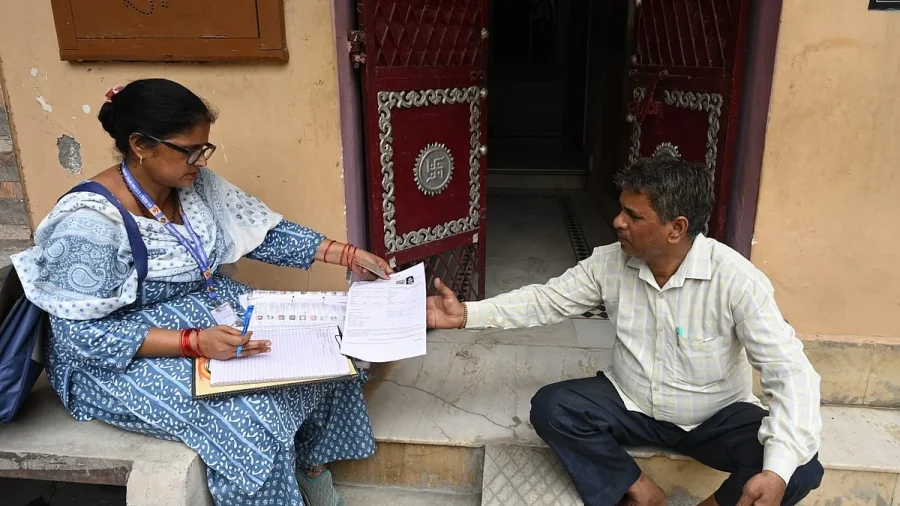
These categories capture voters who could not be traced during verification, have moved residences, have passed away, or whose entries appeared more than once. The house-to-house verification drive was designed to clean up the roll — but the scale of removal has raised concerns.
Delhi's Floating Population: A Unique Challenge for Voter Verification
"Delhi being the national capital, has a large number of floating population which could be the reason," the official explained, referring to the high deletion count.
Delhi's demographic reality is unlike any other state. Migrant workers, students, and professionals move in and out of the city constantly. Many registered voters live in rented accommodation and shift frequently, making physical verification difficult.
What This Means for Lakhs of Delhi Voters
For ordinary citizens, the draft roll is not the final word — but it creates immediate uncertainty. Anyone whose name has been removed will need to file a claim to be reinstated.
The burden now falls on individual voters to prove they exist, reside where they registered, and are eligible to vote. For elderly citizens, daily-wage workers, and those who have recently moved, this process could be challenging.
Election Commission's Process: Claims and Objections Window
The draft roll is exactly that — a draft. The Election Commission has provided a window for claims and objections before the final roll is published.
Voters whose names have been deleted can file claims to be added back. The verification process will re-examine individual cases before the final electoral roll is released.
Confirmed Facts vs What Remains Unclear
Confirmed: Delhi's draft roll excludes over 47 lakh voters; the deletion rate is the highest among states and UTs where SIR was held; ASDDO categories are the primary reason cited.
Unclear: The exact breakdown of how many voters fall into each ASDDO sub-category. Whether the deletions are accurate or include eligible voters who were simply not found at home during verification.
Ongoing: The claims and objections process will determine how many of the 47 lakh excluded voters are ultimately reinstated.
Risks and Concerns: Accuracy vs Cleanliness of the Roll
Election officials argue that removing duplicate and dead entries strengthens electoral integrity. A cleaner roll reduces the risk of impersonation and ensures that each vote cast is legitimate.
However, critics worry that aggressive deletion could disenfranchise genuine voters. The floating population — students, migrants, young professionals — is precisely the demographic most likely to be missed during a single house-to-house visit.
Wider Pattern: Voter Roll Revisions Across India
Delhi is not alone in undergoing this exercise. The Special Intensive Revision was conducted across multiple states and Union Territories. However, Delhi's 33 per cent deletion rate stands out sharply against the national trend.
This raises broader questions about how urban India's mobile population is handled in electoral rolls — a challenge that will only grow as internal migration increases.
What Delhi Voters Should Do Right Now
If you are a Delhi voter, do not assume your name is on the roll. Check the draft electoral roll online or at your local booth-level officer's office.
If your name is missing, file a claim within the stipulated window. Carry proof of residence, identity documents, and any previous voter ID or acknowledgement. Do not wait until election season — the time to act is now.
Future Outlook: What Happens Before the Final Roll
The Election Commission will process claims and objections, conduct fresh verification where needed, and publish the final electoral roll. The final numbers could differ significantly from the draft.
For Delhi's 70 Assembly constituencies, the composition of the final roll will shape the electoral landscape. Every voter reinstated — or permanently removed — changes the arithmetic.
Our Take
A voter roll that excludes one in three people is not a clean roll — it is a roll that demands scrutiny. Cleaning up duplicates and dead entries is necessary, but the process must not punish citizens who were simply not at home when the verification team arrived.
Delhi's floating population is not a problem to be solved by deletion. It is a reality that the electoral machinery must accommodate. The claims and objections window is the safety net — but it only works if voters know about it, understand it, and can access it.
Frequently Asked Questions
Why were over 47 lakh voters deleted from Delhi's draft electoral roll?
Voters were removed primarily under the Absent, Shifted, Dead, Duplicate, Others (ASDDO) categories following a house-to-house verification drive under the Special Intensive Revision. Many could not be traced at their registered addresses.
Is the draft electoral roll final?
No. The draft roll is a provisional list. Voters whose names are missing can file claims and objections before the final roll is published. The Election Commission will verify individual cases.
How can I check if my name is in Delhi's draft electoral roll?
You can check the draft roll online on the Chief Electoral Officer's website or visit your local booth-level officer. If your name is missing, file a claim with proof of residence and identity.
What is the Special Intensive Revision (SIR)?
SIR is a focused electoral roll revision exercise involving house-to-house verification. It aims to remove duplicate, dead, and shifted voters while adding eligible new voters. Delhi's SIR resulted in the highest deletion rate among participating states and UTs.