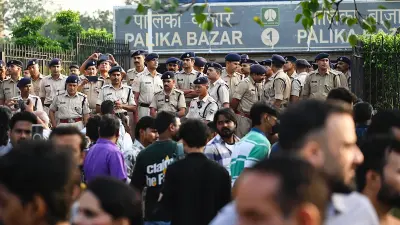
The death of a student at one of India's most prestigious engineering institutions has taken a legal turn. Delhi Police have registered an abetment to suicide case in connection with the death of an IIT Delhi student, moving the matter from a tragic incident to a formal criminal investigation.
What the Abetment to Suicide FIR Means Legally
The registration of a case under Section 306 of the Indian Penal Code signals that investigators believe there may be grounds to examine whether someone's actions, words, or conduct played a role in the student's death. Under this provision, abetment involves instigation, conspiracy, or intentional aid that leads a person to commit suicide.
For a conviction, courts typically require evidence of active instigation or a direct link between the accused's behaviour and the victim's mental state. Mere scolding or harsh words are not always sufficient — the legal threshold demands a clear nexus.
Why This Case Demands Careful Scrutiny
Student suicides in elite institutions carry a weight that extends far beyond the immediate tragedy. Each case raises uncomfortable questions about academic pressure, mental health support systems, hostel life, and the silent struggles that students often endure away from home.
The decision to file an abetment case suggests that preliminary information available to the police pointed toward possible external factors. However, at this stage, the registration of an FIR is the beginning of the process, not an indication of guilt.
How the Investigation Will Likely Proceed
Delhi Police will now undertake a structured inquiry. Investigators are expected to record statements from fellow students, hostel mates, faculty members, and family. Digital evidence — including phone messages, social media activity, and call records — will likely form a critical part of the probe.
The police will also examine the student's academic records, any disciplinary proceedings, and personal relationships that may have contributed to distress. The timeline of events leading up to the death will be reconstructed with precision.
The Human Cost Behind the Headlines
Behind every such case is a family that sent their child to a premier institution with dreams and hopes. The loss is immeasurable, and the legal process, while necessary, cannot undo the grief. For fellow students, the incident serves as a stark reminder of the pressures that exist within campus walls.
Mental health experts have repeatedly pointed out that elite institutions must do more than offer counselling services — they must create environments where students feel safe to speak about their struggles without fear of judgment or academic consequence.
What Delhi Police Have Said So Far
Official confirmation of the FIR has come from Delhi Police sources, who have stated that the case has been registered under the relevant legal provisions. Detailed findings have not been made public, and no arrests have been officially confirmed in available reports.
The investigation remains active, and further disclosures will depend on the progress of the inquiry.
Understanding Section 306 and Its Legal Threshold
Section 306 of the Indian Penal Code prescribes punishment for abetment of suicide. The provision carries a maximum sentence of up to ten years in prison along with a fine. Courts have consistently held that the offence requires proof of mens rea — a guilty mind — and active participation in instigating the act.
Legal experts note that abetment cases are among the most challenging to prove, as they rely heavily on circumstantial evidence and the interpretation of conversations and behaviour.
Confirmed Facts vs What Remains Unclear
Confirmed: Delhi Police have registered an abetment to suicide case in connection with the death of an IIT Delhi student. The FIR has been filed under Section 306 of the IPC.
Unclear: The identity of any accused individuals, the specific circumstances that led to the FIR, the student's name, and the timeline of events have not been officially detailed in available reports. Whether any arrests will follow remains unknown.
Mental Health Support in Elite Institutions — A Broader Concern
This case adds to a troubling pattern of student deaths in premier institutions across India. While each incident has its own unique circumstances, the recurring nature of such tragedies points to systemic gaps in mental health support and early intervention mechanisms.
Institutions are increasingly being called upon to normalise help-seeking behaviour, train faculty to identify warning signs, and create peer support networks that can catch students before they fall.
What Students and Families Should Know
For students currently enrolled in demanding academic programmes, this case is a reminder that distress is not a sign of weakness. Most institutions have counselling centres, helplines, and faculty mentors available. Reaching out early can make a significant difference.
For families, maintaining open lines of communication with children away from home is vital. Regular conversations that go beyond academic performance can help identify emotional struggles that might otherwise go unnoticed.
What Happens Next in the Investigation
The coming weeks will determine the direction of this case. Police will compile evidence, record witness statements, and assess whether the material gathered meets the legal standard for charges. If sufficient evidence emerges, the investigation may lead to arrests and a chargesheet.
If the evidence does not support the abetment theory, the case may be closed or altered based on findings. The legal process will unfold methodically, with the focus on establishing facts rather than assumptions.
Our Take
The registration of an abetment to suicide case is a significant step, but it is not a verdict. It reflects a decision by the police that the circumstances surrounding this student's death warrant deeper examination. The investigation must be thorough, sensitive, and free from external pressure.
Beyond the legal proceedings, this tragedy should prompt a broader conversation about the pressures faced by students in India's most competitive institutions. A single life lost is one too many, and every such case demands that institutions, families, and society examine what more can be done to prevent the next one.
Frequently Asked Questions
What is an abetment to suicide case under Section 306 IPC?
Section 306 of the Indian Penal Code deals with abetment of suicide. It applies when a person instigates, conspires, or intentionally aids another person in committing suicide. The punishment can extend to ten years in prison and a fine.
What does the registration of this FIR mean for the accused?
Registration of an FIR does not mean guilt. It means the police have found preliminary grounds to investigate whether an offence has been committed. The accused is presumed innocent until proven guilty in a court of law.
How does the police prove abetment to suicide?
Police must establish a direct link between the accused's actions and the victim's decision to end their life. Evidence typically includes messages, call records, witness statements, and proof of instigation, coercion, or harassment.
What support is available for students facing mental health distress?
Most institutions, including IITs, have counselling centres and mental health resources. Students can also reach out to national helplines such as KIRAN (1800-599-0019) for immediate support. Speaking to a trusted friend, family member, or faculty mentor is often the first step toward getting help.