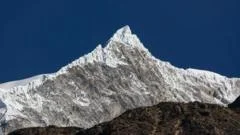
The thunderous roar of water tearing through the mountain valleys was a sound no one in the Nepal-Tibet border region will forget. Within hours, communities were submerged, and livelihoods were washed away. Now, preliminary investigations by scientists have pointed to a collapsed glacier as the likely trigger of these devastating floods, placing the spotlight firmly on the accelerating melt of Himalayan ice.
What the Preliminary Investigation Reveals
According to the initial scientific assessment, the catastrophic flood event was likely caused by a collapsed glacier. While the exact mechanics are still being pieced together, the finding points to a sudden release of water and debris that surged down the valley. The event has been described as a stark illustration of the fragility of high-altitude environments under pressure from a warming climate.
Why This Flood Event Demands Global Attention
This is not just a local tragedy; it is a global warning. The Himalayas, often called the Third Pole, hold the largest reserve of freshwater outside the polar ice caps. As temperatures rise, these glaciers are retreating at an alarming rate, creating unstable glacial lakes. When a glacier collapses or a moraine dam fails, it can unleash a glacial lake outburst flood (GLOF) with little to no warning, threatening millions of people living downstream in Nepal, India, and Tibet.
The Growing Threat of Glacial Lake Outburst Floods
The concept of a GLOF is central to understanding this disaster. These events occur when a lake formed by melting glacier ice suddenly breaches its natural dam. The resulting flood can carry massive amounts of debris, destroying infrastructure, homes, and farmland in its path. Scientists have been warning for years that the risk of such events is increasing as the climate warms, making the Himalayan region a hotspot for this type of natural hazard.
Who Is Most at Risk in the Himalayan Valleys
The immediate victims are the residents of remote mountain settlements who live in the shadow of these towering peaks. These communities often have limited access to early warning systems and are highly vulnerable to sudden natural disasters. Beyond the immediate loss of life and property, the floods can contaminate water supplies, destroy crops, and cut off vital transport links, leaving isolated villages without essential supplies for weeks.
What Scientists Are Saying About the Himalayan Ice
The scientific community has responded to the preliminary findings with a sense of urgency. Researchers have long documented the accelerating rate of ice loss across the Himalayan range. This event serves as a tangible, destructive example of the consequences they have been projecting. The consensus is that the stability of these high-altitude glaciers is becoming increasingly precarious, demanding more robust monitoring and research.
Understanding the Chain Reaction Behind the Floods
The disaster is a reminder that the cryosphere—the frozen parts of the Earth—is not a static landscape. A collapse in one area can trigger a cascade of events downstream. The sudden displacement of ice and water can erode valley walls, pick up sediment, and amplify the destructive power of the flood as it travels. This dynamic process makes predicting the exact scale and reach of such events incredibly challenging for scientists.
Confirmed Facts vs What Remains Unclear
What is confirmed is that a devastating flood has occurred in the Nepal-Tibet border region and that preliminary scientific investigations attribute it to a collapsed glacier. What remains unclear is the precise timeline of the collapse, the exact volume of water and ice released, and the full extent of the damage. The findings are preliminary, and a full scientific analysis will be required to confirm the initial hypothesis and understand the long-term implications for the region's glacial stability.
Risks and the Urgent Need for Better Monitoring
While the immediate focus is on relief and recovery, the event highlights a significant and growing risk. The lack of comprehensive, real-time monitoring systems for high-altitude glacial lakes remains a critical gap. Experts argue that investing in satellite surveillance, ground-based sensors, and community-based early warning systems is no longer an option but a necessity to mitigate the impact of future events.
A Pattern of Increasing Glacial Instability
This incident fits into a broader, worrying pattern across the Hindu Kush Himalayan region. From the Alps to the Andes, mountain glaciers are losing mass, and the frequency of related hazards is on the rise. The Nepal-Tibet floods are a local manifestation of a global phenomenon, serving as a case study for how climate change is reshaping the world's most extreme landscapes and the risks it poses to those who call them home.
What Residents and Authorities Should Do Now
For those living in vulnerable valleys, the immediate advice is to stay informed and heed any warnings from local authorities. For regional governments, the priority must be to accelerate the mapping of high-risk glacial lakes and to establish clear evacuation routes. For the global community, this is a call to support climate adaptation funding for mountain nations that are on the front lines of this crisis.
Future Outlook for the Himalayan Region
Looking ahead, the scientific consensus suggests that events like this will become more frequent. The window for proactive adaptation is narrowing. The focus must shift from reaction to preparedness, with a greater emphasis on understanding the specific triggers of glacier collapse and developing predictive models that can give communities the precious minutes they need to reach safety.
Our Take
This disaster is a sobering reminder that the effects of climate change are not a distant future problem but a present-day reality. The collapse of a glacier is a silent, high-altitude event with a thunderous, destructive consequence. While the investigation is ongoing, the message is clear: the mountains are changing, and the world must listen to the warnings embedded in the ice. The tragedy in Nepal and Tibet is a call for urgent, collective action to protect vulnerable communities and understand the rapidly evolving landscape of our planet.
Frequently Asked Questions
What is a glacial lake outburst flood (GLOF)?
A glacial lake outburst flood (GLOF) is a sudden release of water from a lake fed by glacier melt. This happens when the natural dam holding the water back, often made of ice or loose rock, fails, sending a massive and destructive flood of water and debris down the valley.
Why did the glacier collapse cause such devastating floods?
A collapsed glacier can displace a massive volume of water from a glacial lake almost instantly. This sudden displacement can breach the lake's natural dam, releasing a high-energy flood wave that travels rapidly downstream, carrying enormous destructive power capable of destroying infrastructure and settlements.
How does climate change increase the risk of these floods?
Rising global temperatures cause Himalayan glaciers to melt faster, creating larger and more unstable glacial lakes. The retreat of ice also removes the natural support for mountain slopes, making them more prone to collapse. This combination of larger lakes and unstable terrain significantly increases the likelihood of a GLOF event.
Are there early warning systems for glacial lake floods?
Early warning systems for GLOFs are limited and often underfunded. While some high-risk lakes in Nepal and other countries have monitoring equipment, many remain unmonitored. Scientists are advocating for expanded satellite monitoring and community-based alert systems to provide more warning time to people living in vulnerable valleys.