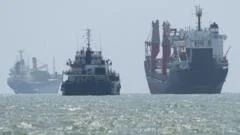
The United States has once again tightened its economic noose around Iran, and this time, it has directly targeted the nations that keep Tehran's economy afloat. Beijing's response was swift and sharp: these new sanctions are "illegal."
Why Beijing is calling the new US sanctions on Iran 'illegal'
China's foreign ministry did not mince words. Officials in Beijing argue that the US is overstepping its bounds by imposing unilateral penalties on third-party countries that choose to trade with Iran. According to the original report, the US has threatened to isolate nations that continue to do business with Tehran.
For China, this is not just a diplomatic squabble. It is a direct challenge to its sovereign right to conduct foreign trade. Beijing maintains that such actions violate the basic principles of international law and the rules of the World Trade Organization.
The oil lifeline: Why Iran's crude matters to China
At the heart of this standoff is oil. The report notes that Iran sells much of its crude to Beijing. For years, Chinese refineries, particularly independent "teapot" refiners, have relied on discounted Iranian crude to keep operating costs low.
This trade relationship is a financial lifeline for Tehran, providing billions in revenue despite existing US sanctions. By threatening to penalize China for this trade, Washington is aiming to choke off Iran's primary income source, but it is also risking a significant escalation with the world's second-largest economy.
Timeline of tension: How the US-China-Iran triangle evolved
The US has a long history of using sanctions to pressure Iran, particularly over its nuclear program and support for regional proxies. However, the recent shift to penalize trading partners marks a more aggressive phase.
Previous US administrations have often granted waivers to key buyers like China and India to avoid disrupting global oil markets. The current approach appears to be a departure from that strategy, signaling a "with us or against us" stance that Beijing finds unacceptable.
Who is affected by the new US sanctions on Iran?
The immediate impact is felt by Chinese importers who now face the risk of being cut off from the US financial system. But the ripple effects extend further.
Global oil prices could see increased volatility as traders price in the risk of supply disruptions. Furthermore, other nations that import Iranian goods, from petrochemicals to consumer products, may also reconsider their dealings, creating a chilling effect on international commerce.
China's official response: A firm rejection of US pressure
China's foreign ministry has consistently opposed what it calls "long-arm jurisdiction." The latest statement continues this line, framing the US actions as a violation of international norms.
While the report does not specify exact retaliatory measures, Beijing has historically responded to such pressure by deepening its ties with Tehran, including through long-term cooperation agreements. The message is clear: China will not be dictated to by Washington.
Analysis: A dangerous game of economic brinkmanship
This is more than a dispute over oil. It is a test of the global economic order. The US is leveraging its financial power to enforce its foreign policy, while China is pushing back against a system it believes is weaponized against it.
Analysts suggest that this could accelerate the trend of de-dollarization, as countries seek alternative payment systems to avoid US scrutiny. The long-term consequence may be a fragmented global economy, where trade blocs form around political alliances rather than economic efficiency.
Confirmed facts vs. what remains unclear
Confirmed: The US has announced new sanctions targeting Iran and its trading partners. China has publicly condemned these sanctions as "illegal."
Unclear: The specific details of the sanctions, such as which entities are targeted and the exact timeline for implementation, have not been fully disclosed in the source material. It is also unclear whether China will take concrete retaliatory steps.
Wider trend: The weaponization of global finance
The US dollar's dominance has long been a pillar of American power. By using it to enforce sanctions, Washington risks pushing adversaries and even allies to seek alternatives.
China and Russia have already been building alternative financial infrastructure, such as the CIPS (Cross-Border Interbank Payment System) to bypass SWIFT. This latest confrontation is likely to accelerate those efforts, reshaping the landscape of international finance.
What should businesses and observers watch for next?
For companies involved in energy trading, the immediate priority is to assess their exposure to Iranian crude and US sanctions compliance. Legal teams should review contracts to ensure they are not inadvertently violating US regulations.
For the general public, the key indicator to watch is the oil price. If China defies the sanctions and continues buying Iranian oil, prices may remain stable. If it capitulates, supply could tighten, leading to higher fuel costs globally.
Future outlook: Escalation or negotiation?
The coming weeks will reveal whether this is a rhetorical clash or a full-blown trade war. China's history suggests it will not easily back down, but it also values economic stability.
There is a possibility of behind-the-scenes negotiations to carve out an exception for Chinese purchases, similar to past waivers. However, given the current political climate in Washington, such a compromise may be politically difficult.
Our Take
This confrontation is a symptom of a deeper structural shift in global politics. The US is trying to maintain its hegemony through economic coercion, while China is asserting its right to trade freely. The outcome of this standoff will set a precedent for how the world's superpowers manage their differences in the 21st century.
For now, the rhetoric is heated, but the real battle will be fought in boardrooms and shipping lanes, where the practicalities of trade meet the ambitions of statecraft.
Frequently Asked Questions
Why did China call the US sanctions on Iran "illegal"?
China argues that the US does not have the legal authority to impose unilateral sanctions on third-party countries that trade with Iran. Beijing views this as a violation of international law and an infringement on its sovereign right to conduct foreign policy and trade.
How will the new US sanctions affect China's oil imports?
The sanctions threaten to penalize Chinese entities that purchase Iranian crude. This could force Chinese refiners to seek alternative suppliers, potentially at higher costs, or risk facing US financial penalties.
What is the US trying to achieve with these sanctions?
The primary goal is to cut off revenue streams to Iran, particularly from oil sales, to pressure Tehran over its nuclear program and regional activities. By targeting trading partners, the US aims to make it impossible for Iran to sell its oil on the global market.
Could this lead to a trade war between the US and China?
While it adds significant friction to US-China relations, a full-scale trade war is not inevitable. The situation could be resolved through diplomatic channels or waivers, but the risk of escalation remains high if both sides refuse to compromise.