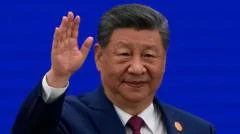
The race for artificial intelligence was never just about technology. It is about power, security, and who writes the rules for the next decade. This week, that tension surfaced again — not in a lab, but in a war of words between Washington's AI safety camp and Beijing.
China has pushed back sharply against the idea that it is engaged in "malicious competition" over AI, after Anthropic CEO Dario Amodei called for a slowdown in AI development — specifically in a way that would prevent China from pulling ahead.
The Comment That Lit the Fuse
Amodei's argument was not new. He has consistently warned that unchecked AI development poses catastrophic risks. But his framing — that a slowdown should be designed so China does not gain an advantage — turned a safety debate into a geopolitical one.
Beijing's response was swift. Chinese officials and state-affiliated voices rejected the characterisation, insisting China's AI ambitions are about development, not domination. The message: do not dress up a race for supremacy as a plea for safety.
Why This Exchange Matters Beyond the Headlines
At its core, this is a dispute about intent. The US side frames China's AI progress as a strategic threat that justifies coordinated Western caution. China frames its own progress as a sovereign right — no different from any nation investing in its digital future.
For ordinary people, the stakes are not abstract. AI will shape jobs, healthcare, education, and surveillance. If the world's two largest economies cannot agree on basic rules, the consequences will be felt far beyond their borders.
How the AI Race Became a Diplomatic Flashpoint
The tension has been building for years. US export controls on advanced chips, China's rapid expansion of domestic AI models, and competing visions for global AI governance have created a fragile equilibrium.
Amodei's comments added a new layer: the suggestion that even safety measures should be calibrated to preserve a Western edge. That is what Beijing is now rejecting — not the idea of safety, but the idea that safety should be weaponised.
Who Is Actually Affected by This Dispute
Researchers, startups, and students in both countries feel the ripple effects first. Visa restrictions, funding gaps, and export bans already shape their work. A rhetorical escalation makes collaboration harder and suspicion easier.
For Indian readers, the lesson is sharper. India sits between these two poles — dependent on US tech, wary of Chinese dominance, and building its own AI stack. How this rivalry unfolds will directly influence India's policy choices.
What Officials and Analysts Are Saying
Chinese officials have not issued a formal policy statement in response, but state-linked commentators have described the "malicious competition" framing as a distortion. According to these voices, China's AI development is transparent, civilian-focused, and consistent with global norms.
Analysts note that both sides are speaking to domestic audiences as much as to each other. The US message reassures voters that safety matters. China's message reassures its citizens that it will not be held back.
The Deeper Game: Standards, Not Just Speed
The real contest is not who builds the fastest model. It is who sets the standards — for safety, for data, for deployment. If the US and China develop incompatible AI ecosystems, the world fragments into digital blocs.
That is why Amodei's call for a slowdown is so contentious. A slowdown only works if everyone slows down. And in a climate of mistrust, no one wants to be the first to brake.
Confirmed Facts vs What Remains Unclear
Confirmed: Anthropic CEO Dario Amodei called for a slowdown in AI development with reference to China. China has publicly criticised the framing of its AI ambitions as malicious competition.
Unclear: Whether this exchange will lead to any formal policy shift, diplomatic protest, or change in AI safety discussions. No new regulations or executive orders have been announced by either side.
Speculation: Some observers suggest this marks a new phase of AI diplomacy. Others see it as a familiar rhetorical cycle. Both views remain unverified.
Risks and the Balanced View
The risk of escalation is real. If AI safety becomes a cover for techno-nationalism, genuine safety cooperation becomes impossible. That would harm everyone — including the US and China.
At the same time, China's own record on AI governance, data privacy, and military-civil fusion raises legitimate concerns in Western capitals. Dismissing those concerns as pure geopolitics would be naive.
The balanced view: both sides have valid points, and both are using safety language to advance strategic interests. The truth is rarely on one side alone.
A Wider Pattern: AI as the New Space Race
This is not the first time technology has become a proxy for great-power rivalry. The Cold War had nuclear weapons and space. The 21st century has semiconductors and algorithms.
What is different now is speed. AI advances in months, not decades. That leaves little time for diplomacy to catch up — and little room for error.
What Readers Should Take Away
For students and researchers: expect more scrutiny on international collaboration. For investors: regulatory uncertainty will remain high. For policymakers: the window for global AI rules is narrowing.
For everyone else: pay attention. The AI race is not a distant tech story. It will shape the price of your data, the quality of your healthcare, and the nature of your work.
What Could Happen Next
Watch for three signals. First, whether China issues a formal diplomatic response. Second, whether US AI labs adjust their public messaging on China. Third, whether international AI safety summits become more polarised.
None of these are certain. But the direction of travel is clear: AI is now too important to be left to engineers alone.
Our Take
The phrase "malicious competition" is doing a lot of work here. It implies intent — that China is not just competing, but competing unfairly or dangerously. Beijing's pushback is predictable, but it also raises a fair question: can any nation be trusted to define what counts as "safe" AI for the world?
Safety and strategy are now inseparable. That is uncomfortable, but it is the reality. The sooner both sides admit it, the sooner real dialogue can begin.
Frequently Asked Questions
What did the Anthropic CEO actually say about China and AI?
Dario Amodei called for a slowdown in AI development, specifically framed in a way that would prevent China from pulling ahead. He has consistently warned about AI risks, but this framing linked safety to geopolitical strategy.
Why did China criticise the "malicious competition" narrative?
China rejected the implication that its AI ambitions are aggressive or unfair. Officials and state-linked commentators framed the narrative as a distortion of legitimate technological development.
Does this mean US-China AI cooperation is over?
Not necessarily. The exchange is rhetorical, not a formal policy break. But it does make cooperation harder, especially on safety standards and research sharing.
How does this affect India or other countries?
India and other nations will face pressure to choose sides or build independent AI ecosystems. The fragmentation of global AI governance could slow innovation and raise costs for everyone.