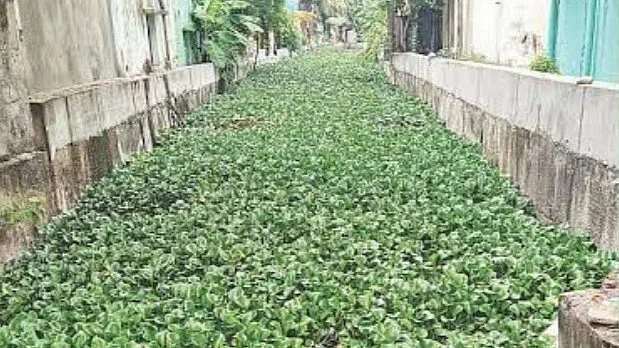
The sight of a thick green carpet stretching across the Vyasarpadi canal is no longer just an eyesore. For residents of Shastri Nagar, it is a ticking time bomb. With Chennai already receiving intermittent rain, the fear is simple and urgent — if a heavy spell hits, the choked waterway could overflow and push water straight into their homes.
A canal that can barely breathe
The canal along Shastri Nagar First Street is severely clogged. Dense water hyacinth covers a large stretch, leaving little room for water to pass through. Beneath the thick layer of vegetation, water has turned stagnant — a source of foul odour that residents say has become unbearable.
The problem is not new. Locals point out that the weed has been spreading unchecked for nearly five months. What started as a slow invasion has now become a full-blown blockage, worsened by garbage piling up along the canal's edges.
Why residents are worried about the next downpour
Chennai's monsoon pattern is unpredictable. A single heavy spell can dump more water than the city's drainage systems can handle. In Vyasarpadi, the situation is more fragile because the canal — meant to carry stormwater away — is already struggling to move even normal flow.
Residents fear that if the water hyacinth is not cleared soon, the canal will overflow during heavy rain, inundating nearby streets and low-lying homes. For a neighbourhood that has seen waterlogging before, the anxiety is real and immediate.
Five months of neglect and growing waste
The timeline matters here. For nearly five months, the water hyacinth has grown thicker, and waste has accumulated along the canal. Each passing week makes the clearing job harder and the flood risk greater.
What makes this worse is the combination of organic weed and solid waste. Together, they form a dense barrier that blocks water flow and creates an ideal breeding ground for mosquitoes and other insects. Residents say the stagnant water beneath the vegetation has become a health hazard in itself.
Who is affected and what is at stake
The immediate impact falls on the residents of Shastri Nagar, particularly those living along First Street. Their homes are closest to the canal and would be the first to face flooding if the water overflows.
Beyond the flood risk, the daily quality of life is already suffering. The foul odour from stagnant water makes it difficult for families to keep windows open. The mosquito menace adds another layer of concern, especially with the risk of vector-borne diseases during the monsoon season.
No official response reported yet
As of now, there has been no reported statement from civic authorities regarding the clogged canal. The Greater Chennai Corporation, which is responsible for maintaining such waterways, has not yet announced any cleaning schedule for this stretch.
Residents are left waiting, hoping that the authorities act before the next heavy rain rather than after the damage is done. The absence of a clear official response only adds to the uncertainty.
What this says about Chennai's monsoon preparedness
This is not an isolated issue. Chennai has repeatedly faced flooding in recent years, and clogged canals and drainage systems have been a recurring factor. The Vyasarpadi canal situation is a reminder that monsoon preparedness is not just about big infrastructure projects — it is also about routine maintenance of the city's waterways.
Water hyacinth is a fast-growing weed that can double its coverage in weeks if left unchecked. Five months of neglect suggests a gap in regular inspection and cleaning schedules. The question is whether the civic body will treat this as an emergency or wait for the monsoon to force its hand.
Confirmed facts vs what remains unclear
What is confirmed is that the canal is severely clogged with water hyacinth and garbage, that the problem has persisted for nearly five months, and that residents fear flooding during heavy rain. These details come directly from the residents' account of the situation.
What remains unclear is whether any official inspection has been conducted, whether a cleaning operation is planned, and how quickly the authorities can respond if heavy rain hits in the coming days. There is no official confirmation of the canal's current water-carrying capacity or the exact level of flood risk.
Risks and the need for a balanced view
While the residents' fears are understandable, it is also true that not every clogged canal leads to flooding. The actual risk depends on the intensity of rainfall, the capacity of the canal, and how quickly the water can be diverted. However, the longer the blockage remains, the higher the risk becomes.
There is also the question of responsibility. While the corporation is the primary authority for canal maintenance, waste dumping by residents along the canal has contributed to the problem. A lasting solution will require both civic action and community cooperation.
A pattern seen across Chennai's waterways
The Vyasarpadi canal is one of many waterways in Chennai that face similar challenges. Water hyacinth infestation, garbage dumping, and slow civic response have been recurring themes in the city's flood management discussions. Each monsoon brings fresh warnings, but the underlying maintenance gaps often remain unaddressed.
This pattern suggests that the issue is not just about one canal but about how the city manages its entire stormwater network. A proactive approach — regular desilting, weed removal, and waste management — could prevent many of the flood scares that emerge every year.
What residents can do right now
For residents of Shastri Nagar, the immediate step is to report the issue formally to the Greater Chennai Corporation through its grievance portal or helpline. Documenting the condition of the canal with photos and videos can help build a stronger case for urgent action.
Residents can also approach their local councillor and ward office to escalate the matter. Collective representation — such as a signed petition from the neighbourhood — often gets faster attention than individual complaints. In the meantime, families in low-lying areas should stay alert to weather warnings and keep essential documents and valuables ready in case of sudden waterlogging.
What happens next
The coming weeks will be critical. If Chennai receives heavy rain before the canal is cleared, the risk of overflow and localised flooding will be significant. If the authorities act quickly, the situation can be brought under control before it escalates.
Much depends on whether the corporation treats this as a priority. The residents have done their part by raising the alarm. The ball is now in the civic body's court to respond with action, not just assurances.
Our Take
The Vyasarpadi canal is a small but telling example of a larger problem. Chennai's flood resilience is only as strong as its weakest link, and a canal choked with hyacinth for five months is a weak link that should never have been allowed to develop. The residents' fear is not exaggerated — it is a rational response to visible neglect.
What makes this story significant is not just the flood risk but the pattern it reveals. Routine maintenance of urban waterways is as important as major infrastructure investments. If the authorities wait for the rain to force action, the city will keep repeating the same cycle of flood, damage, and post-crisis response. The residents of Shastri Nagar deserve better — and so does Chennai.
Frequently Asked Questions
Why is the Vyasarpadi canal causing flood fears?
The canal along Shastri Nagar First Street is severely clogged with dense water hyacinth and garbage, leaving little room for water to flow. Residents fear that heavy rain could cause the canal to overflow and flood nearby homes.
How long has the water hyacinth been spreading in the canal?
Residents say the weed has been spreading unchecked for nearly five months, and the problem has worsened with waste accumulation along the canal.
What are the immediate health concerns from the stagnant water?
The stagnant water beneath the thick vegetation has become a source of foul odour and a breeding ground for mosquitoes and other insects, raising concerns about vector-borne diseases.
What should residents do if they face flooding risk?
Residents should formally report the issue to the Greater Chennai Corporation through its grievance portal, approach their local councillor, and stay alert to weather warnings. Keeping essential documents ready is also advisable in case of sudden waterlogging.