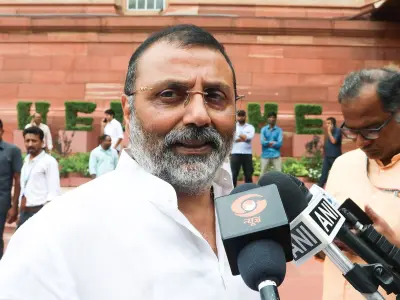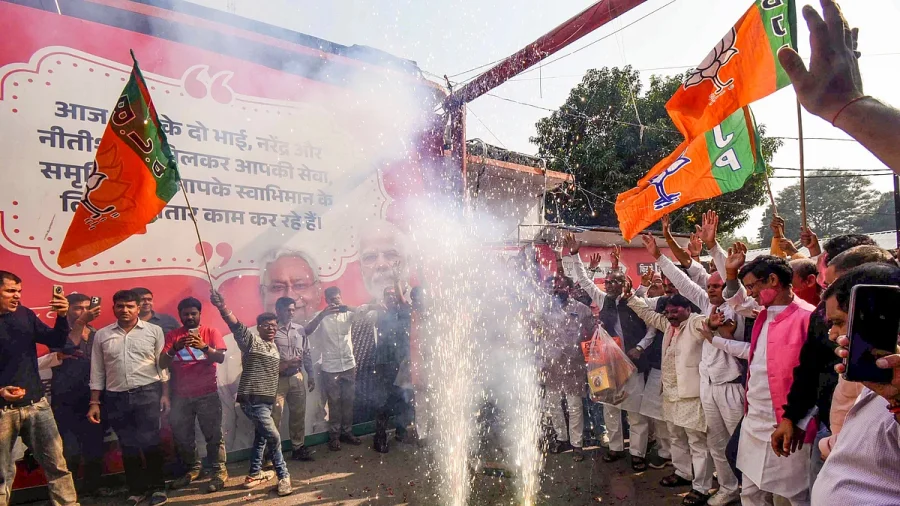
More than half of the BJP's entire assembly election budget went to a single state. According to expenditure reports filed with the Election Commission, the party spent Rs 529.38 crore contesting the five assembly polls that concluded in May — and nearly Rs 287 crore of that was spent in West Bengal alone.
The numbers, first reported by The Indian Express, offer a rare window into how India's largest political party allocates its resources — and how heavily it bet on one battleground.
Where the BJP's Rs 529 Crore Went
The BJP's spending covered West Bengal, Assam, Kerala, Tamil Nadu and Puducherry. West Bengal, where the party was contesting to retain power, absorbed the largest share at nearly Rs 287 crore — including Rs 58.80 crore provided directly to candidates.
That single-state figure is more than the combined spending in several of the other poll-bound states, underscoring how central Bengal was to the BJP's national strategy.
Why Bengal Dominated the BJP's Chequebook
West Bengal is India's third-most populous state and sends 42 MPs to the Lok Sabha. For the BJP, winning it was never just about one assembly term — it was about building a durable presence in a state where it had historically been a marginal force.
The party's decision to concentrate nearly Rs 287 crore there reflects that political calculus. Every rally, every star campaigner, every booth-level worker in Bengal came with a cost — and the BJP was willing to pay it.
How the BJP's War Chest Compares
The expenditure reports also reveal the scale of the BJP's financial machinery. The party declared receipts of about Rs 1,494 crore during the election period and a closing balance of Rs 7,689.06 crore.
That closing balance alone is larger than the annual budgets of several Indian states — a fact that opposition parties have seized upon to argue that the electoral contest is no longer a level playing field.
What Ajay Maken and the Opposition Are Saying
Congress leader Ajay Maken was blunt in his assessment, saying the BJP's funding edge creates a "lopsided electoral battlefield." His comment reflects a long-standing opposition grievance: that the ruling party's access to corporate donations and electoral bonds — now scrapped — gave it an unfair advantage.
The BJP has not issued a detailed public response to the specific spending figures. The party has previously maintained that its expenditures are within legal limits and fully disclosed to the Election Commission.
Confirmed Facts vs What Remains Unclear
Confirmed: The BJP spent Rs 529.38 crore across five assembly polls, with nearly Rs 287 crore in West Bengal. The party reported receipts of about Rs 1,494 crore and a closing balance of Rs 7,689.06 crore. These figures come from expenditure reports submitted to the Election Commission.
Unclear: How these figures compare with other parties' spending in the same elections, whether any portion of the expenditure is under scrutiny, and what specific categories — advertising, travel, rallies — consumed the largest shares. The reports do not break down spending by category in the public summary.
The Money Machine Behind the BJP's Campaigns
What makes the BJP's spending power notable is not just the amount but the ecosystem behind it. The party has built a nationwide donor network, a sophisticated digital outreach apparatus, and a cadre structure that can mobilise across states simultaneously.
That infrastructure — part fundraising, part ground game — is a key differentiator. It allows the BJP to outspend rivals in targeted states without exhausting its central reserves, as the Rs 7,689 crore closing balance suggests.
Risks and the Other Side of the Story
High spending is not automatically a winning strategy. The BJP spent heavily in West Bengal in 2021 and still lost to the Trinamool Congress. Money can buy visibility, but it cannot always buy votes.
There are also legitimate questions about whether current spending limits — which apply to candidates, not parties — are adequate in an era of centralised, party-driven campaigns. Critics argue the rules are outdated; defenders say they prevent excessive influence by any single entity.
A Wider Pattern in Indian Election Financing
The BJP's disclosures are part of a broader trend: the rising cost of contesting elections in India. Campaigns now involve digital advertising, data analytics, helicopter rallies, and round-the-clock media management — all of which carry significant price tags.
As election costs climb, the gap between well-funded and cash-strapped parties widens. That has implications not just for competitiveness but for the quality of democratic debate itself.
What This Means for Voters and Watchdogs
For ordinary voters, the numbers may seem abstract. But they matter: who funds a party often shapes whose interests it prioritises once in power.
For election watchdogs and regulators, the disclosures raise a practical question — whether existing transparency norms are enough to track party-level spending, or whether new rules are needed for an era where parties, not just candidates, dominate campaign finance.
What Could Happen Next
The Election Commission has not announced any review or action based on these filings. However, the figures are likely to feature in ongoing debates about political funding reform, especially after the Supreme Court struck down the electoral bond scheme.
Opposition parties may use the data to push for stricter spending caps or real-time disclosure requirements. The BJP, for its part, is expected to continue defending its record as compliant with existing laws.
Our Take
The BJP's Rs 529 crore bill is not just a number — it is a snapshot of how modern Indian elections are fought. The party's ability to concentrate nearly Rs 287 crore on one state shows both strategic focus and financial depth.
But the story is not only about the BJP. It is about a system where the cost of competing keeps rising, and where the rules have not kept pace. Until that gap is addressed, questions about fairness will persist — regardless of who wins.
Frequently Asked Questions
How much did the BJP spend on the 2024 assembly elections?
The BJP reported spending Rs 529.38 crore across the assembly elections in West Bengal, Assam, Kerala, Tamil Nadu and Puducherry, according to expenditure reports submitted to the Election Commission.
How much did the BJP spend in West Bengal specifically?
Nearly Rs 287 crore was spent in West Bengal, including Rs 58.80 crore provided directly to candidates. This was more than half of the party's total expenditure across all five states and Union territories.
What were the BJP's total receipts during this period?
The party reported receipts of about Rs 1,494 crore during the election period and a closing balance of Rs 7,689.06 crore, according to the same filings.
Why is the BJP's election spending controversial?
Opposition leaders like Ajay Maken argue that the BJP's funding advantage creates a "lopsided electoral battlefield." The debate centres on whether current spending rules are adequate when parties — not just candidates — dominate campaign finance.