The BJP has appointed Union Minister Harsh Malhotra as the new president of its Delhi unit, replacing Virendra Sachdeva. The decision comes at a crucial time for the party in the national capital, where it recently navigated a high-stakes election cycle.
Malhotra, who currently serves as a Union Minister of State and represents the East Delhi constituency in the Lok Sabha, now takes on the additional responsibility of leading the party's organizational structure in Delhi. The change marks a significant moment for the BJP's Delhi leadership.
Why This Leadership Change Matters Right Now
This is not just a routine organizational reshuffle. Malhotra is the only Union minister from Delhi in the current Modi cabinet. His appointment signals that the BJP is prioritizing a direct link between its central leadership and its Delhi unit. For party workers and observers, this move suggests a more aggressive and centrally-coordinated strategy for the capital.
The timing is also critical. With the recent assembly elections behind them, the party is now looking to consolidate its position and prepare for upcoming municipal and parliamentary challenges. Having a Union minister at the helm gives the Delhi BJP a stronger voice in both state and national matters.
How the Leadership Transition Unfolded
Virendra Sachdeva, who served as the Delhi BJP president for three years, completed his term. Under his leadership, the party contested the recent Delhi assembly elections. The transition was described by Malhotra himself as a "relay race," emphasizing continuity and collective effort rather than a break from the past.
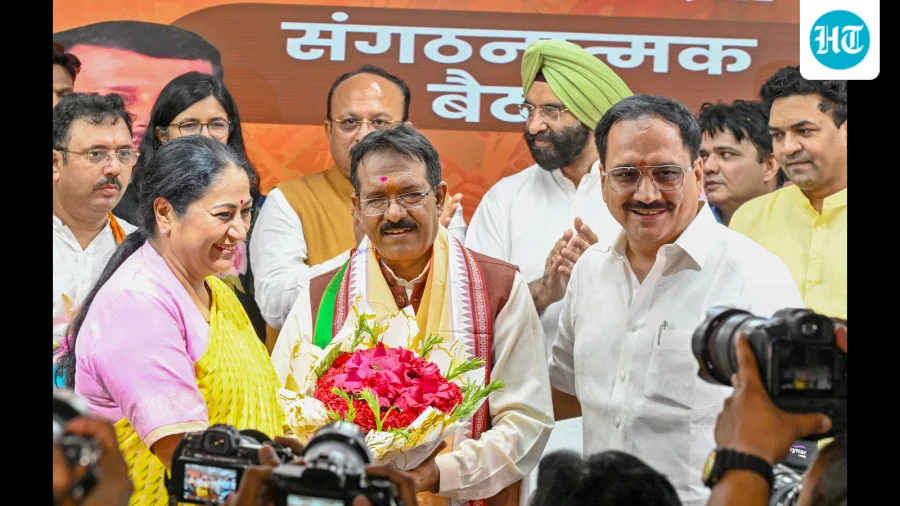
Malhotra officially took charge in a formal ceremony, where he was handed over the reins of the party's Delhi organization. The change was widely expected within political circles, given the party's tendency to rotate leadership and bring in fresh faces ahead of new political cycles.
Who Is Harsh Malhotra and What He Brings
Harsh Malhotra, 62, is a seasoned politician with deep roots in Delhi's political landscape. He was elected as a councillor from the Welcome constituency before rising through the ranks to become an MP and later a Union minister. His father, the late V.K. Malhotra, was a prominent BJP leader and the first president of the party's Delhi unit.
This family legacy gives Malhotra an inherent understanding of the party's organizational history in the capital. His experience as a Union minister also means he can navigate both the central government's machinery and the party's grassroots network. For the BJP, this dual capability is a strategic asset.
What We Know So Far — and What Remains Unclear
What is clear: Malhotra is now the face of the BJP in Delhi. He will oversee party strategy, candidate selection, and organizational expansion in the capital. His appointment has been formally announced and accepted.
What remains to be seen is how his leadership style differs from Sachdeva's. Will he push for a more aggressive opposition strategy against the Aam Aadmi Party government in Delhi? Or will he focus on internal party consolidation? These questions will shape the BJP's approach in the coming months.
Risks, Concerns, and the Balanced View
Every leadership change carries risks. Malhotra now carries the dual burden of being a Union minister and a state party chief. Balancing these roles can be challenging, especially during intense political campaigns.
Critics may argue that concentrating power in one person — especially someone already holding a central government position — could create bottlenecks in decision-making. Supporters, however, see this as an advantage: a direct line to the central leadership means faster approvals and stronger coordination.
The real test will be in how Malhotra handles the party's relationship with the Delhi government and prepares for future electoral battles.
Why Similar Leadership Changes Are Increasing
Political parties across India are increasingly appointing leaders with dual roles — those who hold both organizational and governmental positions. This trend reflects a shift toward more centralized and efficient decision-making structures.
For the BJP, this is part of a broader strategy to ensure that its state units are led by individuals who understand both policy and politics. Malhotra's appointment fits this pattern perfectly.
- Malhotra is the only Union minister from Delhi in the Modi cabinet.
- He was elected as a councillor from the Welcome constituency before becoming an MP.
- His father, V.K. Malhotra, was the first president of the BJP's Delhi unit.
"Change of leadership like a relay race." — Harsh Malhotra, on taking charge as Delhi BJP president
What Party Workers and Delhi Residents Should Know Now
For BJP workers in Delhi, this change means a new chain of command. Malhotra is expected to bring a more structured approach to organizational activities, leveraging his experience in both the party and the government.
For residents and political observers, this signals that the BJP is serious about strengthening its presence in Delhi. With a Union minister at the helm, the party is likely to be more vocal on national issues affecting the capital, from infrastructure to governance.
What Could Happen Next
In the short term, Malhotra will likely focus on internal reorganization and preparing for upcoming municipal elections. He may also push for greater coordination between the BJP's Delhi unit and the central government.
In the longer term, his performance will be judged by the party's electoral success in Delhi. If the BJP can improve its vote share and win more seats under his leadership, this appointment will be seen as a masterstroke. If not, questions about the dual-role strategy may emerge.
Our Take: Why This Story Matters Beyond One Appointment
This is not just about one person taking charge of a party unit. It reflects a larger political strategy: the merging of governmental power with organizational leadership. In an era where political parties need to move fast and speak with one voice, having a Union minister lead a state unit is a powerful tool.
For the BJP, this is a calculated move to ensure that Delhi remains a priority. For Malhotra, it is both an honor and a test. The coming months will reveal whether this strategy pays off.
FAQs
Who has been appointed as the new Delhi BJP president?
Union Minister Harsh Malhotra has been appointed as the new president of the BJP's Delhi unit, replacing Virendra Sachdeva.
Why was Virendra Sachdeva replaced as Delhi BJP chief?
Virendra Sachdeva completed his three-year term as Delhi BJP president. The party decided to appoint Harsh Malhotra as his successor as part of a routine leadership change.
What is Harsh Malhotra's political background?
Harsh Malhotra is a Union Minister of State and the MP from East Delhi. He was previously a councillor and is the son of late BJP veteran V.K. Malhotra, the first president of the BJP's Delhi unit.
How does this change affect the BJP's strategy in Delhi?
Having a Union minister as the state unit chief gives the BJP a stronger link between its central leadership and its Delhi organization. This is expected to lead to more coordinated and aggressive political strategies in the capital.