For millions of cricket fans across India, the Board of Control for Cricket in India (BCCI) has always felt like a world unto itself — powerful, wealthy, and often opaque. Now, a landmark verdict from the Central Information Commission (CIC) has officially cemented that distance. In a stunning reversal of its own 2018 directive, the apex transparency watchdog has ruled that the BCCI does not come under the purview of the Right to Information (RTI) Act. The decision, which declares that the world's richest sporting body cannot be classified as a public authority, has sent shockwaves through the transparency and sports governance communities.
What the CIC Ruling Actually Says About BCCI and RTI
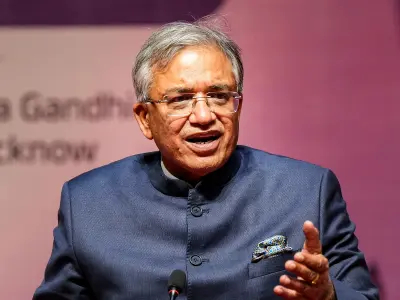
Information Commissioner PR Ramesh issued the definitive order, clarifying that the sports organisation fails to satisfy the structural criteria required to be considered a public authority under the RTI Act. The ruling overturns the CIC's own landmark 2018 directive, which had previously brought the BCCI under the transparency law's ambit. This means that citizens, journalists, and activists can no longer seek information from the BCCI through the RTI route, unless the decision is challenged in a higher court.
Why This Matters Right Now
This verdict matters because the BCCI is not just any sports body — it is the wealthiest cricket board in the world, with revenues running into thousands of crores. It manages the Indian cricket team, controls domestic tournaments like the IPL, and makes decisions that affect the careers of players, the interests of state associations, and the emotions of billions of fans. Without RTI oversight, questions about financial dealings, selection policies, conflict of interest, and governance remain unanswered. For transparency advocates, this ruling feels like a major step backward.
How the Transparency Battle Unfolded
The journey to this verdict has been long and contentious. In 2018, the CIC had ruled that the BCCI was a public authority because it performed public functions and received indirect government support. That decision was seen as a victory for transparency. However, the BCCI challenged the ruling, arguing that it was a private body registered under the Tamil Nadu Societies Registration Act and did not receive direct government funding. After years of legal back-and-forth, the CIC has now reversed its earlier stance, siding with the BCCI's argument.
Who Is Affected and What Officials Are Saying
The immediate impact falls on journalists, researchers, and activists who have used RTI to probe BCCI's financial and administrative decisions. Without access to information, holding the board accountable becomes significantly harder. Information Commissioner PR Ramesh, in his order, reportedly emphasized that the BCCI does not meet the structural definition of a public authority under Section 2(h) of the RTI Act. The BCCI, meanwhile, has welcomed the decision, stating that it remains committed to transparency through its own voluntary disclosures.
What We Know So Far — and What Remains Unclear
What we know is clear: the CIC has officially ruled that the BCCI is outside the RTI scope, overturning the 2018 directive. What remains unclear is whether this verdict will be challenged in the High Court or Supreme Court by transparency activists. Also uncertain is how this ruling affects other sports bodies in India, such as the Indian Olympic Association or state cricket associations, which may now argue for similar exemptions.
Risks, Concerns, and the Balanced View
From a transparency perspective, the risks are obvious: less accountability, less public scrutiny, and a potential erosion of trust in cricket governance. Critics argue that a body that controls a national sport and uses public resources like stadiums and tax benefits should not be above the RTI law. On the other hand, supporters of the BCCI's position argue that the board is a private entity and should not be subjected to the same level of scrutiny as government departments. They point out that the BCCI has its own internal mechanisms for transparency and that excessive RTI requests could hamper its functioning.
Why Similar Trends or Concerns Are Growing
This verdict comes at a time when questions about the governance of sports bodies are rising globally. From FIFA to the International Olympic Committee, calls for greater transparency have intensified. In India, the BCCI has faced repeated allegations of nepotism, financial mismanagement, and lack of accountability. The CIC's reversal may embolden other private bodies performing public functions to seek RTI exemptions, potentially weakening the transparency framework that the RTI Act was designed to strengthen.
- The BCCI is the richest cricket board globally, with annual revenues exceeding ₹4,000 crore.
- The 2018 CIC ruling had been a landmark for transparency in Indian sports.
- Transparency activists are expected to challenge the new verdict in court.
"The BCCI is not a public authority under the RTI Act as it fails to satisfy the structural criteria." — Information Commissioner PR Ramesh, Central Information Commission
What Readers, Users, or Investors Should Know Now
For cricket fans and citizens, this ruling means that RTI applications to the BCCI will no longer be entertained. If you have concerns about BCCI's decisions, you may need to rely on media reports, parliamentary questions, or voluntary disclosures by the board. For journalists and activists, the next step is likely a legal challenge in the High Court. For now, the BCCI remains outside the RTI net, and the onus is on the board to prove its commitment to transparency voluntarily.
What Could Happen Next
The most likely next step is a legal challenge by transparency activists, who may approach the High Court or Supreme Court to overturn the CIC's verdict. The case could also spark a broader debate about whether the RTI Act needs to be amended to explicitly include sports bodies that perform public functions. Meanwhile, the BCCI is expected to continue its operations without RTI oversight, though public pressure may push it to adopt more transparent practices voluntarily.
Our Take: Why This Story Matters Beyond One Incident
This verdict is not just about the BCCI — it is about the fundamental question of who should be held accountable in a democracy. If a body that controls a national sport, uses public infrastructure, and influences the lives of millions can claim exemption from transparency laws, it sets a dangerous precedent. The CIC's reversal may be legally sound, but it raises uncomfortable questions about the limits of the RTI Act. For cricket lovers and citizens alike, this ruling is a reminder that transparency is never guaranteed — it must be fought for, every step of the way.
FAQs
Why is the BCCI not under RTI according to the CIC?
The Central Information Commission ruled that the BCCI does not meet the structural criteria to be classified as a public authority under Section 2(h) of the RTI Act. The board is a private society registered under the Tamil Nadu Societies Registration Act and does not receive direct government funding.
What was the 2018 CIC ruling on BCCI and RTI?
In 2018, the CIC had declared that the BCCI was a public authority and thus subject to RTI, citing its public functions and indirect government support. That landmark ruling has now been overturned by the current verdict.
Can the CIC's decision on BCCI be challenged in court?
Yes, the verdict can be challenged in a High Court or the Supreme Court. Transparency activists and civil society groups are expected to file a petition to overturn the CIC's ruling and bring the BCCI back under RTI scrutiny.
What does this mean for cricket fans and journalists?
Cricket fans and journalists can no longer file RTI applications to seek information from the BCCI. This limits public access to details about financial decisions, selection policies, and governance matters. Alternative methods like media reports and voluntary disclosures may be used instead.