Elon Musk’s SpaceX has just made a jaw-dropping bet. In financial documents filed ahead of its highly anticipated IPO, the company has declared that its future is not in rockets, not in satellites, but in artificial intelligence. It’s a bet so enormous that SpaceX is projecting an AI market opportunity worth trillions of dollars — a figure that rivals the entire economic output of the United States.
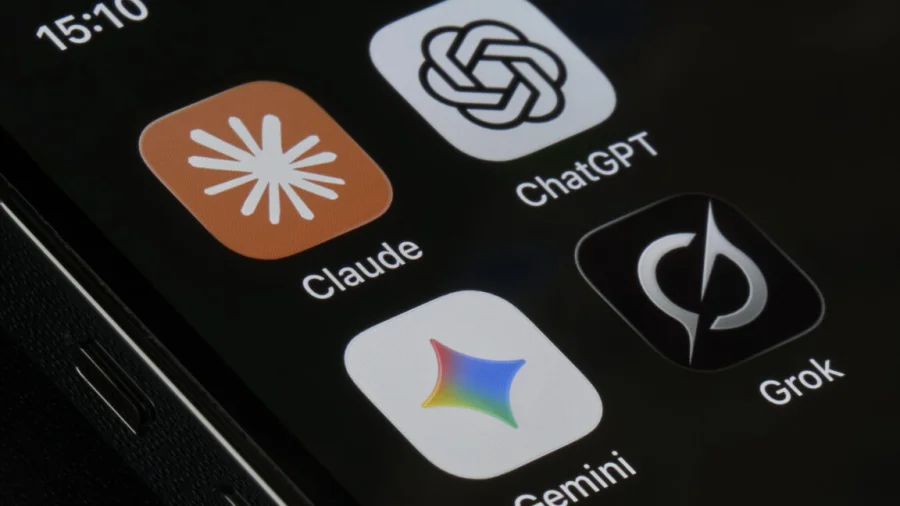
But here’s the problem. The AI product SpaceX is betting on — the Grok chatbot — is currently floundering. It’s struggling to win over users and customers who have already flocked to powerful rivals like OpenAI’s ChatGPT and Anthropic’s Claude. This isn’t just a side project anymore. It’s the centerpiece of SpaceX’s future. And it’s facing an uphill battle.
Why This Matters Right Now
This isn’t just a corporate strategy shift. It’s a signal that one of the world’s most valuable private companies believes its survival and growth depend on winning the AI race. For investors, this means the SpaceX IPO is no longer just about space. It’s about buying into a high-stakes AI gamble. For the tech industry, it means a new, powerful competitor is entering an already crowded and cutthroat market. And for everyday users, it raises a simple question: if SpaceX’s own AI is struggling, can this massive bet actually pay off?
How SpaceX’s AI Bet Unfolded
The revelation came from SpaceX’s S-1 filing, a document required for companies planning to go public. In it, SpaceX described its traditional space launch and satellite business as playing a “supporting role” to its fledgling AI business. This is a stunning admission from a company that has built its reputation on reusable rockets and the Starlink satellite network.
The shift stems from SpaceX’s formal acquisition of Musk’s company xAI earlier this year. The newly formed SpaceXAI division now oversees the Grok AI models and the associated Grok chatbot, which were previously developed by xAI. The S-1 filing boldly claimed that SpaceX has “the largest act…” — suggesting the company believes it has a unique advantage, though the exact nature of that advantage remains unclear.
Who Is Affected and What Officials Are Saying
The most directly affected group is potential SpaceX IPO investors. They are now being asked to evaluate a company whose core future value proposition is an AI product that is currently losing market share. Current SpaceX employees, particularly those in the AI division, face immense pressure to turn Grok into a viable competitor.
According to the S-1 filing, SpaceX officials are framing this as a natural evolution. They argue that the company’s massive computational resources, engineering talent, and data from its space operations give it a unique edge in training AI models. However, critics point out that having resources doesn’t automatically translate into a winning product, especially when competitors like OpenAI and Anthropic have years of head start and deeply entrenched user bases.
What We Know So Far — and What Remains Unclear
What We Know:
- SpaceX’s S-1 filing explicitly positions AI as its primary future business.
- The company projects a multi-trillion-dollar AI market opportunity.
- SpaceX formally acquired xAI and now operates the Grok AI models under the SpaceXAI division.
- Grok is currently struggling to compete with OpenAI and Anthropic in terms of user adoption and market share.
What Remains Unclear:
- What specific “largest act” does SpaceX believe it has? The filing’s exact wording is incomplete.
- How does SpaceX plan to differentiate Grok from established competitors?
- What is the timeline for SpaceX’s IPO, and how will this AI bet affect its valuation?
- Can SpaceX’s engineering culture, known for hardware and physics, successfully pivot to software and AI?
Risks, Concerns, and the Balanced View
The Bull Case: Supporters argue that SpaceX has a unique combination of assets. It has access to massive amounts of data from its satellite network, immense computational power from its own infrastructure, and a culture of solving impossible engineering problems. If anyone can crack the AI code, they say, it’s the team that figured out how to land rockets on a drone ship.
The Bear Case: Critics counter that AI is a different game. OpenAI and Anthropic have not only a head start but also a deep understanding of AI safety, user experience, and the nuances of large language models. Grok, by contrast, has been criticized for being a late entrant with a less polished product. The risk is that SpaceX pours billions into a losing battle, distracting from its core space business.
The Balanced View: The truth likely lies somewhere in between. SpaceX’s bet is audacious, but not irrational. The AI market is indeed enormous and growing. However, the execution risk is equally enormous. The company must not only build a better AI but also convince a skeptical market to switch from products they already trust.
Why Similar Trends Are Growing
SpaceX is not alone in this thinking. Across the tech world, companies are racing to integrate AI into their core offerings. From Microsoft’s deep partnership with OpenAI to Google’s own Gemini model, the message is clear: AI is the new electricity. What makes SpaceX’s move unique is the sheer scale of the bet and the fact that it comes from a company whose primary identity is not software. This trend of non-tech companies betting big on AI is likely to accelerate, as every industry leader fears being left behind.
“SpaceX described its traditional space launch and satellite business as playing a supporting role to its fledgling AI business.” — SpaceX S-1 Filing
What Readers, Users, or Investors Should Know Now
For potential investors, the key question is: do you believe in SpaceX’s ability to execute in AI, or are you buying into the space business? The two are now deeply intertwined. For users, Grok is still available, but it’s a work in progress. If you’re looking for a reliable AI assistant, ChatGPT or Claude remain the safer bets. For the tech industry, watch closely. If SpaceX succeeds, it will redefine what’s possible. If it fails, it will be a cautionary tale about the dangers of overreach.
What Could Happen Next
In the short term, expect SpaceX to aggressively market Grok and invest heavily in AI talent. The IPO itself will be a major test of investor confidence. If the market reacts positively, it could give SpaceX the capital it needs to accelerate its AI efforts. If not, the company may be forced to scale back its ambitions. In the long term, the success or failure of this bet will shape not just SpaceX’s future, but the broader landscape of the AI industry.
Our Take: Why This Story Matters Beyond One Incident
This is more than a corporate pivot. It’s a reflection of a world where AI is no longer a niche technology but the central battleground for the future of business. SpaceX’s bet is a high-stakes gamble that could either cement Elon Musk’s legacy as a visionary or serve as a reminder that even the most successful companies can stumble when they stray too far from their core strengths. Either way, it’s a story that will be studied for years to come.
FAQs
Why is SpaceX betting so heavily on AI?
SpaceX’s S-1 filing reveals that the company sees AI as its primary future business, projecting a multi-trillion-dollar market opportunity. It believes its unique resources, including massive computational power and data from its satellite network, give it a competitive edge.
Is Grok AI any good compared to ChatGPT?
Currently, Grok is struggling to compete with established AI models like OpenAI’s ChatGPT and Anthropic’s Claude. It has faced criticism for being a late entrant with a less polished product, though SpaceX is investing heavily to improve it.
What does this mean for the SpaceX IPO?
The IPO is now as much about AI as it is about space. Investors will need to evaluate SpaceX’s ability to execute in the highly competitive AI market. The company’s valuation will likely depend on how credible its AI ambitions appear to the market.
Can SpaceX really beat Big Tech at AI?
It’s a long shot. SpaceX has impressive engineering talent and resources, but it’s entering a market dominated by well-funded, experienced players like OpenAI and Google. Success will depend on whether SpaceX can differentiate Grok and convince users to switch.