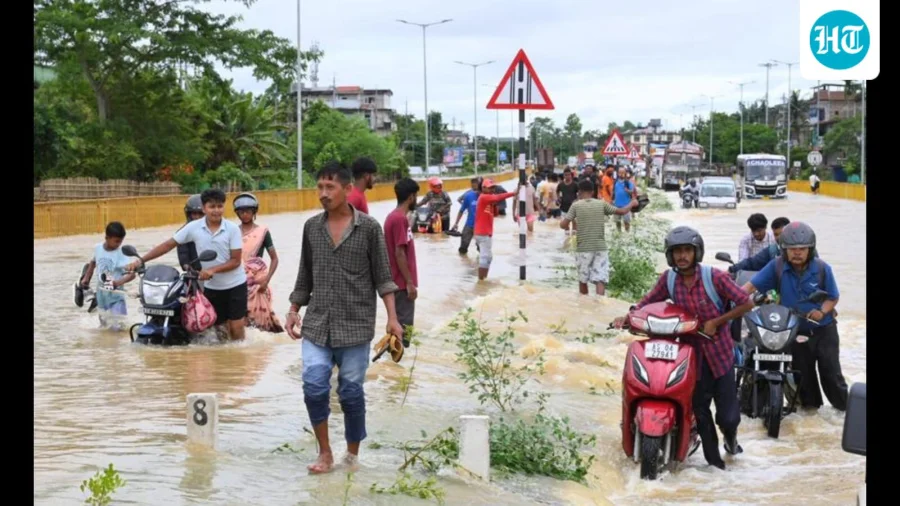
The flood situation in Assam has taken a critical turn, with the Army stepping in to lead rescue operations and the Indian Air Force placed on standby as water levels continue to rise across multiple districts. For thousands of families in low-lying areas, the coming hours could determine whether they reach safety or remain trapped by the surging waters.
Seven Districts on Alert as Flood Conditions Worsen
Low to moderate flood alerts have been issued for Sivasagar, Charaideo, Jorhat, Golaghat, Chirang, Dibrugarh and Tinsukia districts, according to official flood monitoring agencies. These alerts indicate that rivers in these areas are approaching or exceeding danger levels, threatening homes, crops and livelihoods.
Why the Situation Demands Urgent Military Response
The deployment of Army rescue teams and IAF standby status signals that civilian authorities expect the flood situation to escalate further. Military assets bring specialized equipment, including inflatable boats, helicopters and medical support, which are critical when roads become impassable and villages become islands. For residents in remote riverine areas, this military response could mean the difference between rescue and isolation.
How the Flood Crisis Unfolded
Assam has been experiencing heavy monsoon rains over the past week, causing rivers including the Brahmaputra and its tributaries to swell beyond danger marks. The current alerts follow a pattern of seasonal flooding that has historically affected the region, but the speed of deterioration has caught many communities off guard. Authorities had earlier issued warnings for several districts, but the situation escalated faster than anticipated.
Who Is Affected and What It Means for Residents
Villagers in low-lying areas of the seven alerted districts are the most vulnerable. Many have already begun moving to higher ground or relief camps, but those in remote locations face challenges accessing safe shelter. Farmers face the prospect of submerged paddy fields and lost crops, while families worry about drinking water contamination and waterborne diseases. The emotional toll of watching homes fill with water is compounded by uncertainty about when the rains will stop.
Official Response: Army and IAF Mobilized
Army rescue teams have been deployed to the worst-affected areas, conducting evacuations using boats and providing medical aid where needed. The Indian Air Force has been placed on standby, with helicopters and transport aircraft ready for aerial rescue missions, supply drops or evacuation of stranded people. Officials have not yet confirmed whether IAF sorties have been launched, but the standby status indicates readiness for rapid deployment if conditions worsen.
What the Alerts Mean for Affected Districts
Low to moderate flood alerts are issued when river levels are expected to rise but may not yet cause widespread devastation. However, in Assam's topography, even moderate flooding can cut off villages, damage roads and disrupt essential services. The alerts for Sivasagar, Jorhat and Dibrugarh are particularly concerning because these districts have large riverine populations and limited high-ground alternatives.
Confirmed Facts vs What Remains Unclear
What is confirmed: Army rescue operations are underway in Assam. IAF is on standby. Low to moderate flood alerts have been issued for seven districts. What remains unclear: The exact number of people affected or evacuated. Whether IAF has conducted any sorties yet. The full extent of damage to property and infrastructure. Authorities have not released casualty figures or detailed damage assessments at this stage.
Risks and Challenges Ahead
Rescue operations face significant challenges including submerged roads, strong river currents, and the possibility of further rainfall. There are concerns about the adequacy of relief camps, availability of clean drinking water, and the risk of disease outbreaks in crowded shelters. Additionally, the flood alerts may be upgraded to severe if water levels continue to rise, which would require larger-scale evacuations and more military resources.
Wider Pattern: Assam's Recurring Flood Crisis
Assam experiences severe flooding almost every monsoon season, with the Brahmaputra River and its tributaries regularly breaching embankments. Climate change has intensified rainfall patterns, making floods more unpredictable and severe. The current crisis fits into a broader trend of increasing flood frequency in Northeast India, raising questions about long-term flood management, embankment maintenance and community preparedness.
Practical Guidance for Affected Residents
Residents in the seven alerted districts should stay informed through official flood monitoring channels and local administration announcements. Those in low-lying areas should prepare emergency kits with documents, medicines, food and water. Avoid crossing flooded roads or rivers. Move to higher ground if water levels rise. Contact local disaster management authorities for rescue assistance. Do not spread unverified information about flood levels or rescue operations.
What Could Happen Next
If monsoon rains continue, flood alerts may be upgraded to severe for some districts, triggering larger-scale evacuations and full IAF deployment. The Army is likely to expand its rescue operations to more areas. Relief camps will need to accommodate more people. The situation will be reassessed daily based on rainfall forecasts and river levels. A prolonged flood event could lead to significant agricultural losses and long-term displacement for some communities.
Our Take
The Army and IAF mobilization reflects the seriousness of Assam's flood situation, but it also highlights the recurring vulnerability of the region to monsoon disasters. While military rescue capabilities are essential, the focus must also shift to long-term flood mitigation, better early warning systems and climate-resilient infrastructure. For now, the priority is saving lives and ensuring that every stranded person receives help. The coming days will test both the response machinery and the resilience of Assam's flood-affected communities.
Frequently Asked Questions
Which districts in Assam are under flood alert?
Low to moderate flood alerts have been issued for Sivasagar, Charaideo, Jorhat, Golaghat, Chirang, Dibrugarh and Tinsukia districts.
Has the Army started rescue operations in Assam floods?
Yes, the Army has joined rescue operations in flood-affected areas of Assam, deploying teams with boats and medical support.
Is the Indian Air Force involved in Assam flood rescue?
The IAF has been placed on standby with helicopters and transport aircraft ready for rescue missions, supply drops or evacuation if needed.
What should people in flood-affected areas do?
Stay informed through official alerts, prepare emergency kits, move to higher ground if water rises, and contact local disaster management authorities for rescue assistance.