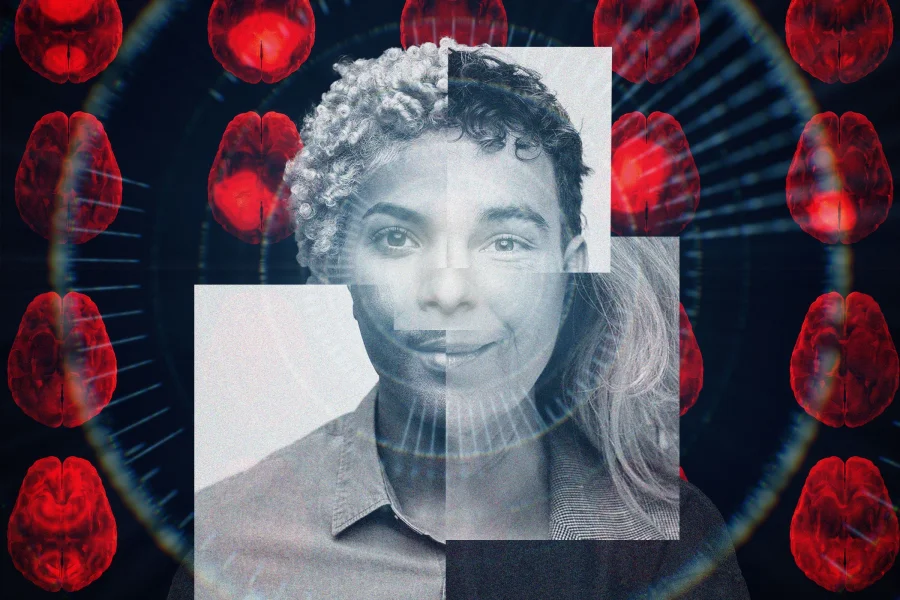
The same engineering mind that taught your iPhone to recognize your face now wants to teach artificial intelligence to read your brain — not for security, but for health.
Gidi Littwin, a co-inventor of Apple’s FaceID, has quietly launched a new AI startup called Hemispheric. Its mission is as ambitious as it is personal: make diagnostic brain scans for mental health and neurological conditions as cheap, fast, and routine as a blood test.
From Unlocking Phones to Unlocking the Brain
Littwin’s work on FaceID involved training machine learning models to map and recognize human faces in three dimensions with extraordinary precision. Hemispheric applies that same pattern-recognition expertise to a different kind of map — the human brain.
The startup’s core technology uses AI to analyze brain scans, looking for biomarkers associated with conditions like depression, post-traumatic stress disorder (PTSD), and Parkinson’s disease. The goal is to detect these conditions earlier, more accurately, and far more affordably than current methods allow.
Why Brain Scans Aren’t Like Blood Tests — Yet
Today, getting a brain scan for mental health is expensive, time-consuming, and often reserved for severe or late-stage cases. An MRI can cost thousands of dollars. A PET scan requires radioactive tracers. Most people with depression or anxiety never receive any form of brain imaging.
Littwin’s vision is to change that. Hemispheric aims to develop AI models that can extract meaningful diagnostic information from cheaper, faster, and more accessible imaging technologies — potentially bringing the cost down to the level of a routine lab test.
What This Means for Mental Health Care
If successful, Hemispheric’s technology could transform how millions of people are diagnosed. Depression and PTSD are currently diagnosed based on symptom checklists and patient interviews — subjective methods that can miss underlying biological patterns.
An objective brain scan, analyzed by AI, could identify depression or PTSD earlier, differentiate between conditions that look similar on the surface, and help doctors choose more targeted treatments. For Parkinson’s disease, early detection could mean earlier intervention and better outcomes.
The FaceID Connection: Why It Matters
Littwin’s background is not just a credential — it’s a signal of the technical approach. FaceID succeeded because Apple’s engineers solved a hard problem: recognizing a face reliably across lighting, angles, and expressions using limited sensor data.
Hemispheric faces a similar challenge: recognizing brain health patterns from imperfect, noisy imaging data. The same kind of machine learning architecture that maps facial features could, in theory, map neural biomarkers.
Confirmed Facts vs What Remains Unclear
Confirmed: Gidi Littwin, a former Apple engineer who contributed to FaceID, has founded Hemispheric. The startup’s stated goal is to make brain scans for depression, PTSD, and Parkinson’s as cheap and easy as a blood test.
Unclear: Specific imaging technology being used, timeline for clinical trials, funding details, regulatory pathway, and whether the company has any working prototypes or published results. These details have not been publicly disclosed.
Risks and Balanced View
AI-based diagnostics face significant hurdles. Regulatory bodies like the FDA require rigorous clinical validation. False positives or false negatives in brain health could have serious consequences. There are also privacy concerns around storing and analyzing sensitive brain imaging data.
Critics may question whether AI can truly replace or augment human clinical judgment in mental health, where biological markers are often subtle and not fully understood. The technology is promising, but it is not proven at scale.
Wider Trend: AI in Mental Health Diagnostics
Hemispheric is part of a growing wave of startups using AI to analyze brain scans, speech patterns, and even social media activity to detect mental health conditions. Companies like Mindstrong, K Health, and Spring Health are exploring similar territory, though Hemispheric’s focus on brain imaging is more hardware-intensive.
The broader trend reflects a shift in psychiatry toward data-driven, biologically informed diagnosis — moving beyond the DSM checklist toward objective biomarkers.
What This Means for Patients and Doctors
For patients, the promise is earlier detection, less stigma (a brain scan feels more medical than a questionnaire), and potentially more personalized treatment. For doctors, AI-assisted diagnostics could become a powerful second opinion — but only if the technology earns clinical trust.
For now, anyone experiencing symptoms of depression, PTSD, or Parkinson’s should continue to seek care through established medical channels. Hemispheric’s technology is not yet available to the public.
Future Outlook
Hemispheric will need to clear several major milestones: develop a working prototype, conduct clinical studies, secure regulatory approval, and prove that its AI can outperform or augment existing diagnostic methods at a fraction of the cost.
If Littwin’s track record with FaceID is any guide, the technical ambition is real. But brain health is far more complex than facial recognition — and the stakes are infinitely higher.
Our Take
This is the kind of story that sounds like science fiction until you remember that FaceID itself seemed like science fiction a decade ago. Littwin is applying proven AI techniques to a deeply human problem — and that combination is worth watching.
The real test will be whether Hemispheric can deliver on its cost and accessibility promises without compromising accuracy. If it does, it could change how we think about mental health: not as something you feel, but as something you can see.
Frequently Asked Questions
Who is Gidi Littwin?
Gidi Littwin is a former Apple engineer who co-invented FaceID, the facial recognition system used in iPhones and iPads. He now leads Hemispheric, an AI startup focused on brain health diagnostics.
What conditions does Hemispheric aim to diagnose?
Hemispheric is initially targeting depression, PTSD, and Parkinson’s disease. The company hopes to expand to other neurological and psychiatric conditions over time.
How is this different from existing brain scans?
Current brain scans for mental health are expensive, often requiring MRI or PET imaging that costs thousands of dollars. Hemispheric aims to use AI to extract diagnostic information from cheaper, faster imaging methods — making brain scans as routine as a blood test.
Is Hemispheric’s technology available now?
No. The startup is in early development stages. It has not announced clinical trials, regulatory approvals, or a public launch date. Patients should continue using established medical channels for diagnosis and treatment.