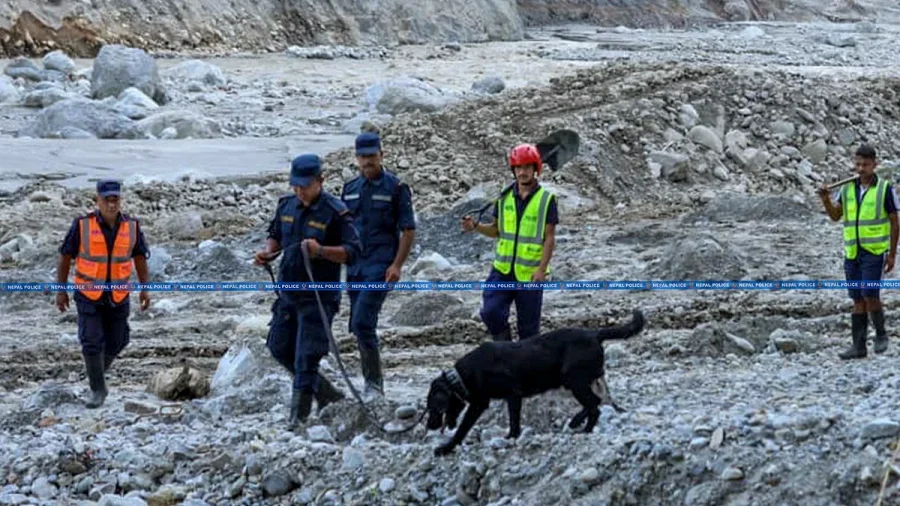
The water came without warning. It swept through homes, roads, and lives in Rasuwa district on 26 August, leaving behind a landscape of mud, debris, and heartbreak. For Sudip Kumar Neupane, 31, the flood took everything in a single moment — his younger brother, a close colleague, and the sense of certainty that tomorrow would look like today.
But after two days of mourning, Neupane made a choice that defines the human spirit in crisis. He returned to the front lines — not as a victim, but as a rescuer, helping distribute food and essential supplies to families who had lost even more than he had.
A Valley of Loss: What Happened in Rasuwa on 26 August
The flash floods that devastated Rasuwa were not ordinary monsoon flooding. According to The Kathmandu Post, they were triggered by an ice-rock avalanche near the Nepal-Tibet border — a reminder that climate change is reshaping the Himalayas in ways that threaten entire communities.
A wall of floodwater tore through towns and villages across northern and central Nepal, catching residents off guard. More than 1,300 people have been affected, with many still searching for missing loved ones and waiting for answers that may never come.
Why Survivors Are Choosing to Help Despite Their Own Grief
Neupane's decision to return to relief work after just two days of mourning is not an isolated act of heroism. Across the affected region, survivors are stepping into roles that local authorities cannot fill. The Kathmandu Post reported that government agencies are struggling with a severe shortage of staff, leaving displaced families without adequate support.
For many survivors, helping others is not just about duty — it is a way to process grief, to find meaning in chaos, and to ensure that their lost loved ones did not die in vain. Every bag of rice distributed, every family helped, becomes a small act of defiance against the randomness of disaster.
The Human Toll: Who Is Affected and How They Are Coping
The floods did not discriminate. They hit farmers, shopkeepers, teachers, and children. They destroyed homes that took generations to build and washed away livelihoods that took decades to establish. In Rasuwa, entire families are now living in temporary shelters, uncertain about their future.
For those like Neupane, the grief is compounded by the practical burden of survival. There is no time to fully process loss when there are mouths to feed and shelters to build. The relief effort has become both a distraction from pain and a lifeline for the community.
Official Response and the Strain on Local Authorities
Local authorities in Rasuwa and surrounding districts have acknowledged the scale of the challenge. With limited staff and resources, they have welcomed the support of survivor-volunteers who understand the terrain, the people, and the urgency of the situation better than any outside agency.
However, the shortage of trained personnel remains a critical concern. Relief distribution, medical support, and search operations require coordination and expertise that volunteer efforts alone cannot fully provide. The coming weeks will test the capacity of both government agencies and community networks.
What This Tells Us About Disaster Response in Nepal
The situation in Rasuwa highlights a broader truth about disaster management in Nepal: when official systems are overwhelmed, communities become the first and often most effective responders. Survivors who have lost everything are still finding the strength to help their neighbours — a resilience that is both inspiring and a sobering indicator of systemic gaps.
Experts have long warned that Himalayan regions are becoming more vulnerable to glacial lake outburst floods and avalanche-triggered disasters as global temperatures rise. The 26 August event is a stark reminder that these warnings are no longer theoretical.
Confirmed Facts vs What Remains Unclear
What is confirmed: The floods occurred on 26 August in Rasuwa district. They were triggered by an ice-rock avalanche near the Nepal-Tibet border. Sudip Kumar Neupane survived but lost his younger brother and a colleague. He returned to relief work after two days. More than 1,300 people have been affected. Local authorities face staff shortages.
What remains unclear: The full death toll and the number of people still missing have not been independently verified in the available report. The long-term needs of displaced families and the timeline for reconstruction are also not yet known. Further official updates are needed to confirm these details.
Why This Story Matters Beyond Nepal's Borders
This is not just a story about one flood in one district. It is a story about how climate change is making once-rare disasters more frequent and more deadly. It is about the inadequacy of traditional disaster response systems in the face of new climate realities. And it is about the extraordinary capacity of ordinary people to rise above personal tragedy for the sake of others.
For readers in India and across South Asia, this story carries a particular resonance. The Himalayas are shared across borders, and the risks posed by melting glaciers and unstable mountain slopes do not respect national boundaries. What happened in Rasuwa could happen anywhere in the region.
Practical Guidance: How to Support Flood-Affected Communities
For those who want to help, the most effective approach is to support established relief organisations working on the ground in Nepal. Cash donations are generally more useful than material goods, as they allow agencies to purchase what is most needed locally. Verify the credibility of any organisation before donating.
For residents of flood-prone regions across South Asia, this event is a reminder to stay informed about local risks, have an emergency plan, and heed official warnings. Preparedness saves lives.
Future Outlook: What Happens Next for Rasuwa
The immediate priority remains search and rescue, followed by the distribution of food, shelter, and medical care to displaced families. In the medium term, Rasuwa will need significant support to rebuild homes, restore livelihoods, and address the psychological trauma experienced by survivors.
Longer-term, this disaster should prompt a regional conversation about climate adaptation in the Himalayas — including better monitoring of glacial lakes, early warning systems, and investment in resilient infrastructure. Without such measures, the cycle of loss and recovery will only intensify.
Our Take
The image of a grieving man distributing food to others who have lost everything is both heartbreaking and humbling. It reminds us that resilience is not the absence of pain, but the ability to act despite it. Neupane's story is a testament to the strength of community bonds in Nepal's mountain districts — bonds that are being tested as never before.
But resilience should not be romanticised to the point of excusing inaction. The fact that survivors must become rescuers because official systems are understaffed is a failure of planning, not a triumph of spirit. As the region grapples with the realities of climate change, governments must match the courage of their citizens with the resources and systems they deserve.
Frequently Asked Questions
What caused the Nepal floods in Rasuwa on 26 August?
The flash floods were triggered by an ice-rock avalanche near the Nepal-Tibet border, which sent a wall of floodwater through towns and villages in northern and central Nepal.
Who is Sudip Kumar Neupane and what did he do?
Sudip Kumar Neupane, 31, is a flood survivor from Rasuwa who lost his younger brother and a close colleague in the disaster. After two days of mourning, he returned to help distribute food and assistance to displaced families.
How many people were affected by the Nepal floods?
According to The Kathmandu Post, more than 1,300 people were affected across northern and central Nepal. The full death toll and number of missing persons have not been fully confirmed in available reports.
Why are flood survivors helping with relief efforts?
Local authorities are struggling with a shortage of staff, making survivor-led efforts critical. Many survivors also find purpose in helping others as a way to cope with their own grief and loss.