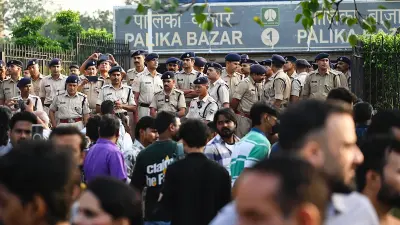
The All India Students' Association (AISA) has thrown its weight behind the Campaign for Justice and Peace (CJP)'s proposed march in Delhi on September 5. The decision signals a growing convergence of student politics and civil rights activism around two key demands — the scrapping of FIRs against demonstrators and a formal inquiry into the use of pellet guns.
Why the September 5 march is drawing student support
For AISA, the march is not just a symbolic show of strength. The organisation has framed it as a necessary pushback against what it describes as the criminalisation of dissent. By backing the CJP, the student body is aligning itself with a broader demand for accountability in the handling of protests.
The twin demands: FIR withdrawal and pellet gun probe
At the heart of the mobilisation are two specific asks. First, the withdrawal of all First Information Reports (FIRs) registered against individuals who participated in previous agitations. Second, a transparent investigation into the use of pellet guns, which have been criticised for causing severe injuries, including loss of vision in several documented cases.
How the situation has evolved over time
The demand for a pellet firing probe is not new. It stems from earlier protest movements where security forces resorted to non-lethal but highly injurious measures. Over time, these incidents have become a flashpoint for human rights organisations, with repeated calls for a review of crowd-control protocols. The CJP's September 5 march appears to be an attempt to keep this issue alive in the public consciousness.
Who stands to be affected by this mobilisation
Students, activists, and residents of conflict-affected regions are the primary stakeholders in this movement. For students, the march represents an opportunity to voice solidarity with those injured in past protests. For civil society, it is a test of the space available for peaceful dissent in the national capital.
Official response and organisational stance
While the CJP has announced the march, there has been no detailed public response from law enforcement agencies regarding the proposed route or the demands. AISA's endorsement adds a layer of organisational muscle, potentially increasing participation. However, the absence of an official statement from authorities leaves the immediate administrative response unclear.
What this endorsement means for the protest movement
AISA's backing could amplify the march's reach, particularly among university students. The association has a history of mobilising youth on issues of public concern. Its involvement may also invite counter-mobilisation from groups supporting the security establishment's actions, setting the stage for a charged political atmosphere in Delhi.
Confirmed facts versus what remains uncertain
What is confirmed is AISA's official support and the stated demands regarding FIRs and pellet guns. What remains unclear is the scale of participation, the exact route of the march, and whether authorities will respond to the demands before or after the event. There is also no verified information on whether other student organisations will join the call.
Risks and the need for a balanced perspective
While the march is framed as a peaceful demand for justice, it carries inherent risks. Large gatherings in the capital often require heavy police deployment, which can lead to friction. Critics of such protests argue that reopening past cases could hinder ongoing peace processes. Supporters, on the other hand, insist that accountability is essential for long-term justice. Both perspectives merit consideration as the date approaches.
A wider pattern of student-led activism
This march fits into a larger pattern of student organisations taking up human rights causes beyond campus issues. From fee hikes to civil liberties, student bodies have increasingly positioned themselves as watchdogs of democratic space. The CJP march is a continuation of that trend, with AISA now adding its voice to the chorus.
What students and supporters should keep in mind
For those planning to participate, it is advisable to stay updated on official announcements regarding the march's logistics. Participants should also be aware of their legal rights while protesting peacefully. For observers, following verified news sources will be key to understanding how the day unfolds.
What could happen next
The immediate future depends on two factors: the turnout on September 5 and the response from authorities. If the march sees significant participation, it could reignite national debate on pellet gun usage. If the response is muted, the demand for a probe may lose momentum. Either way, the event is likely to be a marker for the state of dissent in India.
Our Take
This is more than a routine protest announcement. The convergence of a student body with a human rights campaign signals that the issues of FIR withdrawals and pellet gun injuries remain unresolved in the public mind. While the march is a democratic exercise, its success will be measured not just by numbers, but by whether it forces a substantive conversation on the use of force in crowd control. The absence of an official response so far leaves a vacuum that both sides will likely try to fill.
Frequently Asked Questions
What is the CJP's September 5 Delhi march about?
The Campaign for Justice and Peace (CJP) has called for a march in Delhi on September 5 to demand the withdrawal of FIRs against activists and a formal probe into the use of pellet guns during past protests.
Why is AISA supporting this march?
AISA, the All India Students' Association, is supporting the march to align with demands for accountability and to oppose what it sees as the criminalisation of dissent. The organisation wants a transparent investigation into pellet firing incidents.
What is the demand regarding pellet firing?
The demand is for a comprehensive investigation into the use of pellet guns by security forces, which have been criticised for causing severe and often permanent injuries during crowd-control operations.
What does the withdrawal of FIRs mean in this context?
The withdrawal of FIRs refers to the demand to cancel First Information Reports registered against individuals who participated in previous protests, which activists argue were used to suppress legitimate dissent.