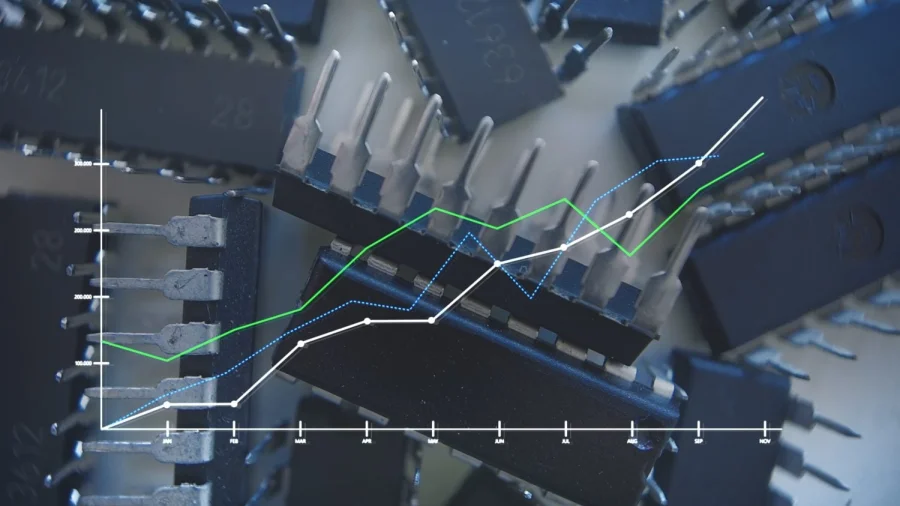
If you've shopped for a new laptop or gaming PC recently, you've likely noticed something frustrating: prices aren't dropping the way they usually do. The culprit isn't a shortage of chips in the traditional sense — it's artificial intelligence.
Why AI Is Keeping DRAM Prices Elevated
AI training and inference require massive amounts of high-bandwidth memory (HBM), a specialized type of DRAM that sits close to AI accelerators. Companies like Samsung, SK Hynix, and Micron have redirected significant production capacity from standard DRAM — used in PCs, laptops, and smartphones — to HBM to meet surging demand from Nvidia, AMD, and cloud providers.
This shift has created a supply squeeze for commodity DRAM. According to industry analysts, DRAM prices rose roughly 20-30% year-over-year in 2024, with server DRAM seeing the steepest increases. Consumers are feeling the pinch through higher device prices and fewer discounts.
When Will the Market Finally Loosen Up?
Analysts at firms like TrendForce and IC Insights project that the DRAM market will begin to loosen in the second half of 2025. The key factors: new fabrication plants (fabs) from Samsung and Micron coming online, and a potential moderation in AI spending growth as enterprises optimize their AI infrastructure.
"We expect DRAM supply to catch up with demand by mid-2025," said a senior analyst at a leading semiconductor research firm. "But the timing depends on how quickly AI demand grows and whether memory makers continue prioritizing HBM."
What This Means for Consumers Right Now
For everyday buyers, the immediate outlook is mixed. Prices for DDR5 RAM and laptop memory are unlikely to drop significantly before mid-2025. However, some analysts believe that smartphone DRAM prices could stabilize sooner as mobile demand softens. Gamers and PC builders may want to wait until late 2025 for better deals.
If you need a new device now, consider buying during seasonal sales (Black Friday, Diwali, etc.) where retailers absorb some of the cost increases. For enterprise buyers, locking in long-term contracts with memory suppliers may offer some price protection.
How DRAM Makers Are Responding
Samsung, SK Hynix, and Micron have all announced capacity expansions for HBM and advanced DRAM. Samsung is building a new HBM-dedicated fab in Pyeongtaek, South Korea, while Micron is expanding its Boise, Idaho facility. These investments are expected to increase overall DRAM supply by 15-20% by late 2025.
However, the shift to HBM is not without risks. If AI demand growth slows unexpectedly, memory makers could be left with excess HBM capacity, potentially leading to a price crash in commodity DRAM — a scenario that would benefit consumers but hurt chipmaker profits.
The Bigger Picture: AI's Impact on the Memory Market
The current DRAM price dynamic is a direct consequence of AI's rapid adoption. Unlike previous memory cycles driven by PC and smartphone upgrades, this cycle is being shaped by data center and AI infrastructure spending. This structural shift means that DRAM prices may remain more volatile and less predictable than in the past.
For investors, the key metric to watch is HBM revenue as a percentage of total DRAM revenue. If that share continues to grow, commodity DRAM supply will remain tight. If it stabilizes, the market could rebalance faster.
Confirmed Facts vs What Remains Unclear
Confirmed: DRAM prices have risen 20-30% year-over-year in 2024 due to AI demand for HBM. Major memory makers have shifted production capacity to HBM. New fab capacity is expected in 2025.
Unclear: The exact timing of price normalization depends on AI demand growth, which is difficult to forecast. Whether consumers will see significant price drops in late 2025 or early 2026 remains uncertain. The potential for a price crash if AI demand slows is speculative.
Risks and Balanced View
While the consensus points to a loosening market in H2 2025, there are risks. AI demand could accelerate further if new applications (like autonomous driving or robotics) emerge. Geopolitical tensions could disrupt supply chains. Conversely, a global economic slowdown could reduce demand for both AI and consumer electronics, leading to a faster-than-expected price drop.
Critics argue that memory makers are over-investing in HBM capacity, which could lead to a supply glut and price collapse — a pattern seen in previous memory cycles. This would be good for consumers but painful for chipmakers.
Practical Guidance for Different Audiences
Consumers: If you can wait until late 2025, you'll likely get better prices on DRAM-heavy devices. If you need a device now, buy during sales events.
Investors: Monitor HBM revenue share and new fab announcements. A shift in AI spending trends could signal a market turning point.
Enterprise buyers: Consider long-term contracts with memory suppliers to hedge against price volatility.
Future Outlook
The DRAM market is entering a period of structural change driven by AI. While prices are expected to ease in the second half of 2025, the long-term trend may be toward higher baseline prices as AI demand becomes a permanent feature of the memory landscape. Consumers should plan for a new normal where DRAM prices are less cyclical and more influenced by industrial demand.
Our Take
The current DRAM price story is a textbook example of how AI is reshaping industries beyond the obvious. It's not just about chatbots and image generators — it's about the physical infrastructure that powers them. For consumers, the pain is real but temporary. For investors, the opportunity lies in understanding which memory makers are best positioned for the AI era. The key takeaway: patience will be rewarded, but the market may never return to the low prices of the pre-AI era.
Frequently Asked Questions
Why are DRAM prices still high in 2024?
AI demand for high-bandwidth memory (HBM) has caused DRAM makers to shift production capacity away from standard DRAM, creating a supply squeeze that has driven prices up 20-30% year-over-year.
When will DRAM prices drop for consumers?
Analysts expect prices to begin easing in the second half of 2025 as new fab capacity comes online and AI demand growth moderates. Significant consumer relief may not come until late 2025 or early 2026.
Will smartphone DRAM prices also stay high?
Smartphone DRAM prices are expected to stabilize sooner than PC/server DRAM, possibly by mid-2025, as mobile demand softens and memory makers balance their production mix.
Should I buy a new laptop now or wait?
If you can wait until late 2025, you'll likely get better prices. If you need a device now, look for seasonal sales where retailers absorb some of the cost increases.