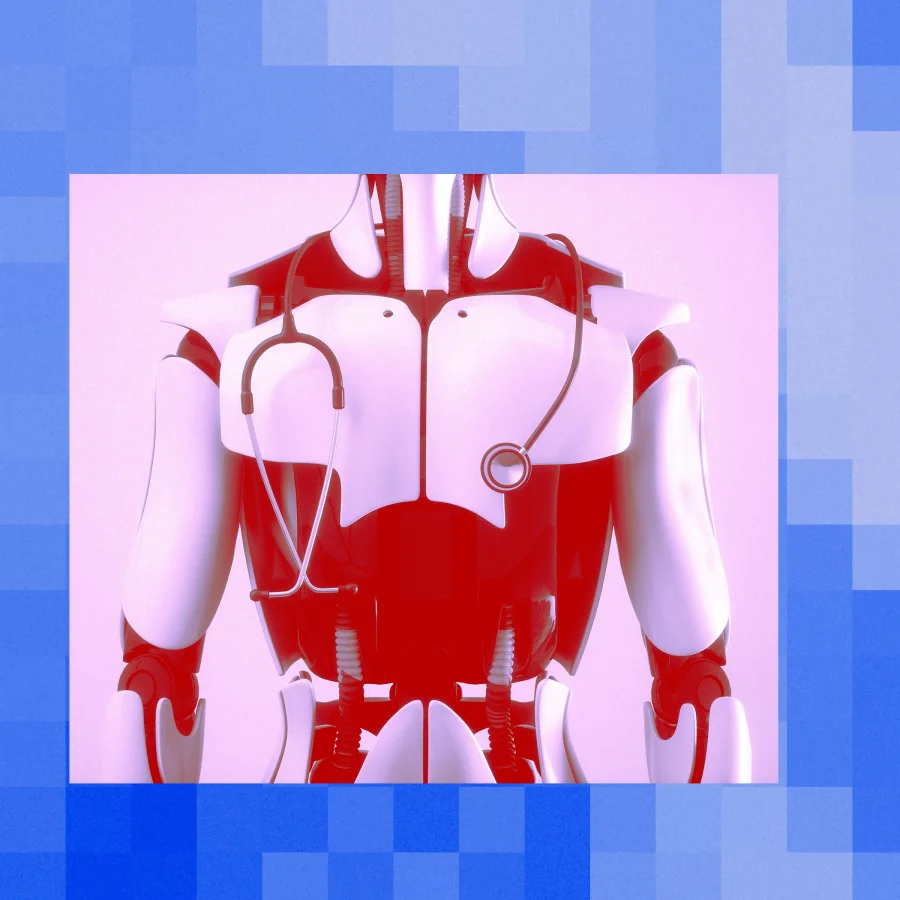
The stethoscope hangs around the neck. The white coat is crisp. But in the exam room of the future, will a human still be holding the clipboard? A recent paper has stirred a quiet panic in the medical community by suggesting that, in many cases, AI is simply better at the job than a human doctor. The question on everyone’s lips is no longer “Can AI do this?” but “What’s left for us?”
The Paper That Sparked the Debate
The research in question argues that AI models, particularly those trained on vast datasets of medical imaging and patient records, can outperform human physicians in diagnostic accuracy. The paper points to specific tasks—like interpreting X-rays, identifying skin lesions, and predicting patient outcomes—where algorithms have shown fewer errors than their human counterparts. For doctors who spent a decade in training, the implication is unsettling.
Why This Hits Close to Home for Patients
For the average person, this isn’t just an academic squabble. It’s about who you trust with your life. If an AI can read your scan with 99% accuracy and a human doctor with 95%, what does that mean for your treatment plan? The promise is fewer misdiagnoses and faster results. The fear is a healthcare system that becomes cold, transactional, and devoid of the human touch that has defined medicine for centuries.
How We Got Here: The Rise of Medical AI
This didn’t happen overnight. For over a decade, AI has been quietly infiltrating healthcare—first in radiology, then in pathology, and now in general practice. Early algorithms were clunky, but the latest generation of deep learning models has reached a tipping point. They don’t get tired, they don’t have bad days, and they never forget a single case they’ve ever seen. The paper is simply the latest—and most provocative—summary of where the technology stands.
The Human Element: What Machines Can’t Replace
Despite the impressive numbers, the paper doesn’t suggest doctors are obsolete. A machine can tell you that you have cancer, but it cannot hold your hand while you cry. It can calculate your risk of heart disease, but it cannot understand your fear of hospitals. The human doctor brings empathy, intuition, and the ability to navigate the messy, emotional reality of illness. These are skills that cannot be coded.
How the Medical Establishment Is Responding
The reaction from the medical community has been swift and mixed. Some leading physicians have welcomed the findings, arguing that AI can handle the drudgery of data analysis, freeing doctors to focus on patient interaction. Others are more defensive, warning that over-reliance on algorithms could erode clinical skills and lead to a generation of doctors who can’t think without a computer. Medical boards are now grappling with how to regulate AI tools without stifling innovation.
What the AI Advantage Really Means
Digging deeper, the paper’s findings are less about robots replacing doctors and more about a shift in responsibilities. AI excels at pattern recognition—spotting the anomaly in a sea of normal data. But it struggles with context. A patient’s lifestyle, their mental health, their social circumstances—these factors often change a diagnosis. The future likely isn’t a choice between AI or doctors, but a partnership where each covers the other’s weaknesses.
Confirmed Facts vs. What Remains Unclear
What is verified is that AI has demonstrated superior accuracy in narrow, data-heavy tasks like image analysis. What remains unclear is how this translates to overall patient outcomes. The paper does not yet prove that AI-led care results in healthier populations. It also doesn’t address the legal and ethical minefield—who is liable when an AI makes a mistake? These questions remain open.
Why This Technology Matters for the Healthcare Industry
For hospitals and clinics, the appeal is obvious: efficiency and cost savings. AI doesn’t need sleep, doesn’t demand overtime, and can process thousands of cases in minutes. For a strained public health system, that’s a lifeline. But the transition will be expensive, and the fear of job displacement among healthcare workers is real. The industry is at a crossroads, deciding whether to invest heavily in AI infrastructure or proceed with caution.
The Risks and the Pushback
Not everyone is on board. Critics point to algorithmic bias—AI trained on one population may fail on another. There are also concerns about data privacy and the security of sensitive medical records. Some doctors argue that the paper’s conclusions are overstated, noting that AI still fails in complex, multi-symptom cases that require holistic thinking. The pushback is a healthy reminder that technology is a tool, not a savior.
A Pattern Across Industries
This isn’t just a medical story. From law to finance to journalism, AI is challenging the expertise of professionals who once thought their jobs were safe. The pattern is consistent: AI takes over the analytical, repetitive tasks, while humans are pushed toward roles that require creativity, empathy, and judgment. Medicine is just the latest—and most visible—battleground.
What Patients Should Keep in Mind
If you have a doctor’s appointment coming up, don’t cancel it. The paper is a snapshot of potential, not a current reality. In most clinics, AI is still a support tool, not a replacement. But you can expect to see more AI-assisted diagnostics in the coming years. Ask your doctor about it. A good physician will be transparent about how they use technology to inform their decisions.
Where Medicine Goes From Here
The next decade will likely see a gradual integration of AI into everyday practice. We may see AI triage nurses, AI-assisted surgery, and AI-driven personalized treatment plans. But the role of the doctor will evolve, not disappear. The physician of the future will be a manager of technology, a communicator, and a decision-maker—skills that are more human, not less.
Our Take
This paper is a wake-up call, but not a death knell. It forces us to confront an uncomfortable truth: machines can be better at some things than we are. But it also highlights what makes medicine a calling, not just a job. The best outcomes will come from a system that leverages AI’s precision and a doctor’s compassion. The question isn’t “What’s left for doctors?” but “How can we redefine their role to be more valuable than ever?”
Frequently Asked Questions
Is AI really better than human doctors?
In specific, data-heavy tasks like analyzing medical images or identifying patterns in lab results, AI has shown higher accuracy in some studies. However, it lacks the contextual understanding and empathy of a human physician, so it is not universally "better" at doctoring.
Will AI replace my doctor?
It is highly unlikely in the near future. AI is being developed to assist doctors by handling data analysis and administrative tasks. The human doctor will still be needed for diagnosis, treatment planning, and providing emotional support.
What are the risks of using AI in healthcare?
Key risks include algorithmic bias, where AI may not work well for all demographic groups, data privacy concerns, and the potential for over-reliance on technology, which could erode clinical skills over time.
How can I prepare for AI in my healthcare?
Stay informed and ask questions. When you visit a doctor, ask if AI tools are being used in your diagnosis and what that means for your care. A transparent conversation with your physician is the best way to understand your treatment.