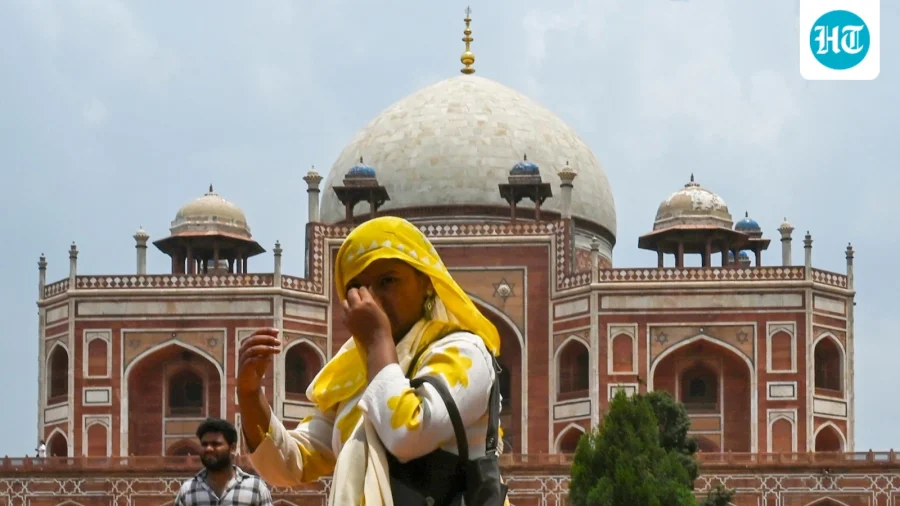
Delhi's iconic Humayun's Tomb, a masterpiece of Mughal architecture and a UNESCO World Heritage Site, is under siege. A creeping black crust is forming on its ancient red sandstone and white marble, slowly decaying the very fabric of this 16th-century marvel. The culprit, researchers say, is the very air Delhiites breathe every day.
The Invisible Enemy: How Air Pollution Attacks Ancient Stone
The black crust is not just a stain; it is a chemical reaction in progress. Air pollution, laden with sulphur dioxide and nitrogen oxides, mixes with moisture in the air to form weak acids. When these acids settle on the tomb's surfaces, they react with the minerals in the stone, creating a dark, gypsum-based crust that gradually eats into the original material.
This process, known as sulphation, is a well-documented threat to heritage structures worldwide. For Humayun's Tomb, situated in one of the most polluted capitals on Earth, the assault is relentless.
Why This UNESCO Treasure Is Especially Vulnerable
Humayun's Tomb is not just any monument; it is a pioneer of Mughal architecture, setting the template for the Taj Mahal. Its intricate carvings, red sandstone facades, and marble inlays are irreplaceable. The black crust doesn't just discolour these features—it causes them to flake, blister, and eventually crumble, leading to a permanent loss of detail and structural integrity.
For historians and conservationists, this is a cultural emergency. The monument is a physical link to India's rich past, and its decay represents a loss that cannot be quantified in rupees.
The Conservation Blueprint: Maintenance, Coatings, and Monitoring
Researchers studying the decay have outlined a clear, three-pronged strategy to combat the black crust. The first and most immediate step is regular maintenance, which involves careful cleaning to remove existing crusts without damaging the stone beneath.
The second recommendation is the application of protective coatings. These are designed to act as a barrier, preventing pollutants from coming into direct contact with the stone surface. The third, and perhaps most critical, is continuous monitoring. This involves tracking the rate of decay and the effectiveness of the treatments, allowing conservationists to adapt their approach over time.
The Human Cost: A Shared Heritage at Risk
This is not just a problem for archaeologists. Humayun's Tomb is a source of national pride and a major tourist destination, drawing visitors from across India and the world. Its decay diminishes the experience for every visitor and represents a failure to protect a shared inheritance for future generations.
The monument's plight also serves as a stark reminder of the broader cost of air pollution. While the health impacts of Delhi's smog are well-known, this damage to Humayun's Tomb shows that the city's air is also erasing its history.
Expert Guidance: What Conservationists Are Saying
According to the research, the path forward is not about a single, dramatic intervention but about sustained, scientific care. The recommendation of protective coatings and regular maintenance reflects a global best practice in heritage conservation. Experts argue that without these proactive steps, the decay will accelerate, making future restoration efforts far more difficult and expensive.
Beyond the Surface: The Deeper Meaning of the Crust
The black crust on Humayun's Tomb is a physical manifestation of a deeper issue: the conflict between rapid urbanisation and the preservation of the past. It highlights the need for a holistic approach to heritage management that includes not just on-site conservation but also broader policies to improve air quality.
Confirmed Facts vs. What Remains Unclear
Confirmed: A black crust is decaying the surfaces of Humayun's Tomb. The primary driver is air pollution. Researchers recommend maintenance, coatings, and monitoring.
Unclear: The exact timeline for the monument's decay if no action is taken, and the specific funding or timeline for implementing the recommended conservation measures.
The Monument's Unique Legacy: Why Saving It Matters
Humayun's Tomb was the first garden-tomb on the Indian subcontinent and a precursor to the Taj Mahal. Its architectural innovations, including the use of red sandstone and white marble, set a new standard. Its preservation is not just about one building; it is about safeguarding a pivotal chapter in architectural history.
Risks and the Road Ahead: A Balanced View
While the recommended measures offer hope, they are not without challenges. Protective coatings can alter the appearance of the stone if not applied correctly, and cleaning processes carry a risk of damage. There is also the question of cost and the ongoing battle against a pollution source that shows no sign of abating. Some critics argue that without significant improvements in Delhi's air quality, these conservation efforts will only slow the decay, not stop it.
A Pattern of Peril: Delhi's Monuments Under Threat
Humayun's Tomb is not alone. Other heritage structures across Delhi, including the Red Fort and Qutub Minar, face similar threats from pollution. This situation points to a systemic problem that requires a city-wide response, not just monument-by-monument fixes.
What Visitors and Citizens Can Do Now
For those who love these monuments, the immediate action is to support and advocate for their conservation. This includes following the work of the Archaeological Survey of India (ASI) and other heritage bodies, and supporting policies aimed at reducing air pollution. Visitors can also contribute by respecting the sites and not touching the fragile surfaces.
Future Outlook: A Race Against Time
The future of Humayun's Tomb will depend on the speed and effectiveness of the recommended conservation work. If the protective coatings are applied and maintenance becomes routine, the decay can be significantly slowed. However, the long-term survival of the monument is inextricably linked to the city's ability to clean its air.
Our Take
The black crust on Humayun's Tomb is a visible scar of our environmental negligence. It is a reminder that pollution's cost is not just measured in respiratory illnesses but also in the slow erasure of our cultural identity. The researchers' recommendations are sound, but they are a treatment for a symptom. The cure lies in a collective commitment to cleaner air, for the sake of both our lungs and our legacy.
Frequently Asked Questions
What is the black crust on Humayun's Tomb?
The black crust is a layer of gypsum and other pollutants that forms when airborne acids from air pollution react with the minerals in the tomb's red sandstone and marble. This crust gradually decays the original stone.
How does air pollution damage monuments like Humayun's Tomb?
Pollutants like sulphur dioxide and nitrogen oxides mix with moisture to form weak acids. These acids react with the stone's surface, creating a dark crust that causes flaking, blistering, and structural decay over time.
What can be done to save Humayun's Tomb from decay?
Researchers recommend a three-part strategy: regular maintenance to clean existing crusts, applying protective coatings to shield the stone from pollutants, and continuous monitoring to track the decay and effectiveness of treatments.
Is Humayun's Tomb still open to visitors despite the damage?
Yes, the monument remains open to the public. However, conservation experts warn that without intervention, the ongoing decay could lead to permanent loss of intricate carvings and structural details.