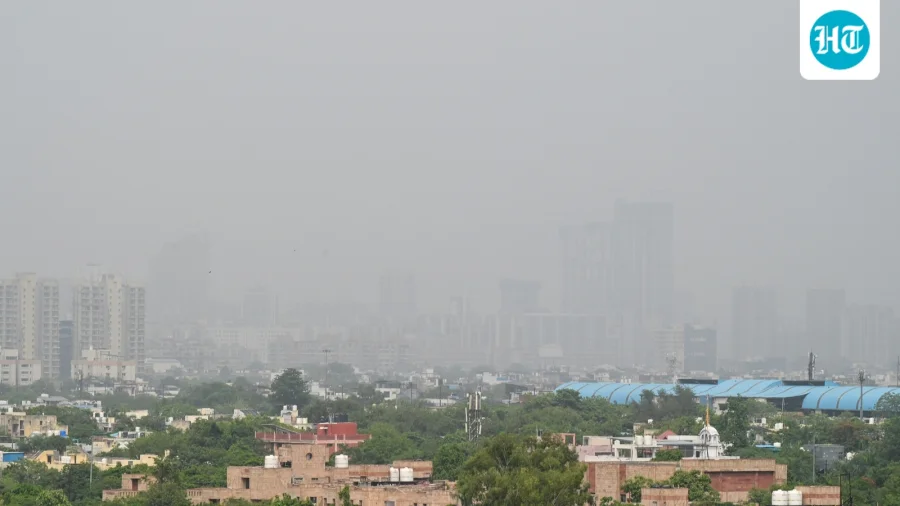
Money collected to punish pollution is sitting idle while the air Indians breathe remains among the most toxic in the world. An RTI reply has revealed that nearly 60% of the environmental compensation charge — a levy imposed on polluting activities — has still not been used. The disclosure lands at a time when the Supreme Court has repeatedly stressed that these funds must be fully deployed for air pollution control.
A Levy Meant to Clean the Air, Now Stuck in Ledgers
The environmental compensation charge is a financial penalty levied on activities that harm the environment. The idea is straightforward: polluters pay, and that money funds remediation — cleaner technology, monitoring systems, and pollution control infrastructure.
According to the RTI reply, a majority of that money has not been spent. The gap between what was collected and what was actually deployed is now at the centre of the story.
Why an Unused Pollution Fund Matters to Every Indian
Air pollution is not an abstract concern. It affects respiratory health, reduces life expectancy, and imposes economic costs on households and the exchequer alike. When funds earmarked for pollution control remain unutilised, the consequences are felt in real terms — in hospitals, in schools, and in the daily commute of millions.
The RTI disclosure suggests that the financial tool designed to address this crisis is not functioning at full capacity.
What the Supreme Court Had Said
The Supreme Court had previously stressed the need to fully utilise the funds for air pollution control measures. That judicial push reflected a broader concern: that environmental compensation should not become a mere accounting entry but a working instrument for change.
The latest RTI reply indicates that the gap between judicial direction and administrative action may still be wide.
Who Is Affected by the Delay
Urban residents in pollution-heavy regions are the most immediate stakeholders. But the impact extends to farmers affected by air quality-linked crop stress, children and the elderly vulnerable to respiratory illness, and taxpayers who ultimately bear the cost of both pollution and inaction.
When funds lie unused, the public pays twice — once through the original pollution, and again through the missed opportunity to mitigate it.
Official Position and the RTI Route
The RTI reply is the primary source of this disclosure. No specific official statement clarifying the reasons for underutilisation is available in the source material. The Supreme Court's earlier emphasis on full utilisation remains the key authoritative reference point.
This is a case where the data has spoken, but the administrative explanation is still awaited.
Reading the Numbers: What 60% Unused Actually Means
If 60% of a dedicated environmental fund is unspent, it implies that the machinery for converting penalties into projects is either slow, unclear, or both. It also raises a question about whether the compensation charge is being treated as a revenue stream rather than a remediation tool.
The RTI reply does not, by itself, explain why the funds remain idle. But it does establish that the problem exists.
Confirmed Facts vs What Remains Unclear
Confirmed: An RTI reply states that about 60% of the environmental compensation charge is unused. The Supreme Court had previously stressed full utilisation of these funds for air pollution control.
Unclear: The exact total amount collected, the specific reasons for non-utilisation, the timeline for deployment, and whether any corrective mechanism is underway. These details are not available in the source material and should not be assumed.
Risks and the Balanced View
One reading is that administrative delays, inter-agency coordination issues, or project approval bottlenecks may be responsible. Another is that the fund's design itself may need reform to ensure faster deployment.
What is not in dispute is that the money was collected for a purpose — and that purpose remains unmet for a majority of the amount.
A Pattern of Collected-but-Unspent Environmental Funds
This is not an isolated concern. Environmental funds across jurisdictions often face similar challenges: collection is easier than deployment. The RTI disclosure adds to a growing body of evidence that India's environmental financial architecture needs stronger execution mechanisms, not just stronger penalties.
What Readers and Citizens Can Do
Citizens can use RTI requests to track environmental compensation utilisation in their own states and districts. Local pollution data and fund deployment records are public information. Asking the right questions is the first step toward accountability.
For students and researchers, this case offers a clear example of how environmental governance works — or fails to work — in practice.
What Could Happen Next
If the Supreme Court's earlier direction is followed through, the focus may shift to why the funds remain unspent and what mechanism will ensure deployment. Further RTI queries or judicial scrutiny could bring more clarity.
For now, the RTI reply stands as a documented gap between intent and action.
Our Take
The environmental compensation charge was designed as a deterrent with a purpose — to convert pollution penalties into cleaner air. When 60% of that money sits unused, the deterrent loses its teeth and the purpose loses its meaning. This is not just an accounting lapse; it is a governance signal. The Supreme Court has already pointed the way. The question is whether the machinery will follow.
Frequently Asked Questions
What is the environmental compensation charge?
It is a financial penalty levied on activities that cause environmental harm, intended to fund pollution control and remediation measures.
How much of the environmental compensation charge is unused?
According to an RTI reply, approximately 60% of the collected amount remains unused.
What did the Supreme Court say about these funds?
The Supreme Court had previously stressed the need to fully utilise the funds for air pollution control measures.
Why are the funds not being used?
The source material does not specify the reasons. Administrative delays, coordination issues, or procedural bottlenecks are possible factors, but these are not confirmed.