A Historic Address for a Historic Anniversary
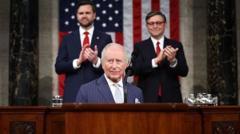
King Charles III made history on Tuesday, April 28, 2026, when he became only the second British monarch to address a joint meeting of the United States Congress. The speech, delivered during the most consequential state visit of his reign, was a masterclass in diplomacy, weaving together themes of shared history, mutual challenges, and a subtle but unmistakable call for the two nations to remain united in the face of global uncertainty.
The address, which commemorated the 250th anniversary of the signing of the Declaration of Independence, was a carefully calibrated performance. As reported by BBC News, the king’s words were designed to reaffirm the "special relationship" between the United States and the United Kingdom, a bond that has been tested in recent years by trade disputes and shifting geopolitical alliances.
Takeaway 1: A Masterclass in Diplomatic Unity
The overarching theme of the king’s address was unity. In a moment of deep political division in both the US and the UK, Charles sought to remind lawmakers of the foundational ties that bind the two nations. He spoke of the "collective strength" that comes from the alliance, a clear nod to the ongoing challenges posed by Russia’s war in Ukraine and China’s growing influence.
According to ABC News, lawmakers appeared rapt by the king’s message. The speech was a deliberate contrast to the often combative tone of modern political discourse, offering a vision of partnership that transcended partisan lines. "Our two countries have always found ways to come together," Charles said, a line that drew a standing ovation from both sides of the aisle.
Takeaway 2: The "No Taxation Without Representation" Jab
Perhaps the most talked-about moment of the speech came when the king invoked the revolutionary slogan "no taxation without representation." The line, a direct reference to the American colonists’ grievances against the British Crown, was a clever rhetorical device that served multiple purposes.
As noted by USA Today, the comment was seen as a subtle dig at the current administration’s trade policies, which have imposed tariffs on British goods. Democrats in the chamber erupted in applause, while White House officials were reportedly less amused. The line was a reminder that even in a speech about unity, the king was not afraid to gently needle his hosts on issues of economic fairness.
Takeaway 3: A Call to Action on Climate and Technology
King Charles, a lifelong environmental advocate, used the platform to call for renewed cooperation on climate change. He urged Congress to work with the UK on developing green technologies and meeting emissions targets. This was a particularly pointed message given the Trump administration’s skepticism of climate science.
The king also highlighted the need for joint leadership on artificial intelligence and global health security. As reported by BBC News, Charles framed these challenges as existential threats that no single nation can solve alone. "The challenges we face today are not confined by borders," he said, "and neither should our solutions be."
Takeaway 4: A Subtle Warning Against Isolationism
Beneath the veneer of celebration, the king’s speech contained a clear warning. In an era of rising nationalism and "America First" policies, Charles made the case for internationalism. He reminded lawmakers that the US and UK have always been strongest when they stand together, a message that resonated with many in the chamber but may have rankled those who favor a more isolationist approach.
This was a delicate balancing act. As USA Today noted, the state visit itself was designed to tamp down concerns over the increasingly rocky relationship between the two nations. The king’s address was a public reaffirmation of a partnership that, behind the scenes, has faced significant strain.
Takeaway 5: The Personal Touch
Finally, the king’s speech was notable for its personal and emotional resonance. Charles spoke of his mother, Queen Elizabeth II, who addressed Congress in 1991, and of the deep familial ties between the two nations. He referenced the shared sacrifices of American and British soldiers in two world wars, and the cultural bonds that link everything from Shakespeare to Hollywood.
This human element was crucial. As ABC News reported, lawmakers on both sides of the aisle were visibly moved by the king’s references to history and heritage. In a political environment often defined by cynicism, the address offered a rare moment of genuine sentiment.
Expert Analysis: What This Means for the Special Relationship
The king’s address was more than a ceremonial formality; it was a strategic intervention. By choosing to highlight areas of agreement while gently challenging the US on trade and climate, Charles positioned himself as a statesman capable of navigating the treacherous waters of modern diplomacy.
The timing of the visit is critical. With the 250th anniversary of the Declaration of Independence approaching, the king’s presence in Washington is a powerful symbol of reconciliation and continuity. However, the underlying tensions remain. The "no taxation without representation" line was a reminder that the economic relationship between the two countries is far from settled.
Multiple Perspectives: How the Speech Was Received
Reaction to the speech was predictably divided along partisan lines. Democrats praised the king’s call for climate action and his implicit criticism of trade tariffs. Republicans, meanwhile, focused on the themes of national sovereignty and military cooperation.
On social media, the speech generated significant discussion. As noted by BBC News on X, the address was trending worldwide within minutes of its conclusion. Some commentators noted the irony of a British monarch lecturing Americans on taxation, while others saw it as a sign of the deep respect Charles holds for the US political system.
What Happens Next?
The king’s address is just one part of a four-day state visit that will include meetings with President Trump, a state dinner at the White House, and a visit to the National Archives to view the original Declaration of Independence. The visit is expected to culminate in a joint statement on future cooperation in areas such as defense, trade, and technology.
For the "special relationship," the king’s speech was a reaffirmation of its enduring importance. But as the applause fades, the real work of translating those words into policy will begin. The coming months will reveal whether the king’s call for unity can overcome the political and economic forces pulling the two nations apart.
Conclusion: A Speech for the History Books
King Charles III’s address to Congress was a historic moment, delivered with grace, wit, and a clear sense of purpose. It was a reminder that even in an age of division, the bonds between the United States and the United Kingdom remain strong. The king’s five key messages—unity, fairness, climate action, internationalism, and personal connection—will resonate long after the cameras have left the chamber.
As the 250th anniversary of American independence approaches, the king’s words serve as a powerful testament to the idea that history is not just something to be remembered, but something to be actively shaped. For lawmakers, the challenge now is to live up to the vision he laid out.
Sources & References
- BBC News: Five takeaways from the King's historic address to US Congress
- BBC News on X: Five takeaways from the King's historic address to US Congress
- ABC News: 'Our collective strength' -- 4 takeaways from King Charles III's address to Congress
- USA Today: Five takeaways from King Charles' state visit with Trump
- Reddit: Discussion on King's historic address