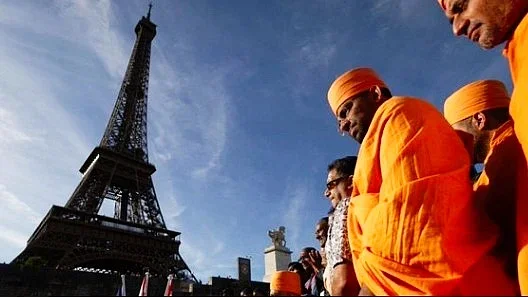
For most of the world, the Eiffel Tower is a symbol of openness — a monument that welcomes millions of visitors a year regardless of who they are. That image took a hit this month, not because of anything that happened on its viewing decks, but because of who was kept off them.
On Tuesday, the company that operates the tower confirmed that its director-general, Patrick Branco Ruivo, will step down by the end of 2026. The decision follows an internal investigation into a 5 September visit by a delegation from BAPS, a Hindu organisation, during which female employees were reportedly sidelined from the arrangements.
What SETE's Own Investigation Found
Société d'Exploitation de la Tour Eiffel (SETE), the operator, said an independent probe had identified several operational failures tied to how the delegation visit was handled. The company called the arrangements "unacceptable" — a rare public admission from an institution that usually manages its image as carefully as its queues.
The findings did not accuse BAPS of instructing the exclusion. Instead, they pointed to decisions made internally about which staff members should be present, and which should not.
Why a Staffing Decision Became a National Story
The exclusion of women from the visit's operational setup did not stay inside SETE's offices. It travelled quickly to the unions, and from there to the public.
By 7 September, staff had walked out in protest. The strike forced the Eiffel Tower to close for a day — a disruption that turned an internal HR matter into a visible symbol of something larger: how far institutions will go to accommodate visiting dignitaries or religious groups, and at whose expense.
How the Story Unfolded
The sequence matters. The visit took place on 5 September. The strike followed on 7 September. The internal investigation concluded in the weeks after. And on Tuesday, SETE confirmed the leadership change.
Each step escalated the stakes — from a quiet operational complaint to a public shutdown to a resignation with a long runway.
Who Was Actually Affected
The immediate impact fell on the female employees who were asked, in effect, to step back from their own workplace for the duration of a visit. For them, the question was not abstract: it was about whether their presence at work was negotiable.
Then there were the thousands of visitors turned away on 7 September, and the staff who lost a day's work. The fallout, in other words, was not confined to one department or one decision.
What BAPS Has Said
BAPS has apologised for the distress caused but has denied seeking discriminatory treatment. That distinction is important. The organisation's position is that it did not ask for women to be excluded — which leaves the question of why the arrangements were made that way in the first place.
SETE's investigation appears to have focused on that internal question rather than on any request from the delegation.
Reading the Leadership Exit
Ruivo's departure is set for the end of 2026, not immediately. That timing is deliberate — it allows for a transition rather than an abrupt rupture. But it also signals that SETE wants to close this chapter without appearing to have been forced into a rushed decision.
In French corporate culture, a phased exit of this kind is often a way of acknowledging responsibility while protecting institutional continuity.
Confirmed Facts vs What Remains Unclear
Confirmed: The visit took place on 5 September. Female staff were excluded from the arrangements. SETE called the arrangements unacceptable. A strike closed the tower on 7 September. An independent investigation was conducted. Ruivo will step down by end-2026. BAPS apologised and denied seeking discriminatory treatment.
Unclear: Who specifically authorised the staffing decision, whether any individual beyond Ruivo faces consequences, and what exact recommendations the investigation produced. SETE has not published the full report.
The Institutional Reputation at Stake
The Eiffel Tower is not just a tourist attraction. It is a national symbol, and SETE operates it under public scrutiny that few private companies face. Any suggestion that its workplace practices bend to external preferences — religious or otherwise — cuts against the values the monument is meant to represent.
That is why a staffing decision that might have gone unnoticed elsewhere became a national conversation here.
Risks and the Balanced View
There is a risk of overreading the episode. SETE has not said BAPS demanded the exclusion, and BAPS denies doing so. The investigation appears to have centred on internal operational choices, not on external pressure.
At the same time, the fact that such arrangements were made at all — and that it took a strike to surface them — raises legitimate questions about how much discretion staff are expected to surrender during high-profile visits.
A Wider Pattern in Cultural Institutions
Museums, monuments, and heritage sites across Europe have increasingly had to navigate visits from religious, political, and cultural delegations with specific expectations. The tension between hospitality and workplace equality is not unique to Paris.
What is unusual here is how quickly the tension became public — and how high the cost climbed.
What This Means for Visitors and Staff
For visitors, the practical impact was a one-day closure. For staff, the episode has already reshaped the conversation around workplace protections during special events.
Unions are likely to press for clearer rules on when, if ever, staff can be asked to step aside for a visiting group — and who has the authority to make that call.
What Happens Next
Ruivo remains in his role until the end of 2026, which gives SETE time to appoint a successor and revise its protocols. The company has not announced a timeline for publishing the investigation's recommendations.
Whether this becomes a turning point for how the tower handles delegations — or simply a leadership change — will depend on what SETE does with the findings it has so far kept private.
Our Take
This is a story about a monument, but it is really a story about boundaries. The Eiffel Tower belongs to everyone who visits it and everyone who works there. When those two groups are treated differently for the comfort of a guest, the institution has to answer for it.
SETE has answered, in part, by accepting a leadership change. The harder work — making sure it does not happen again — is still ahead.
Frequently Asked Questions
Why is the Eiffel Tower chief stepping down?
Patrick Branco Ruivo, director-general of SETE, will step down by end-2026 after an internal investigation into the exclusion of female staff during a BAPS delegation visit on 5 September.
What did BAPS say about the allegations?
BAPS apologised for the distress caused but denied seeking discriminatory treatment. The organisation said it did not request that women be excluded from the arrangements.
Why did the Eiffel Tower close on 7 September?
Staff went on strike in protest against the treatment of female colleagues during the BAPS visit. The strike forced the tower to shut for the day.
Is Ruivo leaving immediately?
No. His departure is set for the end of 2026, allowing SETE time for a transition and a successor appointment.
Has SETE published the investigation report?
No. SETE has confirmed the findings but has not released the full report or its specific recommendations.