Delhi Chief Minister Arvind Kejriwal has escalated the E20 fuel debate by directly writing to India’s largest automobile manufacturers — Maruti Suzuki, Toyota Kirloskar Motor, and Hero MotoCorp — demanding a written guarantee that they will compensate customers if the new ethanol-blended fuel damages vehicle performance or reduces mileage significantly.
What Kejriwal has demanded from automakers
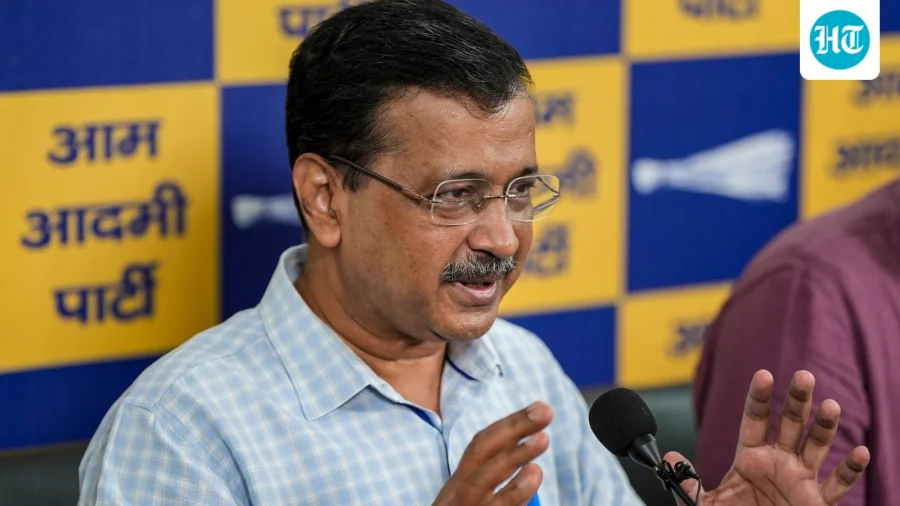
Addressing a press conference in Delhi, Kejriwal said he had sent separate letters to the three companies seeking clarification on their responsibility if E20 fuel is used in existing vehicles. “Will the company compensate if the vehicle’s mileage drops by more than 10%? Will they compensate for any engine damage?” he asked, according to reports.
The AAP chief specifically demanded that companies provide a written assurance that they will cover the financial loss for customers if E20 fuel leads to a mileage drop exceeding 10%. He also questioned whether companies would take responsibility for any long-term engine wear caused by the higher ethanol content.
Why E20 fuel has become a point of contention
The central government has been pushing for a phased introduction of E20 fuel — petrol blended with 20% ethanol — as part of its National Policy on Biofuels and commitments to reduce carbon emissions. The target is to achieve nationwide availability of E20 fuel by 2025.
However, many vehicles currently on Indian roads are not fully compatible with E20 fuel. While most modern cars can handle up to E10 (10% ethanol blend), higher ethanol content can cause corrosion in rubber and plastic components, reduce fuel efficiency, and potentially void warranties if the manufacturer hasn’t certified the vehicle for E20.
For millions of Indian consumers who own older vehicles or two-wheelers, the transition to E20 raises genuine concerns about unexpected repair costs and reduced performance.
How the controversy unfolded
The E20 fuel debate gained traction after several consumer groups and political leaders raised questions about the lack of clear communication from automakers. Kejriwal’s intervention marks a significant political push, as he directly challenges the industry to take responsibility rather than leaving consumers to bear the cost of the policy shift.
At his press conference, Kejriwal accused automobile companies of being “forced to mislead people” on E20 fuel, suggesting that manufacturers are caught between government mandates and consumer expectations. He said his letters seek to bring transparency to the issue.
Who is affected by this E20 fuel uncertainty
The primary concern is for the average Indian vehicle owner — someone who may not know whether their car or motorcycle is E20-compatible. Two-wheeler owners, who form a massive segment of the market, are particularly vulnerable because many older Hero MotoCorp models were not designed for high ethanol blends.
If E20 fuel becomes mandatory at pumps, owners of non-compatible vehicles could face reduced mileage, engine knocking, fuel system corrosion, and expensive repairs — all without clear compensation from manufacturers.
What Maruti, Toyota, and Hero have said so far
As of now, none of the three companies — Maruti Suzuki, Toyota Kirloskar Motor, or Hero MotoCorp — have issued a public response to Kejriwal’s letters. It remains unclear whether they will provide the written guarantee he has demanded.
Industry sources suggest that automakers have been working on E20-compliant engines for new models, but retrofitting older vehicles or offering compensation for mileage loss is a complex and potentially costly proposition.
What this demand really means for consumers
Kejriwal’s demand goes beyond a simple clarification. If companies agree to compensate for mileage drops above 10%, it would set a precedent for consumer protection in India’s fuel transition. It would also force automakers to be transparent about the real-world impact of E20 fuel on vehicle performance.
However, experts point out that mileage depends on multiple factors — driving habits, road conditions, vehicle maintenance — making it difficult to attribute a specific drop solely to fuel blend. This could make any compensation guarantee legally and practically challenging to enforce.
Confirmed facts vs what remains unclear
Confirmed: Kejriwal has sent letters to Maruti Suzuki, Toyota, and Hero MotoCorp seeking a written guarantee on E20 fuel compensation. He made the announcement at a Delhi press conference. The letters demand that companies compensate customers if mileage drops by more than 10%.
Unclear: Whether the companies will respond positively, what legal basis exists for such a demand, and whether the government will intervene to clarify the policy. It is also unclear if Kejriwal has sent similar letters to other automakers like Hyundai, Tata Motors, or Bajaj Auto.
Why Kejriwal targeted these three companies
Maruti Suzuki is India’s largest carmaker by volume, with millions of vehicles on the road that may be affected by E20 fuel. Toyota is a major player in the hybrid and premium segment, and its vehicles often have different fuel system specifications. Hero MotoCorp dominates the two-wheeler market, where E20 compatibility is a significant concern for budget-conscious consumers.
By targeting these three, Kejriwal is effectively asking the industry leaders to set a precedent that others may have to follow.
Risks and concerns around the compensation demand
Industry experts warn that a blanket compensation guarantee could be impractical. Mileage varies widely even with the same fuel, and proving that E20 caused a specific drop would require controlled testing. Automakers may argue that they already design vehicles to meet government fuel standards and that any compensation should come from the government, not manufacturers.
Consumer rights groups, however, argue that if companies sell vehicles that are not E20-compatible while the government mandates E20 fuel, the burden should not fall on the customer.
The bigger picture: India’s ethanol blending push
The E20 controversy is part of India’s larger ambition to reduce oil imports and cut carbon emissions. The government has set a target of 20% ethanol blending in petrol by 2025, up from the current 10% (E10). While this benefits sugarcane farmers and reduces pollution, the transition has created confusion for vehicle owners.
Other countries like Brazil have successfully implemented higher ethanol blends, but they did so with clear communication and vehicle compatibility standards from the start.
What vehicle owners should do now
If you own a vehicle manufactured before 2020, check your owner’s manual or contact your manufacturer to confirm E20 compatibility. Avoid using E20 fuel in older vehicles unless explicitly approved. Keep records of fuel purchases and mileage in case you need to make a claim later. Follow the developments in Kejriwal’s letters — if companies respond, it could affect your rights as a consumer.
What happens next
Kejriwal has indicated he will write to other automobile manufacturers as well. The ball is now in the court of Maruti, Toyota, and Hero. If they refuse to provide a written guarantee, the issue could escalate politically, with Kejriwal likely to pressure the central government to intervene.
The companies may also choose to issue general statements about E20 compatibility without committing to specific compensation, which could leave the matter unresolved for consumers.
Our Take
Kejriwal’s letter is a smart political move that taps into genuine consumer anxiety. The E20 transition is happening faster than public awareness, and many vehicle owners are unaware of the risks. By demanding written guarantees, he is forcing automakers to either take responsibility or admit they cannot guarantee performance — both outcomes would benefit consumers.
However, the compensation demand for mileage drop is a tricky one. Mileage is influenced by too many variables to be a reliable metric for compensation. A more practical demand would be for automakers to clearly state which models are E20-compatible and offer free retrofitting or extended warranties for older models.
For now, the silence from Maruti, Toyota, and Hero speaks volumes. Consumers deserve clarity, and this letter may finally force the industry to provide it.
Frequently Asked Questions
What is E20 fuel?
E20 fuel is petrol blended with 20% ethanol. The Indian government plans to make it widely available by 2025 as part of its renewable energy and emissions reduction goals.
Will E20 fuel damage my car or bike?
It depends on your vehicle. Most modern vehicles (manufactured after 2020) are designed to handle E20. Older vehicles may experience corrosion in fuel system components, reduced mileage, and engine knocking if E20 is used without compatibility.
What did Kejriwal ask Maruti, Toyota, and Hero?
He asked for a written guarantee that these companies will compensate customers if their vehicle’s mileage drops by more than 10% due to E20 fuel usage, and if any engine damage occurs.
Have the companies responded to Kejriwal’s letter?
As of now, none of the three companies — Maruti Suzuki, Toyota, or Hero MotoCorp — have issued a public response to Kejriwal’s demand for a written compensation guarantee.