The political temperature in New Delhi escalated sharply on Thursday as the Cockroach Janta Party (CJP) levelled serious allegations against the central government, directly questioning the protection afforded to Chief Election Commissioner Gyanesh Kumar. At the heart of the controversy is a staggering claim: the deletion of over 13 crore voters' names from the electoral rolls.
Dipke's Direct Charge: A 'Setting' for Elections?
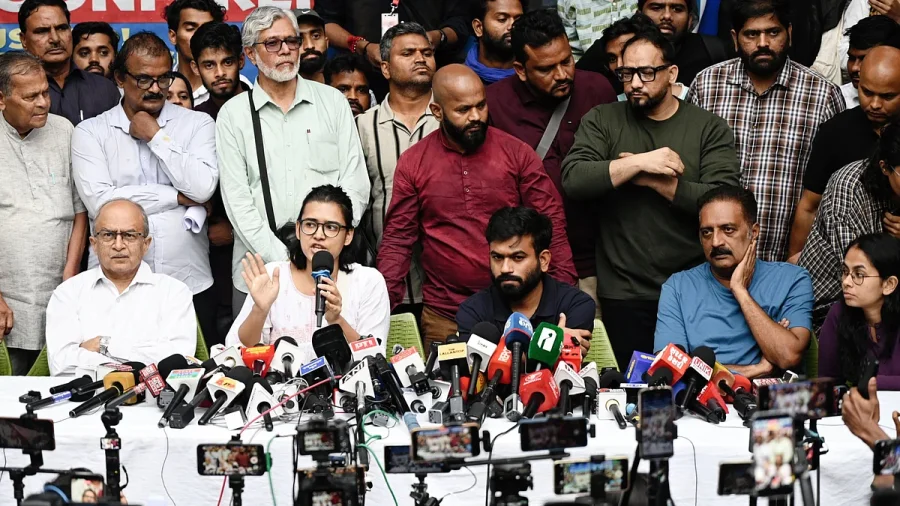
Addressing a press conference in New Delhi, CJP founder Abhijeet Dipke did not mince words. He accused the Narendra Modi government of shielding the Chief Election Commissioner amid allegations of electoral-roll manipulation. Dipke questioned whether the mass deletion of voters was a deliberate "setting" designed to influence election outcomes. His central question, "Why is Gyanesh Kumar so important to Modi?", framed the CEC not just as an official, but as a pivotal figure in a larger political strategy.
Why the Allegations Matter for Indian Democracy
The integrity of India's electoral process is the bedrock of its democracy. Allegations of manipulated voter rolls strike at the very heart of public trust. If millions of names are indeed deleted without due process, it could disenfranchise a vast section of the population, potentially altering the outcome of future elections. For the common citizen, this raises a fundamental question: Is their vote truly secure? The CJP's allegations, if proven, would represent one of the most significant challenges to the Election Commission's credibility in recent history.
From Allegations to Action: The Call for a Tricolour March
The CJP has moved beyond rhetoric, calling for a tricolour march at Connaught Place on 16 October. This planned demonstration signals a shift from a press-room battle to a street-level confrontation. The choice of Connaught Place, a symbolic and high-visibility location in the capital, indicates an intent to maximise public and media attention. The march is being positioned as a peaceful, patriotic protest, using the national flag as its symbol.
Police Crackdown and the Question of Dissent
The lead-up to the march has been anything but smooth. Student leaders have accused the police of suppressing dissent and mistreating journalists amid a crackdown on anti-CEC protests. These accusations add a volatile layer to the situation, transforming a political dispute into a broader debate about civil liberties and the right to protest. The treatment of journalists, in particular, raises uncomfortable questions about press freedom during political agitation.
Delhi High Court Steps In
With tensions rising, the Delhi High Court has intervened. The court recorded assurances from the police regarding the regulation of the proposed CJP gathering. This development places the planned march under judicial scrutiny, with the police now bound to follow a specific protocol. The court's involvement suggests a recognition of the potential for unrest and an attempt to balance the right to protest with the need for public order.
Confirmed Facts vs. What Remains Unclear
Confirmed: CJP founder Abhijeet Dipke made the allegations at a press conference. The CJP has called for a march on 16 October. The Delhi High Court has recorded police assurances. Student leaders have made accusations of police misconduct.
Unclear: The veracity of the claim regarding the deletion of 13 crore voters. The specific evidence, if any, the CJP possesses to support its "setting" allegation. The exact nature of the "protection" the government is allegedly providing to the CEC. The outcome of the planned march and the police's actual response on the ground.
The Political Moat: Why the CEC's Position is Crucial
In the architecture of Indian democracy, the Chief Election Commissioner is not just an administrator; he is the final arbiter of the electoral process. The position holds immense power to certify results, adjudicate disputes, and manage the mammoth exercise of national elections. For any government, having a pliable or aligned CEC could be seen as a significant strategic advantage. This is why the CJP's question—"Why is Gyanesh Kumar so important to Modi?"—is so potent. It implies that the CEC's role is not neutral but central to the government's political fortunes.
Risks and the Balanced View
While the CJP's allegations are serious, it is crucial to note that they remain allegations. The government and the Election Commission have not issued a detailed rebuttal to these specific claims in the public domain. There is a risk of political polarisation, where the issue becomes a partisan battle rather than a factual inquiry. The call for a march also carries the risk of public disorder, which the Delhi High Court is clearly trying to mitigate. A balanced view requires waiting for concrete evidence and official responses before arriving at a conclusion.
A Wider Pattern of Electoral Contention
This is not an isolated incident. Across India, political parties and civil society groups have frequently raised concerns about the accuracy and fairness of voter rolls. The controversy surrounding the CEC is the latest flashpoint in a long-running debate about the independence of constitutional bodies. It reflects a growing trend of questioning the neutrality of institutions that are supposed to be above politics.
What Should Concerned Citizens Do?
For the average citizen, the most practical step is to verify their own voter registration status. Ensure your name is on the electoral roll and that your details are correct. Stay informed through multiple credible news sources rather than relying on social media rumours. If you witness any irregularities, report them to the relevant authorities. The strength of a democracy lies in the vigilance of its citizens.
Future Outlook
The immediate future hinges on the events of 16 October. Will the march proceed peacefully? How will the police respond? Will the CJP present concrete evidence to support its claims? The Delhi High Court's involvement ensures that the situation will be closely monitored. The political discourse is likely to intensify, with the government and the opposition trading charges. The controversy is set to remain a major political flashpoint in the days to come.
Our Take
The CJP's allegations have shifted the debate from the technicalities of voter rolls to the fundamental question of institutional independence. By directly targeting the CEC's relationship with the Prime Minister, Abhijeet Dipke has forced a conversation about the perceived politicisation of constitutional authorities. Regardless of the merits of the specific claims, the story underscores a deepening trust deficit in India's electoral machinery. The coming days will test not just the CJP's evidence, but the resilience of India's democratic institutions to withstand such intense scrutiny.
Frequently Asked Questions
What is the CJP's main allegation against CEC Gyanesh Kumar?
The CJP alleges that the Modi government is protecting CEC Gyanesh Kumar to facilitate the deletion of over 13 crore voters' names, which it claims is a "setting" to influence elections.
What is the tricolour march called by the CJP?
The CJP has called for a tricolour march at Connaught Place in New Delhi on 16 October to protest against the alleged electoral roll manipulation.
How has the Delhi High Court responded to the planned march?
The Delhi High Court has recorded assurances from the police regarding the regulation of the proposed CJP gathering, ensuring the protest is managed within legal frameworks.
What have student leaders accused the police of?
Student leaders have accused the police of suppressing dissent and mistreating journalists during the crackdown on anti-CEC protests.