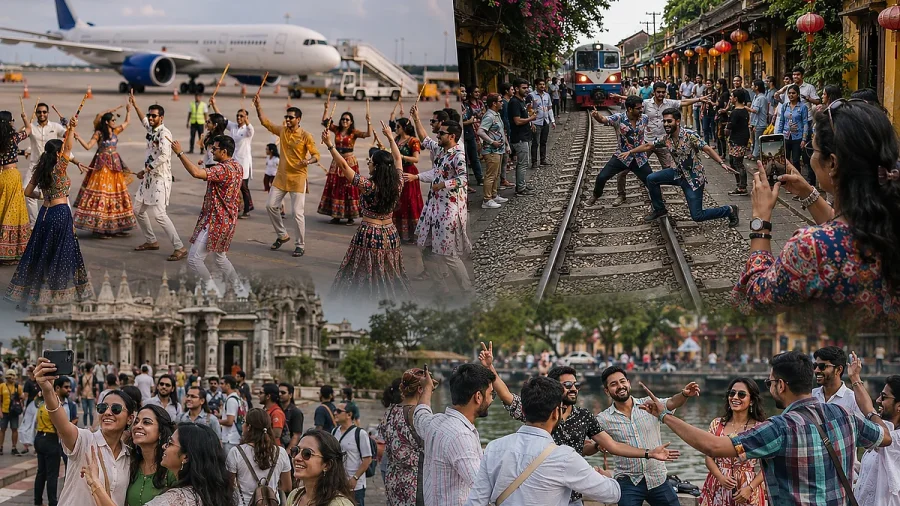
It was meant to be a moment of pure joy—a spontaneous garba performance on an airport tarmac in Vietnam. But within hours, the video had sparked a very different kind of conversation. Locals were not amused. The incident, along with reports of dancing on railway tracks and high noise levels in public spaces, has reignited a sensitive global debate: why do some Indian tourists struggle to navigate cultural norms abroad?
While the vast majority of Indian travelers are respectful and considerate, a pattern of behavior—often characterized by a blend of enthusiasm and cultural differences—has drawn the ire of locals and prompted advisories from establishments. A recent advisory from a hotel in Gstaad, Switzerland, subtly addressed issues like noise levels and appropriate attire, a move widely interpreted as a response to these very patterns.
Why This Conversation Is More Than Just a Travel Complaint
This isn't just about bad behavior. It’s about a clash of cultural expectations. For a nation with a rapidly growing middle class and a booming outbound tourism market, these incidents carry real consequences. They affect India’s global reputation, the experience of other Indian travelers, and the economic relationships between countries. When a hotel in Switzerland feels the need to issue a behavioral advisory, it signals a breakdown in understanding that goes beyond a single bad guest.
How the Incidents Unfolded: From Joy to Controversy
The most recent flashpoint was the garba performance on the tarmac in Vietnam. What was likely a spontaneous celebration of culture was perceived by locals as a disruption of airport protocols and public order. This was followed by reports of Indian tourists dancing on active railway tracks, a dangerous act that also showed a disregard for local safety norms. The hotel advisory in Gstaad, while not naming any nationality, was a clear signal that certain behaviors—loud conversations in common areas, inappropriate attire in dining rooms, and misuse of facilities—were becoming a recurring issue.
Who Is Affected and What Officials Are Saying
The impact is felt by everyone. The respectful Indian traveler now faces a stereotype they must overcome. Local businesses in tourist destinations have to manage complaints from other guests. And Indian diplomatic missions abroad are often called upon to manage the fallout. While no official government statement has directly addressed these specific incidents, the conversation on social media is loud and clear. Many Indians themselves are calling for greater awareness and sensitivity, arguing that the actions of a few are tarnishing the image of the many.
What We Know So Far — and What Remains Unclear
We know that specific incidents have occurred and have been documented. We know that they have generated significant negative attention. What remains unclear is the scale of the problem. Are these isolated incidents amplified by social media, or do they represent a genuine and growing trend? The data is anecdotal. There is no official “bad tourist” index. However, the consistency of the complaints—noise, lack of spatial awareness, disregard for local rules—suggests a deeper, systemic issue rooted in cultural conditioning.
Risks, Concerns, and the Balanced View
The primary risk is reputational. A country’s image as a tourist source market can be damaged, leading to stricter visa policies or negative treatment of its citizens. There is also a risk of cultural backlash, where locals become less welcoming. However, it’s crucial to maintain a balanced view. This behavior is not representative of all Indian tourists. Many are well-traveled, respectful, and actively seek to learn about local cultures. The criticism should be directed at specific behaviors, not an entire nationality. The real concern is the lack of pre-travel cultural orientation for many first-time international travelers from India.
Why Similar Trends Are Growing Globally
This is not an India-specific problem. As global tourism booms, cultural clashes are becoming more common. Tourists from all nations can be guilty of insensitivity. However, the rapid growth of the Indian outbound market—with millions of first-time flyers—means that the learning curve is steep and very public. The challenge is to provide the tools for cultural adaptation as quickly as the market is expanding.
- First-time international travelers often carry home habits without realizing they are inappropriate.
- Social media amplifies negative incidents, creating a perception that is often worse than reality.
- The lack of a standardized “travel etiquette” education before departure is a major gap.
“Instead of adapting, they carry home habits abroad — loud behavior, crowding, ignoring local rules — which makes them stand out negatively.” — Reddit user comment on Indian tourist behavior
What Indian Travelers Should Know Now
The solution is not to stop traveling, but to travel smarter. Before visiting a new country, take 15 minutes to research local customs. Understand that what is acceptable in India—like loud, animated conversations in public—might be considered rude elsewhere. Dress codes matter, especially in religious or formal settings. Be mindful of noise levels, especially in hotels and residential areas. The goal is not to suppress your culture, but to share it respectfully. A garba performance is beautiful, but an airport tarmac is not the right stage.
What Could Happen Next
If these patterns continue, we can expect more targeted advisories from hotels and tourist boards. There may be a rise in “cultural sensitivity” campaigns aimed at Indian travelers. On the positive side, this conversation could lead to better pre-travel resources and a greater awareness among the traveling public. The Indian travel industry, from tour operators to airlines, has a role to play in educating their customers. The future of Indian tourism abroad depends on this shift in mindset.
Our Take: Why This Story Matters Beyond One Incident
This is a story about a nation finding its place in the world. As India’s economic power grows, so does its global footprint. The way its citizens behave abroad is a reflection of the country itself. These incidents are growing pains. They are a call for introspection, not for shame. The goal is to become travelers who are not just seen, but respected. That requires a conscious effort to understand that the world does not operate on Indian cultural norms, and that the joy of travel lies in adapting to, not imposing upon, the places we visit.
FAQs
Why are some Indian tourists facing backlash abroad?
Some Indian tourists are facing backlash due to a pattern of behaviors that clash with local cultural norms, such as high noise levels, disregard for public space etiquette, and inappropriate attire. These actions, while often unintentional, can be perceived as disrespectful by locals.
What specific incidents have sparked the debate about Indian tourists?
Recent incidents include a spontaneous garba dance on an airport tarmac in Vietnam, dancing on railway tracks, and a hotel in Gstaad, Switzerland issuing a behavioral advisory about noise and attire. These events have been widely shared on social media, fueling the conversation.
Is the criticism of Indian tourists fair?
The criticism is directed at specific behaviors, not the entire nationality. The vast majority of Indian travelers are respectful. However, the consistency of complaints suggests a genuine cultural gap that needs to be addressed through better awareness and pre-travel education.
How can Indian tourists avoid cultural misunderstandings abroad?
Indian tourists can avoid misunderstandings by researching local customs before traveling, being mindful of noise levels, dressing appropriately for different settings, and observing how locals behave in public spaces. The key is to adapt to the local environment rather than expecting it to adapt to you.