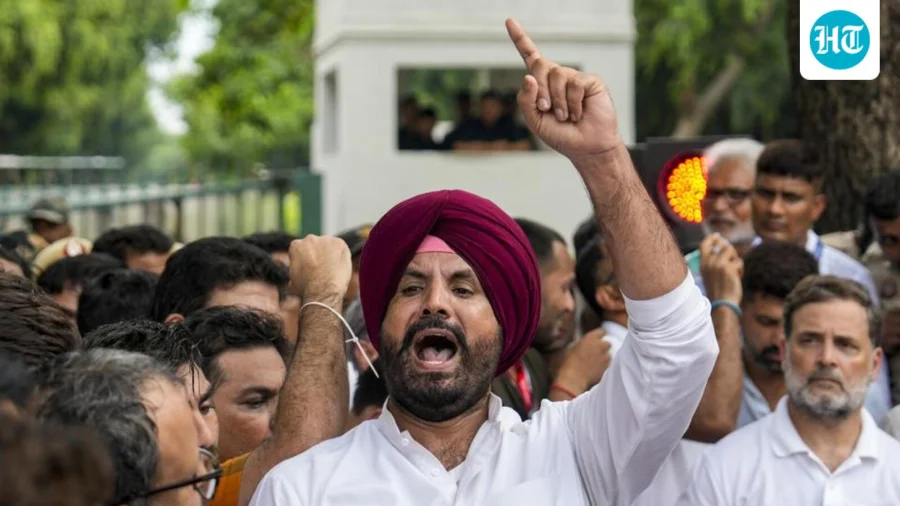
Punjab Congress president Amarinder Singh Raja Warring is being removed from his post — a decision that lands quietly on paper but carries loud implications for a party still searching for its footing in one of its most politically sensitive states.
The trigger, according to the original report, was a review process led by Sachin Pilot, who took over as AICC general secretary in-charge on September 5, replacing Bhupesh Baghel. Pilot held a series of discussions with state leaders and MPs before the decision was taken.
What the Congress's Punjab Reset Actually Signals
Leadership changes in state units are rarely just about one person. In Punjab, the Congress has been navigating factional fault lines, an electoral setback, and the challenge of rebuilding credibility with a voter base that has shown increasing willingness to look elsewhere.
Removing a sitting state chief mid-term suggests the high command believes the current structure is not delivering — organisationally or politically.
Why Punjab Still Matters to the Congress's National Math
Punjab is not a large state in terms of Lok Sabha seats, but it is symbolically and strategically important. The party has historically drawn national leaders from Punjab, and a weak state unit weakens the Congress's broader claim to being a serious contender in North India.
For a party trying to project unity and direction after a series of internal debates, a visible Punjab reset is both a message and a necessity.
How the Decision Was Reached — What We Know
The original report states that Sachin Pilot, after taking charge on September 5, held multiple rounds of discussions with state leaders and MPs. These consultations appear to have formed the basis for the decision to replace Warring.
What is not yet clear is whether the change was driven primarily by internal feedback, electoral strategy, or a broader organisational review that Pilot is conducting across states.
Who Is Affected — and Why It Matters Beyond the Party
For Congress workers and local leaders in Punjab, a change at the top means a reset of internal equations, access, and patronage. For voters, it is a signal about how serious the party is about fixing its ground game.
For Warring himself, the removal is a significant political moment — he was seen as a relatively young, active face of the party in the state.
What the Congress Leadership Has Said — and What Remains Silent
Based on available source material, there is no confirmed public statement from the Congress high command or from Warring explaining the decision in detail. The move has been reported, but the official communication around it remains limited.
This silence is not unusual in internal organisational changes, but it does leave room for speculation — which the party will likely want to control quickly.
Reading the Timing: Why Now, and Why Pilot
Sachin Pilot's appointment as AICC general secretary in-charge on September 5 placed him directly in the middle of the Congress's organisational machinery. His first visible interventions in Punjab suggest he is being given room to reshape state units.
For Pilot, this is also a test of his ability to manage complex state politics — something he has navigated before, with mixed outcomes.
Confirmed Facts vs What Remains Unclear
Confirmed: The Congress has decided to remove Amarinder Singh Raja Warring as Punjab unit chief. Sachin Pilot replaced Bhupesh Baghel as AICC general secretary in-charge on September 5. Pilot held discussions with state leaders and MPs.
Unclear: The exact reasons for the removal, the name of the successor, the timeline for a formal announcement, and whether this is part of a larger reshuffle across other states.
Risks and the Balanced View
Changing a state chief can energise a unit — or deepen existing factionalism. If the successor is seen as imposed rather than consensus-backed, it could create fresh internal friction.
There is also the risk that the change is read as a sign of instability rather than renewal, especially if the party does not clearly communicate the rationale.
The Wider Pattern: Congress's Organisational Churn
This is not an isolated move. The Congress has been reshuffling state units and assigning new general secretaries as part of a broader attempt to present a more organised, election-ready structure.
Punjab is one piece of that puzzle — but a visible one, given the state's political weight and the party's recent history there.
What This Means for Congress Workers and Supporters in Punjab
For local leaders, the immediate task is to adjust to a new chain of command. For workers, the hope will be that the change brings clearer direction and better coordination with the high command.
For voters, the real test will be whether this translates into a more visible, responsive party presence on the ground.
What Could Happen Next
A successor is expected to be named, though the timeline is not confirmed. The new chief will inherit the same challenges: faction management, organisational rebuilding, and preparing the party for future electoral contests.
How smoothly this transition is handled will be an early indicator of how Pilot's tenure as AICC in-charge will unfold.
Our Take
The removal of Amarinder Singh Raja Warring is less a verdict on one leader and more a reflection of the Congress's ongoing struggle to get its state units right. Punjab matters — not just for its seats, but for what it says about the party's ability to manage its own house.
Whether this reset works will depend on who comes next, and whether the change is seen internally as a correction or a compromise.
Frequently Asked Questions
Why did the Congress remove Amarinder Singh Raja Warring?
According to the original report, the decision followed a review process led by Sachin Pilot, who became AICC general secretary in-charge on September 5. Pilot held discussions with state leaders and MPs before the change was decided.
Who is Sachin Pilot and why is he involved in Punjab?
Sachin Pilot replaced Bhupesh Baghel as AICC general secretary in-charge on September 5. In that role, he oversees organisational matters for the state, including leadership decisions.
Who will replace Amarinder Singh Raja Warring as Punjab Congress chief?
No successor has been confirmed in the available source material. The party is expected to name a replacement as part of the organisational reshuffle.
What does this mean for the Congress in Punjab?
It signals an organisational reset. The impact will depend on the successor, how the transition is managed, and whether it helps the party rebuild its ground presence in the state.