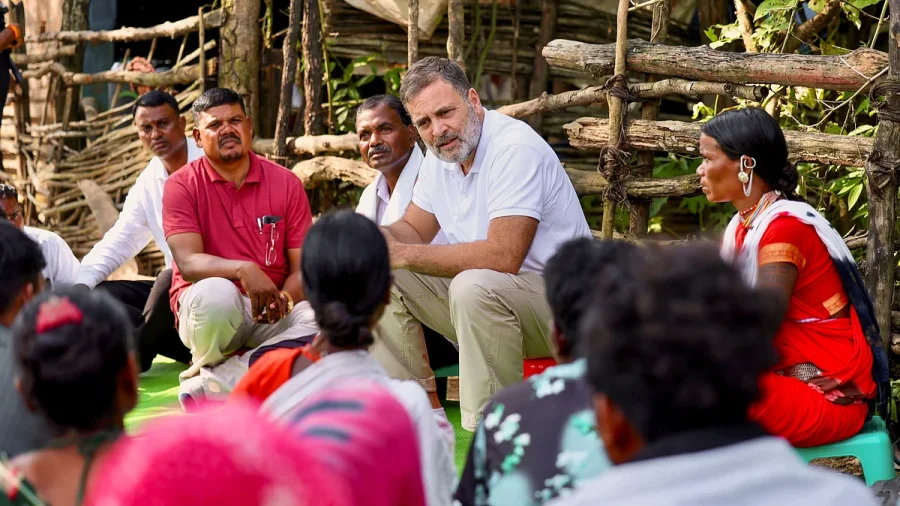
The road into Birsa block runs through sal forest and past hamlets where the nearest functioning health centre can be hours away. On Thursday, Rahul Gandhi took that road — from neighbouring Maharashtra into Balaghat district — to sit with families who have buried children in recent months.
He did not arrive with a speech. He arrived with questions, and the families answered them.
Inside the Villages Where the Deaths Happened
Gandhi met Baiga tribal families in the Birsa development block, including relatives of children who had fallen ill and later died. The Baiga are among India's particularly vulnerable tribal groups, and Balaghat's tribal belt has long figured in discussions about malnutrition and access to care.
At Jagla village, he said he was pained by the deaths. He alleged that inadequate healthcare and insufficient action on malnutrition had contributed to the crisis — a charge the state government has not yet answered in the material available.
Why a Cluster of Child Deaths Becomes a Political Question
Child deaths in tribal districts are rarely treated as isolated tragedies. They become a measure of whether the state's health machinery — anganwadi workers, nutrition programmes, referral hospitals — is actually reaching the last village.
That is the ground Gandhi chose to stand on. His argument was not only about medicine. He framed it as a broader failure: healthcare, education and employment, all at once, in a region where all three are scarce.
From Maharashtra to Mate: How the Day Unfolded
Gandhi travelled into Madhya Pradesh from neighbouring Maharashtra, moving through villages rather than holding a single public meeting. In Mate village, he visited a government primary school and spoke to students about their education and the mid-day meal they receive.
The choice of stops was deliberate — a school and a set of grieving homes, rather than a stage. It placed the conversation on delivery: what reaches children, and what does not.
The Families at the Centre of This Story
Behind the political exchange are parents who lost children after illnesses that families say were not caught in time. Their accounts, as shared with Gandhi, describe a familiar pattern in remote tribal areas: symptoms noticed late, transport unavailable, treatment delayed.
For these families, the visit is not a campaign event. It is the first time their loss has been heard outside the district.
What the BJP Government Has Said
As of the available material, there is no recorded response from the Madhya Pradesh government or the state BJP to Gandhi's allegations. This article does not attribute any statement to them that has not been made.
Gandhi, for his part, said he would raise the issue further. He did not specify where or when.
Reading the Visit Politically
Madhya Pradesh has been a BJP stronghold, and the tribal belt — Balaghat, Mandla, Dindori, Shahdol — carries weight beyond its seat count. Tribal voters have shifted before, and both parties know it.
A visit framed around children's deaths is difficult to counter without addressing the deaths themselves. That is precisely why the Congress chose this ground, and why the state's silence so far is itself politically notable.
Confirmed Facts vs What Remains Unclear
Confirmed: Gandhi visited Birsa block villages, met Baiga families including relatives of children who died, visited a government primary school in Mate, and made the allegations described above.
Unclear: The exact number of child deaths, their medical causes, and whether malnutrition was officially recorded as a factor. No independent verification of the death toll or its causes is available in the source material. Any figure circulating without official confirmation should be treated as unverified.
The Pattern This Fits Into
This is not the first time child deaths in tribal Madhya Pradesh have drawn national attention, nor the first time a national leader has walked into a village to highlight them. Such visits tend to follow a rhythm: outrage, inquiry, promises, and then a slower question — what actually changed on the ground.
The pattern matters because it suggests the problem is structural, not episodic. Forests, distance, understaffed health posts and seasonal migration all shape whether a sick child reaches treatment in time.
What This Means for People in the Region
For residents of Balaghat's tribal blocks, the practical questions are immediate: Is the nearest health centre staffed? Are anganwadi centres supplying nutrition on schedule? Do schools have functioning mid-day meal arrangements?
These are answerable questions, and they are the ones that will determine whether this visit produces anything beyond headlines.
What Could Happen Next
Gandhi has said he will raise the issue further, which suggests it will reappear in Parliament or in upcoming political engagements. The state government may respond, order a review, or release its own data on child health in the district.
None of that is confirmed. What is confirmed is that a national opposition leader has now placed Balaghat's child deaths on the record.
Our Take
The political framing will be contested, and it should be. But the underlying question — whether a child in a Baiga village can reach treatment in time — is not a partisan one. It is a delivery question, and it has been asked before in this region without a durable answer.
Visits end. Villages remain. The test of this one is whether anything changes after the cameras leave.
Frequently Asked Questions
Why did Rahul Gandhi visit Balaghat?
He travelled to the Birsa development block in Balaghat district to meet Baiga tribal families, including relatives of children who died after falling ill in recent months, and to visit a government primary school in Mate village.
What allegations did Rahul Gandhi make?
He alleged that inadequate healthcare and insufficient action on malnutrition contributed to the child deaths, and that the BJP-led Madhya Pradesh government had failed to provide adequate healthcare, education and employment support in the tribal-dominated region.
Has the Madhya Pradesh government responded?
No response from the state government or the state BJP is available in the source material. This article does not attribute any statement to them.
How many children died in Balaghat?
The exact number is not confirmed in the available material. Reports refer to children who died in recent months, but no officially verified figure or cause of death has been established here. Treat unverified numbers with caution.