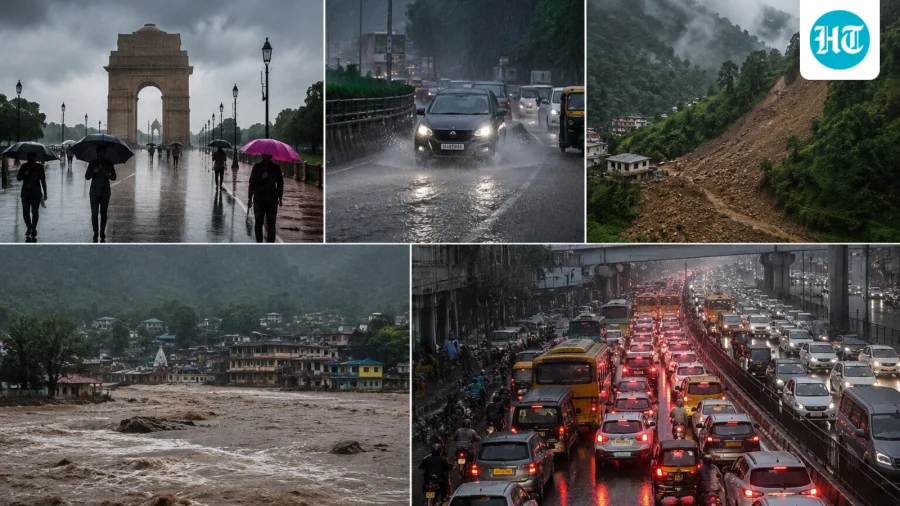
Delhi woke up to a wet Thursday morning as rainfall lashed parts of the national capital, bringing relief from humidity but also raising alarm. The Indian Meteorological Department (IMD) has issued a red alert, warning of more heavy downpour, gusty winds, and thunderstorms as the monsoon inches closer to the city.
IMD red alert: What it means for Delhi residents
The IMD upgraded its warning from yellow to orange and finally to a red alert by 7 am on Thursday. A red alert signals "extremely heavy rainfall" and advises residents to take precautions, avoid unnecessary travel, and stay indoors. The alert covers Delhi-NCR, with predictions of continued rainfall and cloudy skies over the next 24 to 48 hours.
Monsoon advances: Why this rainfall matters
This rainfall marks a significant step in the monsoon's progress toward Delhi. The capital has been waiting for the monsoon to arrive, and this spell indicates the system is finally moving closer. For residents, this means more than just wet roads — it signals a shift in weather patterns that could bring both relief from heat and risks of waterlogging.
Widespread destruction across states: Seven killed
While Delhi braces for more rain, other parts of India are already facing the monsoon's fury. At least seven people have been killed in Himachal Pradesh and Karnataka due to rain-related incidents. In Himachal, landslides and flash floods have damaged homes and roads, while Karnataka has reported flooding in low-lying areas. The IMD has warned of more heavy rain in these states as well.
Waterlogging and traffic chaos in Delhi
Heavy rainfall lashed several parts of the National Capital, causing severe waterlogging in many areas. Commuters faced delays as roads turned into rivers, with vehicles struggling to navigate submerged stretches. The downpour, accompanied by gusty winds and thunderstorms, led to fallen trees and power outages in some neighborhoods.
IMD's warning system: From yellow to red
The IMD uses a color-coded warning system to alert the public. A yellow alert means "be aware," orange means "be prepared," and red means "take action." The rapid escalation to red by 7 am on Thursday reflects the severity of the expected rainfall. Officials said the upgrade was based on satellite data and weather models predicting intense downpour.
Confirmed facts vs what remains unclear
Confirmed: Delhi received rainfall on Thursday; IMD issued a red alert; seven deaths reported in Himachal and Karnataka; waterlogging reported in Delhi. Unclear: Exact timeline of when monsoon will officially arrive in Delhi; full extent of damage in affected states; whether the red alert will be extended beyond 48 hours.
Risks and balanced view
While the rain brings relief from heat, it also poses risks. Waterlogging can disrupt daily life, damage property, and increase the risk of vector-borne diseases. Authorities have advised residents to stay cautious, but some critics argue that infrastructure in Delhi is ill-prepared for heavy rain, with drainage systems often overwhelmed. The IMD's red alert is a precautionary measure, but the actual impact will depend on how the weather unfolds.
Wider pattern: Monsoon's erratic behavior
This year's monsoon has been marked by uneven distribution — some regions face floods while others wait for rain. The IMD has noted that climate change is making monsoon patterns more unpredictable, with intense rainfall events becoming more frequent. This red alert in Delhi is part of a larger trend of extreme weather events across India.
Practical guidance for Delhi residents
If you are in Delhi-NCR, avoid unnecessary travel during heavy rain. Keep emergency numbers handy, stay away from waterlogged areas, and ensure drainage around your home is clear. For those in low-lying areas, move valuables to higher ground. Monitor IMD updates and local news for real-time information.
Future outlook: What next for Delhi's monsoon
The IMD expects more rainfall in the coming days, with the monsoon likely to officially cover Delhi within the next week. The red alert may be downgraded if conditions improve, but residents should remain prepared for intermittent heavy showers. In the longer term, the monsoon season is expected to continue through September, with periodic heavy rain events.
Our Take
This red alert is a reminder that monsoon in India is both a lifeline and a threat. While Delhi desperately needs rain to replenish water tables and cool the city, the lack of preparedness for urban flooding remains a concern. The IMD's timely warnings are crucial, but they must be matched by responsive infrastructure and public awareness. For now, the focus should be on safety — and hoping the rain brings more relief than destruction.
Frequently Asked Questions
What does a red alert from IMD mean?
A red alert is the highest level of weather warning, indicating "extremely heavy rainfall" expected. It advises residents to take immediate action, avoid travel, and stay indoors to ensure safety.
Is the monsoon officially in Delhi now?
Not yet officially, but the rainfall on Thursday indicates the monsoon is inching closer to the capital. The IMD will declare the monsoon's arrival once conditions meet specific criteria over consecutive days.
How long will the red alert last?
The IMD has issued the red alert for the next 24 to 48 hours. It may be extended or downgraded based on weather conditions.
What should I do if my area gets waterlogged?
Avoid walking or driving through waterlogged areas. Contact local authorities for assistance. Keep emergency supplies ready and monitor official updates.