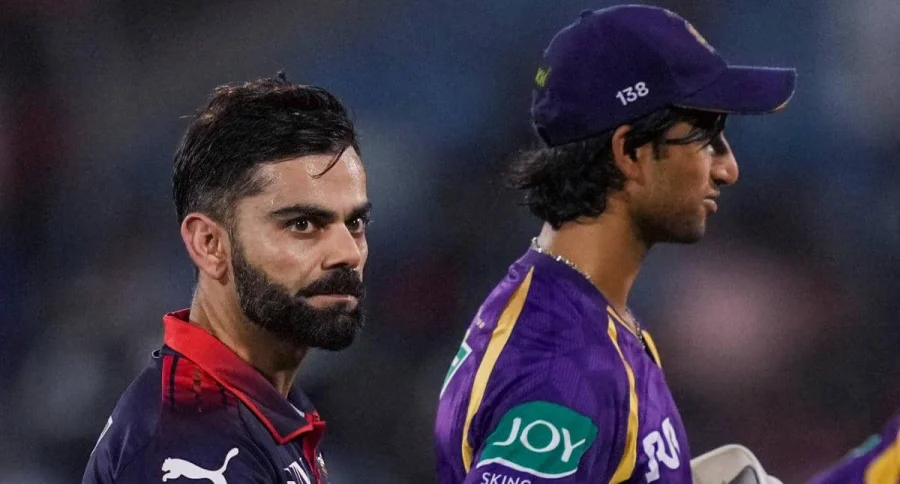
Virat Kohli has dropped a bold take on the evolution of T20 cricket, stating the shortest format has become “a different game altogether.” The 37-year-old Royal Challengers Bengaluru star made the revelation during a recent RCB podcast in the midst of the IPL 2026 season.
For fans who have watched Kohli dominate T20 cricket for over a decade, his admission carries weight. It signals that even the most experienced players are grappling with how much the game has changed. The pressure cooker environment of the IPL, he suggested, now rivals top-tier global football leagues in intensity.
Virat Kohli on T20 Evolution: A Private Chat with KL Rahul
Reflecting on how drastically the game has transformed over recent seasons, Kohli shared details of a private conversation he had with Lucknow Super Giants captain KL Rahul. The two batters, both veterans of the format, agreed on a mutual sentiment: the baseline demands of T20 cricket have shifted dramatically.
“It’s not just a different format anymore,” Kohli said on the podcast. “It’s a different game altogether.” The former India captain compared the current IPL environment to top-tier global football leagues, where every match carries immense pressure and the margin for error has shrunk to near zero.
What Has Changed in Modern T20 Cricket
Kohli’s analysis points to a fundamental shift in how the game is played and perceived. The evolution is not just about power-hitting or strike rates—it’s about the entire ecosystem of the sport.
- Baseline demands have increased: What was considered exceptional batting a few seasons ago is now expected.
- Pressure levels have intensified: Every game now feels like a knockout, with no room for complacency.
- Strategic complexity has grown: Teams are constantly innovating, making the game harder to predict.
What This Means for Players and Fans
For players like Kohli and Rahul, who have been at the top for years, this evolution requires constant adaptation. For fans, it means watching a sport that is faster, more competitive, and more demanding than ever before. The emotional relevance is clear: the game they grew up watching is no longer the same.
The practical impact is that players must now train differently, think differently, and execute differently. Those who fail to evolve risk being left behind, even if they have a stellar track record.
Our Take: Editorial Analysis
What matters here is that Kohli is not just making a casual observation. He is speaking from experience, having been at the center of T20 cricket’s transformation. The bottom line is that the format has reached a point where experience alone is no longer enough—players must continuously reinvent themselves.
For the Indian audience, this resonates deeply. Cricket is not just a sport here; it is a cultural touchstone. When a player of Kohli’s stature says the game has fundamentally changed, it forces everyone—from aspiring cricketers to casual fans—to rethink their understanding of the sport.
The future of T20 cricket will likely see even more evolution. Kohli’s take serves as a warning and an invitation: adapt, or be left behind.