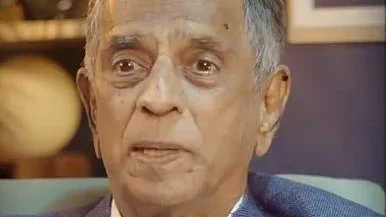
Veteran film producer and former Central Board of Film Certification (CBFC) chairperson Pahlaj Nihalani passed away on Thursday, June 4, in Mumbai. He was 76. His death marks the end of an era for Hindi cinema, where he was both a prolific hitmaker and a deeply controversial regulator.
The news was confirmed by Abhay Sinha, president of the Indian Motion Picture Producers' Association (IMPPA). Filmmaker Ashoke Pandit said Nihalani suffered a heart attack after a prolonged battle with liver-related ailments.
A Producer Who Defined an Era of Hindi Cinema
Pahlaj Nihalani was not just a producer; he was a force in Bollywood's commercial landscape. He was responsible for producing several major hits, including the iconic Andaz Apna Apna (1994), Raja Hindustani (1996), and Chura Liyaa Hai Tumne (2003). His production house, Nihalani Films, was a staple of 1990s and early 2000s Hindi cinema, known for backing mass-appeal entertainers that defined a generation of moviegoers.
His ability to spot commercially viable scripts and talent made him a respected figure in the industry. He was also a key leader in the Indian Motion Picture Producers' Association, advocating for the rights and interests of film producers for decades.
Why His Passing Matters Beyond One Industry
Nihalani's death is not just a personal loss for his family and friends. It is a moment of reflection for the entire Indian film industry. He was a bridge between two distinct eras of Bollywood — the era of single-screen blockbusters and the modern, multiplex-driven industry. His career spanned the transition from celluloid to digital, from VHS to OTT.
More importantly, his tenure as CBFC chairman from 2015 to 2017 placed him at the center of a national debate on censorship, artistic freedom, and the role of the state in regulating culture. His decisions — often controversial — sparked conversations that continue to shape how Indian cinema is regulated today.
What Happened: The Final Hours
According to reports, Nihalani had been unwell for some time, battling liver cirrhosis. On Thursday morning, his condition deteriorated. Filmmaker Ashoke Pandit, a close associate, shared the news on social media, writing: “Sad to know about the demise of a veteran film producer and industry leader Pahlaj Nihalani ji. He was a man who stood by the industry's causes and was responsible for many hit films. A great loss to the industry.”
Family sources confirmed that he breathed his last in Mumbai. His last rites are expected to be held later today.
The CBFC Tenure That Divided Opinion
Nihalani's appointment as CBFC chairperson in 2015 was seen as a move to bring a producer's perspective to film certification. However, his tenure quickly became one of the most controversial in the board's history.
He was known for demanding cuts in films over what he considered objectionable content — from kissing scenes to the use of words like "sex" and "lesbian." He famously ordered 21 cuts in the film Udta Punjab (2016), a decision that was later overturned by the Bombay High Court. The episode became a flashpoint in the debate over censorship in India, with filmmakers and activists accusing him of moral policing.
Nihalani defended his actions, arguing that he was simply following the law and protecting Indian cultural values. His supporters said he was unfairly targeted by a liberal media and that his decisions were within the legal framework of the Cinematograph Act.
What Is Confirmed and What Remains Unclear
Confirmed: Pahlaj Nihalani passed away on June 4, 2026, in Mumbai. He was 76. The cause of death was a heart attack, following a period of liver-related illness. The news was confirmed by IMPPA president Abhay Sinha and filmmaker Ashoke Pandit.
Unclear: The exact timeline of his hospitalization in the final days has not been publicly detailed. While liver cirrhosis was reported as a pre-existing condition, the precise sequence of events leading to the heart attack remains private. The full list of attendees at his last rites is also not yet known.
Risks and Balanced View: A Legacy of Both Hits and Controversy
Nihalani's legacy is a study in contrasts. On one hand, he was a beloved producer who gave the industry some of its most memorable films. On the other, he was a regulator whose decisions were seen by many as regressive and censorious.
His supporters argue that he was a principled man who stood by his convictions in an industry that often prioritizes profit over values. His critics say his tenure set back the cause of creative freedom in Indian cinema by several years.
The truth likely lies somewhere in between. Nihalani was a product of his time — a man who believed in the power of cinema but also in the need for boundaries. His passing invites a more nuanced conversation about the role of censorship in a democratic society.
A Wider Pattern: The Changing Face of Bollywood Regulation
Nihalani's death comes at a time when the CBFC itself is undergoing significant change. The board has moved towards a more lenient certification system in recent years, with fewer cuts and a greater acceptance of adult themes. The Udta Punjab controversy, in particular, marked a turning point, after which the courts and public opinion pushed back against excessive censorship.
His passing is a reminder of how quickly the industry has evolved. The battles he fought — over language, sexuality, and artistic expression — are now largely settled in favor of greater freedom. Yet, the questions he raised about cultural sensitivity and the limits of expression remain relevant.
What the Industry Is Saying
Tributes have poured in from across the film fraternity. Filmmaker Ashoke Pandit called him a "great loss to the industry." Abhay Sinha of IMPPA remembered him as a "tireless advocate for producers." Many have highlighted his role in nurturing talent and his unwavering commitment to the film business.
However, some voices have been more measured, acknowledging his contributions while also noting the controversies. The overall tone, as is customary in such moments, has been one of respect for the departed.
What Happens Next
Nihalani's last rites are expected to be performed later today in Mumbai. The film industry is likely to hold a memorial or tribute in the coming days. His family has requested privacy during this time of mourning.
For the industry, his death closes a chapter. But the debates he ignited — about censorship, artistic freedom, and the role of the state — are likely to continue for years to come.
Our Take
Pahlaj Nihalani was a man of contradictions. He was a hitmaker who understood the pulse of the masses, yet he was also a regulator who often seemed out of step with the times. His life reminds us that the film industry is not a monolith — it is a space where commerce, art, and politics constantly collide.
His passing is a moment to remember the films he gave us, but also to reflect on the larger questions he forced us to confront. In death, as in life, he remains a figure who will be debated, remembered, and — in the end — missed.
FAQs
What was the cause of Pahlaj Nihalani's death?
Pahlaj Nihalani died after suffering a heart attack. He had been battling liver-related ailments, including liver cirrhosis, for some time.
How old was Pahlaj Nihalani when he passed away?
He was 76 years old at the time of his death.
What were Pahlaj Nihalani's most famous films?
He produced several major Bollywood hits, including Andaz Apna Apna (1994), Raja Hindustani (1996), and Chura Liyaa Hai Tumne (2003).
Why was Pahlaj Nihalani's tenure as CBFC chairman controversial?
His tenure was marked by strict censorship decisions, including demanding 21 cuts in the film Udta Punjab. He was accused of moral policing, though he defended his actions as being within the legal framework of the Cinematograph Act.