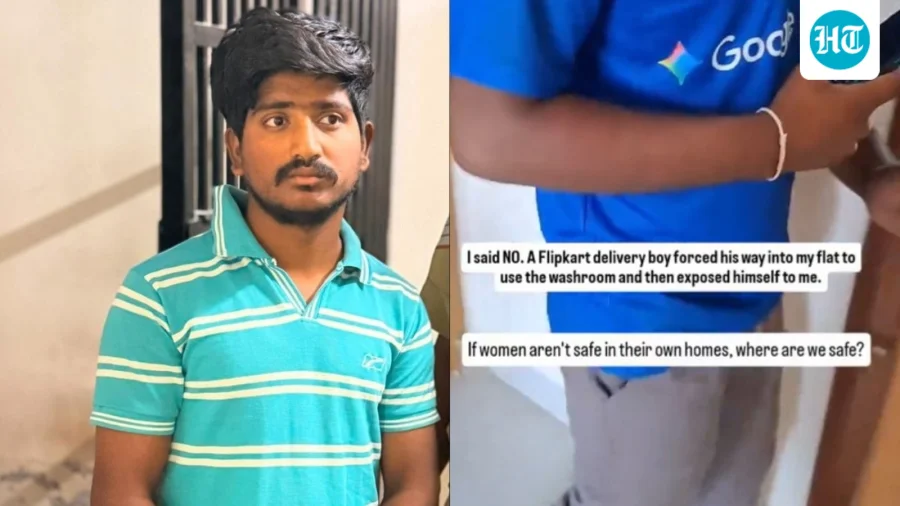
“Unsafe in my own home.” That’s the chilling reality a Bengaluru woman says she faced when a Flipkart delivery agent allegedly forced his way into her flat, made an obscene gesture, and left. The incident, which has sent shockwaves through the city’s solo-living community, has led to the agent’s arrest and sparked a broader conversation about safety protocols for delivery personnel.
How the incident unfolded: A request turned into a threat
According to the woman’s account, the delivery agent arrived at her doorstep with a parcel. He then asked her for permission to use her washroom. She repeatedly refused, telling him she does not allow strangers inside her home. Despite her clear refusal, the agent allegedly barged into her flat, used the washroom, and then made an obscene gesture before leaving. The woman, shaken by the ordeal, immediately contacted the police.
Why this matters: A breach of safety in the most private space
For millions of women living alone in Indian cities, the home is meant to be a sanctuary. This incident shatters that trust. It highlights a vulnerability that many women face daily: the risk of harassment or assault from service providers who have access to residential buildings. The emotional toll is immense, as the woman’s own words—‘Unsafe in my own home’—underscore a deep sense of violation.
Timeline of events: From delivery to arrest
The incident occurred in Bengaluru, though the exact date has not been disclosed. The woman filed a complaint with the local police, who acted swiftly. The delivery agent was identified and arrested. He is currently in custody, and the police are investigating whether he has a history of similar behavior. The case is expected to be heard in court soon.
Human impact: The fear of being alone at home
For women who live alone, this story is a nightmare. The feeling of being unsafe in one’s own home is a profound psychological blow. Many have taken to social media to express their anger and fear, sharing similar experiences with delivery personnel. The incident has also raised questions about the lack of background checks and training for delivery agents, who often have unsupervised access to private residences.
Official response: Police action and Flipkart’s silence
The Bengaluru police have confirmed the arrest and are conducting a thorough investigation. However, Flipkart has not yet issued a public statement. The company’s silence has been criticized, with many demanding accountability and stricter safety measures for its delivery workforce. The woman’s complaint is a stark reminder that e-commerce platforms must prioritize customer safety over convenience.
Analysis: A systemic failure in safety protocols
This incident is not isolated. Across India, there have been multiple reports of delivery agents harassing women. The problem lies in the gig economy’s lack of regulation. Delivery agents are often hired through third-party contractors with minimal vetting. There is no standardized training on how to interact with customers, especially women living alone. This case exposes a gap that needs urgent attention from both companies and regulators.
Confirmed facts vs what remains unclear
Confirmed: The delivery agent entered the woman’s flat after she refused his request. He made an obscene gesture. He has been arrested. Unclear: Whether the agent had a history of similar complaints. Whether Flipkart will take disciplinary action. The full details of the police investigation are still pending.
Risks and balanced view: The need for caution without panic
While this incident is deeply troubling, it is important to avoid generalizing all delivery agents as threats. Many are hardworking individuals who follow protocols. However, the risk is real, and companies must act. The solution lies in better vetting, mandatory training, and clear guidelines for delivery personnel. Customers should also be empowered to report suspicious behavior without fear of retaliation.
Wider trend: The gig economy’s safety blind spot
The rise of e-commerce and food delivery has brought convenience, but it has also introduced new safety risks. Women, in particular, are vulnerable when they open their doors to strangers. This case is part of a broader pattern where gig workers, often under pressure to meet delivery targets, may overstep boundaries. The industry must address this blind spot before more women are traumatized.
Practical guidance: What women can do to stay safe
For women living alone, experts recommend never allowing delivery personnel inside the home. Parcels can be left at the door or collected from a designated area. If a delivery agent insists on entering, call the company’s helpline immediately. Install a peephole or a smart doorbell camera. Always trust your instincts—if something feels wrong, it probably is. Report any suspicious behavior to the police and the platform.
Future outlook: Will this lead to policy changes?
The arrest is a positive step, but lasting change requires systemic action. Consumer rights groups are calling for mandatory background checks and training for all delivery personnel. Some experts suggest that e-commerce platforms should implement a “no entry” policy for delivery agents, similar to food delivery services. The Bengaluru case could become a catalyst for new regulations if public pressure mounts.
Our Take
This story is not just about one woman’s trauma—it is a wake-up call for the entire e-commerce industry. The convenience of doorstep delivery should never come at the cost of a woman’s safety. Flipkart and other platforms must act decisively: implement strict protocols, conduct thorough background checks, and ensure that every delivery agent understands the boundaries of their job. Until then, women like the Bengaluru victim will continue to feel unsafe in their own homes.
Frequently Asked Questions
What happened in the Bengaluru Flipkart delivery agent incident?
A Flipkart delivery agent allegedly forced his way into a Bengaluru woman’s flat after she refused his request to use her washroom. He then made an obscene gesture before leaving. The agent has been arrested.
Why is this incident significant for women’s safety?
It highlights the vulnerability of women living alone, who may face harassment from delivery personnel who have unsupervised access to their homes. The case has sparked calls for stricter safety protocols.
What action has been taken against the delivery agent?
The Bengaluru police arrested the delivery agent after the woman filed a complaint. He is currently in custody, and an investigation is underway.
What can women do to protect themselves from similar incidents?
Experts recommend never allowing delivery personnel inside the home, using doorbell cameras, and reporting any suspicious behavior to the platform and police immediately.