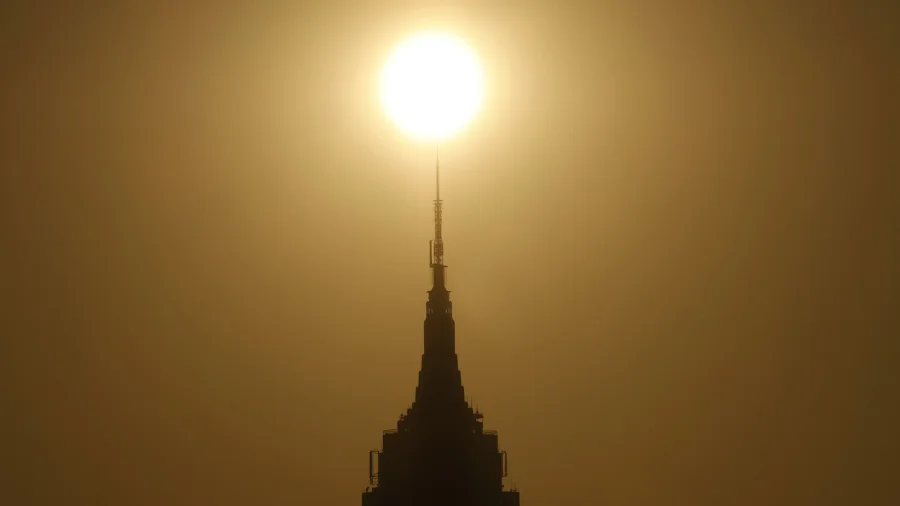
The world's most ambitious climate goal is no longer about prevention. It is now about damage control. A new UN report has concluded that global warming will surpass the 1.5 degrees Celsius threshold — the central target of the 2015 Paris Agreement — marking a sobering turning point in the fight against climate change.
Why the 1.5°C Goal Is Now Out of Reach
The 1.5°C limit was never a random number. It represented the threshold beyond which scientists warned of catastrophic impacts — from severe heatwaves to irreversible ice-sheet loss. But decades of rising emissions have made that target increasingly unrealistic.
According to the UN report, current warming trajectories make a temporary breach of the limit all but inevitable. The question is no longer if we cross the line, but for how long we stay on the wrong side of it.
The New Scientific Strategy: Shortening the Overshoot
Climate scientists are now redefining success. Instead of preventing the breach, the goal is to minimize the time spent above the 1.5°C limit. The logic is simple: a short, temporary overshoot causes less damage than a prolonged one.
This "overshoot management" approach relies on two pillars — aggressive near-term emission cuts to slow the climb, and large-scale carbon dioxide removal to accelerate the descent back below the threshold.
What the Paris Agreement Actually Promised
The Paris Agreement, signed by nearly 200 nations, committed to holding warming "well below 2°C" while pursuing efforts to limit it to 1.5°C. The 1.5°C figure became the rallying cry for climate activism and policy alike.
For years, the goal was treated as a hard ceiling. The UN report now treats it more like a line in the sand that will be crossed — with the hope of returning. This represents a fundamental shift in how the international community frames its climate ambitions.
What Breaching 1.5°C Means for Ordinary People
For the average person, this is not an abstract scientific debate. Every fraction of a degree translates into real-world consequences: more intense heatwaves, stronger cyclones, prolonged droughts, and rising sea levels that threaten coastal cities.
Communities in South Asia, sub-Saharan Africa, and small island nations are already experiencing the leading edge of these impacts. A longer overshoot period would deepen food insecurity, water scarcity, and climate-induced migration pressures.
How Governments and Scientists Are Responding
The UN report is not a surrender document — it is a recalibration. Scientists argue that acknowledging the inevitable breach is necessary to focus resources on the most effective response: shortening the duration of the overshoot.
Officials emphasize that every fraction of a degree avoided still matters. Even if 1.5°C is surpassed, limiting the peak warming to 1.6°C or 1.7°C rather than 2°C or higher would significantly reduce the severity of climate impacts.
The Hard Truth About Carbon Removal
The strategy of "coming back down" depends heavily on technologies that remove carbon dioxide from the atmosphere. These include nature-based solutions like reforestation and engineered approaches like direct air capture.
However, experts caution that these technologies remain unproven at the scale required. Relying on future carbon removal to fix today's emissions is a risky bet — one that could leave the planet stuck above the 1.5°C threshold for decades.
Confirmed Facts vs What Remains Unclear
Confirmed: The UN report states global warming will surpass the 1.5°C goal. Climate scientists are now focused on minimizing the duration of the overshoot.
Unclear: The exact duration of the overshoot period remains uncertain. The feasibility of large-scale carbon removal technologies is still unproven. The precise peak temperature the world will reach before cooling efforts take effect has not been definitively established.
Why This Report Marks a Psychological Shift
Beyond the science, this report carries a psychological weight. For years, 1.5°C served as a motivating symbol — a line that must not be crossed. Admitting that the line will be crossed risks breeding fatalism.
Scientists counter that despair is the wrong response. The window to act is narrowing, but it is not closed. Every year of delayed action extends the overshoot period; every year of aggressive action shortens it.
The Wider Pattern: Climate Goals Meeting Reality
This report is part of a broader pattern of climate targets being revised against hard reality. Earlier this year, separate analyses suggested that even 2°C of warming was becoming increasingly difficult to avoid without unprecedented action.
The trend is clear: the gap between political ambition and physical reality continues to widen. The UN report is an attempt to close that gap — not by lowering ambition, but by redefining what success looks like in a warming world.
What Citizens and Policymakers Should Do Now
For policymakers, the message is to accelerate the energy transition with greater urgency. Every ton of carbon avoided today reduces the duration of the overshoot tomorrow.
For citizens, the report underscores the importance of climate adaptation. Communities must prepare for a world that will be warmer than the Paris Agreement envisioned — while still pushing for the rapid changes that can bring temperatures back down.
Future Outlook: A Temporary Breach or a Permanent One?
The coming decades will determine whether the 1.5°C breach is a temporary overshoot or a permanent crossing. The difference hinges on decisions made now — in energy policy, industrial transformation, and international cooperation.
The UN report offers a sobering diagnosis but not a hopeless one. The planet will likely exceed its target, but the duration of that overshoot remains a choice. That choice will define the world future generations inherit.
Our Take
This report marks the end of a comforting illusion. The 1.5°C goal served as a powerful motivator, but treating it as an absolute line in the sand may have delayed honest planning for a warmer world.
The shift toward "overshoot management" is pragmatic, but it carries risks. It could be read as permission to delay action, banking on future technologies that may never materialize at scale. The most responsible interpretation is the opposite: the overshoot must be as short as humanly possible, which demands the most aggressive emission cuts achievable today.
The planet is going to cross a line it promised itself it would never cross. How long it stays on the other side is now the defining question of our era.
Frequently Asked Questions
What does it mean that global warming will surpass 1.5 degrees Celsius?
It means the planet's average temperature will rise more than 1.5°C above pre-industrial levels, breaching the central target of the Paris Agreement. The UN report indicates this breach is now unavoidable.
Why is the 1.5°C target so important?
Scientists identified 1.5°C as a critical threshold. Beyond this level, the risk of severe climate impacts — including extreme heat, biodiversity loss, and sea-level rise — increases significantly.
What is "overshoot" in climate terms?
Overshoot refers to the period when global temperatures exceed the 1.5°C target before potentially coming back down. Climate scientists now aim to minimize the duration of this overshoot period.
Can the world still avoid the worst effects of climate change?
Yes, but the margin for action is shrinking. While the 1.5°C breach appears inevitable, limiting the peak temperature and shortening the overshoot period can still prevent the most catastrophic outcomes.