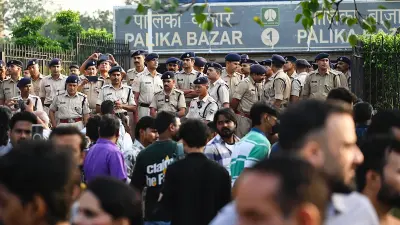
The case that has gripped public attention took a decisive turn on Tuesday as a Bhopal court sent retired district judge Giribala Singh and her son Samarth Singh to judicial remand until June 16. The development comes after the Central Bureau of Investigation (CBI) told the court it had completed its custodial interrogation and did not require further custody of the two accused in the death of actor-model Twisha Sharma.
For the family of Twisha Sharma, this is another step in a long and painful pursuit of justice. For the accused, it marks the beginning of a prolonged legal battle from behind bars.
Court Orders Judicial Custody After CBI Completes Questioning
The Chief Judicial Magistrate (CJM) court in Bhopal on Tuesday ordered Giribala Singh and Samarth Singh to be sent to judicial custody after the CBI informed the court that it did not need further custodial interrogation. The two had been in CBI custody for five days, during which the agency conducted extensive questioning.
Following the court's order, both accused were produced before the magistrate and subsequently sent to Bhopal Central Jail. The court also directed that they be lodged separately from other inmates, a standard precaution in high-profile cases.
Advocate Ankur Pandey, representing the victim's family, confirmed the development to IANS, stating that the court issued jail warrants following the hearing.
Why This Matters Right Now
This case has become a flashpoint for public discourse around justice, privilege, and the treatment of women in India. Twisha Sharma, a young actor-model, died under circumstances that her family alleges were suspicious. The involvement of a former judge as an accused has added a layer of complexity and public scrutiny.
The shift from CBI custody to judicial remand means the investigation is now in a new phase. While the CBI has gathered what it needs from direct questioning, the legal process will now move toward filing charges and preparing for trial. For the public, this case serves as a test of whether the justice system can deliver accountability regardless of the accused's background.
How the Case Unfolded: From Arrest to Remand
The case began with the death of Twisha Sharma, which her family claimed was not accidental. Following a complaint, the matter was transferred to the CBI for investigation. The agency arrested Giribala Singh and Samarth Singh, who were initially remanded to police custody and later to CBI custody.
During their five-day CBI custody, the agency questioned both accused extensively. Sources indicate that the investigation focused on the circumstances surrounding Twisha's death, including possible financial disputes, marital discord, and the sequence of events leading to her demise.
On Tuesday, when the CBI produced the accused before the CJM court, the agency's counsel stated that custodial interrogation was no longer required. This prompted the court to order judicial remand until June 16.
What the Court Order Means for the Accused
Judicial remand means that Giribala Singh and Samarth Singh will now be held in Bhopal Central Jail under the court's authority. They will not be available for further questioning by the CBI unless the agency seeks and obtains fresh custody orders.
The court's directive to keep them separate from other inmates is a routine measure in cases involving former judicial officers or high-profile individuals, aimed at ensuring their safety and preventing any potential influence on other prisoners.
For the accused, this marks the beginning of a prolonged period of incarceration. The next hearing on June 16 will likely involve the submission of the CBI's charge sheet or a request for further investigation.
What We Know So Far — and What Remains Unclear
What is confirmed:
- Giribala Singh and Samarth Singh were sent to judicial remand till June 16 by a Bhopal CJM court.
- The CBI informed the court it did not require further custodial interrogation.
- Both accused will be lodged separately at Bhopal Central Jail.
- The victim's family lawyer confirmed the development.
What remains unclear:
- The exact cause of Twisha Sharma's death and whether the CBI has reached a conclusive finding.
- Whether the CBI will file a charge sheet before the next hearing or seek additional time.
- The specific evidence gathered during the five-day CBI custody.
- Whether any other individuals may be named as accused in the future.
Risks, Concerns, and the Balanced View
While the legal process is moving forward, several concerns remain. Critics of the investigation have questioned the pace of the probe, arguing that high-profile cases often face delays. Others have pointed to the accused's background as a former judge, raising questions about potential influence or preferential treatment.
On the other hand, legal experts note that the CBI's decision to not seek further custody could indicate that the agency has gathered sufficient evidence. However, this does not guarantee a swift trial, as judicial proceedings in India can take years.
The victim's family has expressed cautious optimism but remains vigilant. "We are watching every step of the process," advocate Ankur Pandey said. "Justice must be done, and we will not rest until it is."
Why Cases Involving Former Judges Attract Extra Scrutiny
The involvement of a retired district judge as an accused has made this case particularly sensitive. In India, the judiciary is expected to uphold the highest standards of conduct. When a former judge faces criminal charges, it not only impacts the individual but also raises questions about the system's integrity.
Legal analysts point out that such cases often lead to heightened media coverage and public interest. The court's decision to keep the accused separate from other inmates reflects an awareness of the unique circumstances.
This case also highlights the growing trend of the CBI taking over investigations involving former public officials, signaling a push for accountability regardless of past positions.
What the Victim's Family and the Public Should Watch For
For those following the case, the next key date is June 16, when the accused are scheduled to be produced again before the court. By then, the CBI is expected to have made significant progress in its investigation.
The victim's family has urged the public to remain patient and allow the legal process to take its course. "We have faith in the judiciary," Pandey said. "But we also urge the authorities to ensure that no undue delays occur."
For the general public, this case serves as a reminder of the importance of independent investigations and the need for transparency in the justice system.
What Could Happen Next
Several scenarios are possible in the coming weeks:
- Charge sheet filing: The CBI may file a charge sheet before June 16, detailing the evidence against the accused.
- Further investigation: If the CBI needs more time, it may seek an extension of the investigation period.
- Bail applications: The accused may file for bail, which the court will consider based on the severity of the charges and the evidence available.
- Trial commencement: Once the charge sheet is filed, the court will begin the process of framing charges and scheduling the trial.
Legal experts believe that given the nature of the case, the trial could be a lengthy process. However, the CBI's decision to not seek further custody suggests that the agency is confident in its evidence.
Our Take: Why This Story Matters Beyond One Incident
The Twisha Sharma death case is not just about one family's tragedy. It is a test of whether India's justice system can deliver impartial justice when the accused hold positions of power. The fact that a former judge is now in judicial custody sends a strong signal that no one is above the law.
But the real test lies ahead. Will the investigation be thorough? Will the trial be fair and timely? Will the victim's family finally get closure? These are questions that only time can answer.
For now, the court's decision to send the accused to judicial remand is a procedural step, but it is also a symbolic one. It says that the law is moving forward, and that justice, however slow, is being pursued.
FAQs
Why were Giribala Singh and Samarth Singh sent to judicial remand?
The CBI informed the Bhopal CJM court that it had completed its custodial interrogation and did not require further custody. The court then ordered judicial remand until June 16.
What is the difference between CBI custody and judicial remand?
In CBI custody, the accused are held by the investigating agency for questioning. In judicial remand, they are held in jail under the court's authority and are not available for further questioning unless the court orders it.
What happens next in the Twisha Sharma death case?
The next hearing is scheduled for June 16. By then, the CBI may file a charge sheet or seek further time for investigation. The accused may also apply for bail.
Why is this case getting so much attention?
The case involves the death of a young actor-model and the arrest of a former district judge. It has raised questions about justice, privilege, and accountability in India's legal system.